


 简体中文
 Japanese
 Korean
 Russian
 繁体中文
 Español
Valve selection
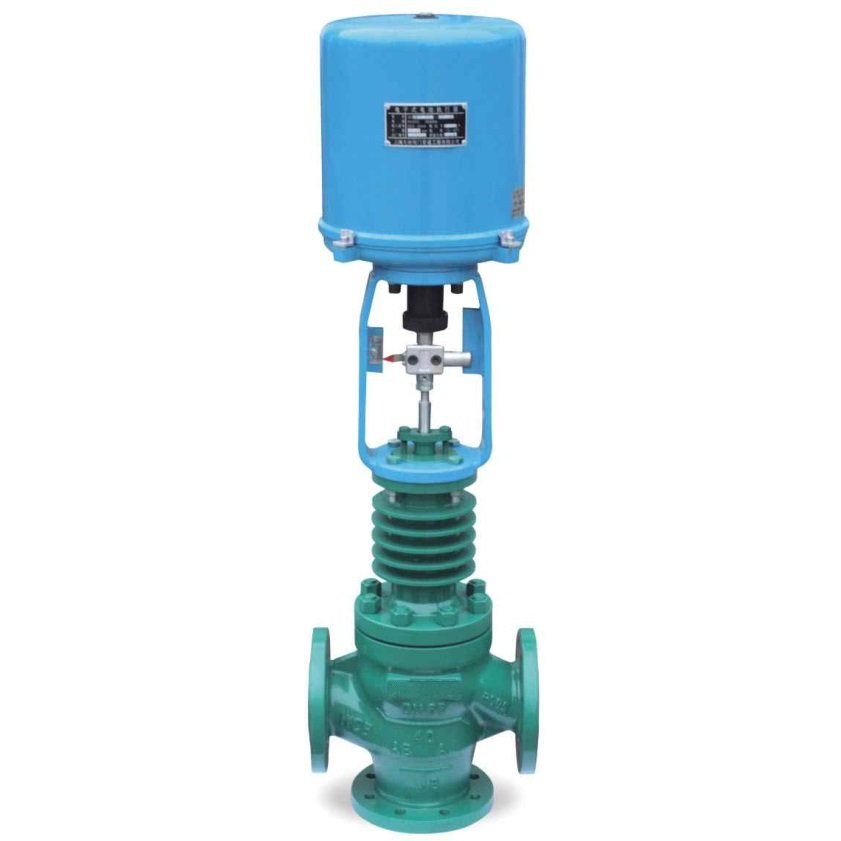
Electric three-way regulating valve - diversion and merging valve
Electric three-way regulating valve - diversion and merging valve is commonly used for regulating two media in heat exchangers. One can replace two single seat and double seat regulating valves. It can also save installation pipelines, reduce investment, and occupy less space. It is powered by a power supply and receives unified signals from 0-10V or 4-20mADC to drive the valve opening corresponding to the operation signal, thereby adjusting working parameters such as pressure, flow rate, liquid level, temperature, etc.The valve body of the electric three-way regulating valve is a three-way structure, which includes one inlet and two outlets (split type) and two inlets and one outlet (combined type). The combined type is used to mix two fluids into a third fluid, or two fluids of the same temperature mixed into fluids of the same temperature. Split flow is the process of dividing a fluid into two types of fluids.
Common problems in product selection
Can this three-way regulating valve be used to switch from merging to splitting?
It is not allowed to change the purpose without confirmation. It is necessary to verify the valve internals, flow arrows, interface pressures, and allowable pressure differentials. Corresponding product structures and control schemes should be adopted for merging and splitting.
Do I need to provide an interface diagram when replacing the old three-way valve with DT946W?
Interface number, connection direction, structural length, and flange size need to be provided, and the flow rate and pressure of each channel should be explained; Only providing the same DN cannot confirm that the connection and adjustment performance are the same.
When the three-way regulating valve is powered off, where will the cold and hot flow paths stop?
The actual electric actuator and complete fault plan should be followed. Ordinary electrical appliances cannot default to returning to a certain flow path; Systems with safety temperature requirements should also be separately audited for interlock and power failure status.
 Home
 Valve selection
 news information
 Contact us