


 简体中文
 Japanese
 Korean
 Russian
 繁体中文
 Español
Valve selection
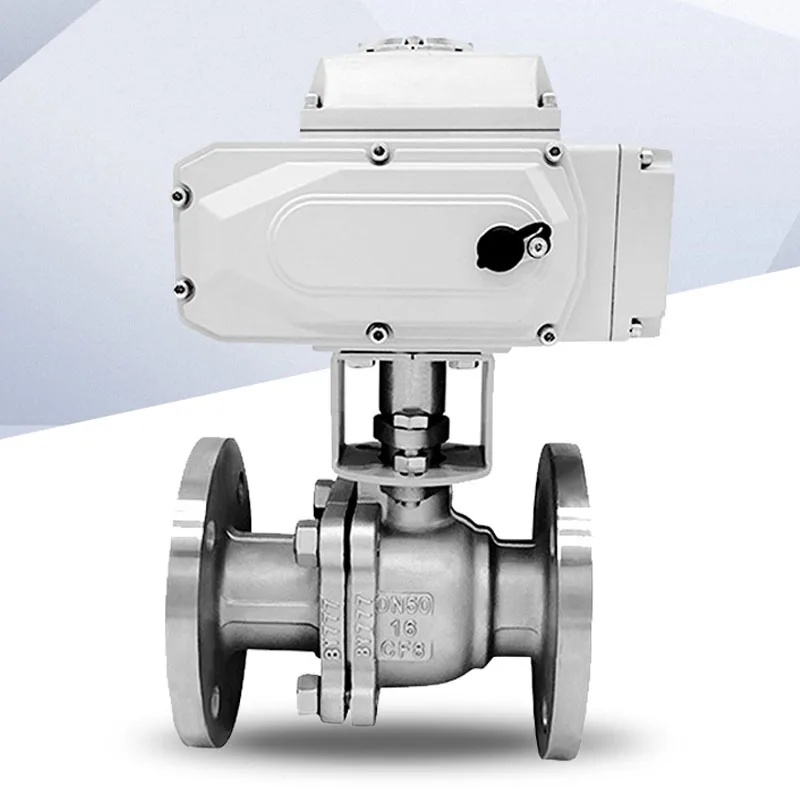
Electric flange ball valve Q941F-16P
Electric Flange Ball Valve Q941F-16P Product Description
The electric flange ball valve Q941F-16P is designed for automatic switching or process control needs in water treatment, chemical engineering, urban heating, and general industrial automation. When selecting, one should start from the actual working conditions, check the medium name, temperature, maximum and normal flow rates, pressure before and after the valve, connection standards and control methods, and not simply copy the valve diameter based on the existing diameter. The parameters provided in this article belong to the commonly used configuration range, and the final execution data should be based on the project operating conditions, order confirmation form, and manufacturing drawings.
Product Specifications
| Product Model | Q941F-16P |
| Structural form | Two piece straight channel, flange connection, floating ball structure |
| Nominal Diameter | DN15-DN200 |
| pressure rating | PN16/PN25 |
| Valve body material | CF8/CF8M |
| sealing form | PTFE or enhanced PTFE soft seal |
| Drive Type | Angular stroke electric actuator |
| Applicable temperature | -20℃ to 180℃, confirm according to the sealing material |
| Applicable Medium | Water, oil, air, and weakly corrosive media |
Structure and working mode
Q941F-16P adopts a two-piece straight channel, flange connection, and floating ball structure. The electric actuator rotates the ball through the valve stem to mainly complete the opening, closing, and cutting of the pipeline. The actuator is selected based on the maximum working pressure difference, seat friction, and valve operating torque, and the angle, limit, power supply, and valve position feedback are checked. The ability of the actuator to stop in the middle position does not mean that this ordinary straight through ball valve has professional continuous adjustment performance; The use of throttling also requires verification of the flow channel, valve seat, and actual operating conditions.
Caliber pressure and material selection
The commonly used caliber is DN15-DN200, and the pressure rating is PN16/PN25. The valve body material can be selected as CF8/CF8M, but the material selection cannot be separated from the corrosiveness of the medium, chloride ion content, temperature fluctuations, and cleaning conditions. PTFE or enhanced PTFE soft seal, its allowable temperature, pressure difference, and leakage level need to be checked simultaneously. For steam, crystallization prone, particle containing, or frequent operating conditions, further confirmation should be made on the hardness of valve internals, packing form, and erosion prevention measures.
Product features and applicable industries
The flange connection of Q941F-16P is easy to install with paired pipelines, and the electric drive is used for remote switch control. The compatibility of the medium with the valve body and valve seat should be checked separately for water treatment, heating or chemical supporting applications. The explosion-proof applicability of electric actuators and related electrical accessories needs to be verified in hazardous areas; Food, pharmaceutical, oxygen or toxic medium working conditions must also meet the requirements of cleaning, materials and leakage control separately, and cannot be inferred from the name of the stainless steel valve body to have the corresponding certification.
Installation and Debugging
Before installation, check the valve nameplate, matching flange standards, sealing surface and structural length, remove debris from the pipe, ensure that the flange is aligned and evenly fasten the connectors, and avoid imposing pipeline deviations on the valve body. Reserve disassembly space around the actuator, and seal the cable entry according to equipment and environmental requirements. During debugging, check the direction of electric opening and closing, full open and full close limit, valve position feedback, and interlocking logic, and complete sealing and action checks according to regulations.
operation and maintenance
During operation, the action time, abnormal noise, leakage, valve position feedback, and control signals should be observed. If the action is slow, first check the power supply, wiring, control module, valve position feedback, and electric actuator, and then check the valve stem, valve seat, and seals. It is not advisable to blindly increase the driving force. Before maintenance, it is necessary to isolate the medium, relieve pressure, and confirm that the equipment has no residual energy. After replacing the seal, strength, sealing, and action tests should be conducted according to regulations, and the material of the spare parts and the date of maintenance should be recorded.
Corresponding pneumatic products can be found inQ641F-16P Pneumatic Flange Ball ValveMore electric ball valves can be foundSelection of electric ball valve。
Q941F-16P Electric Flange Ball Valve Common Problems
Does Q941F-16P default to a regulating ball valve?
Not default. The ordinary straight floating ball structure is mainly used for opening, closing, and cutting, and continuous adjustment requires additional verification of the structure and operating conditions.
How to choose between CF8 and CF8M?
It should be determined based on the corrosiveness of the medium, temperature, pressure, and project material requirements.
Does the selection of electric actuators only depend on the diameter?
No, it needs to be determined based on the working pressure difference, valve seat friction, required output torque, power supply, and control mode.
Order Information List
Suggest providing the composition of the medium, design and operating temperature, maximum and normal pressure, flow range, pipeline standards, operating frequency, power supply, control signals, valve position feedback, requirements for electric actuators, and environmental protection requirements. Fouten Flow Control (Jiangsu) Co., Ltd. will verify the valve diameter, material, seal, actuator, and accessory combination based on these materials to ensure that the product parameters are consistent with the actual pipeline conditions, and provide traceable basis for subsequent installation and maintenance.
 Home
 Valve selection
 news information
 Contact us