


 简体中文
 Japanese
 Korean
 Russian
 繁体中文
 Español
Valve selection
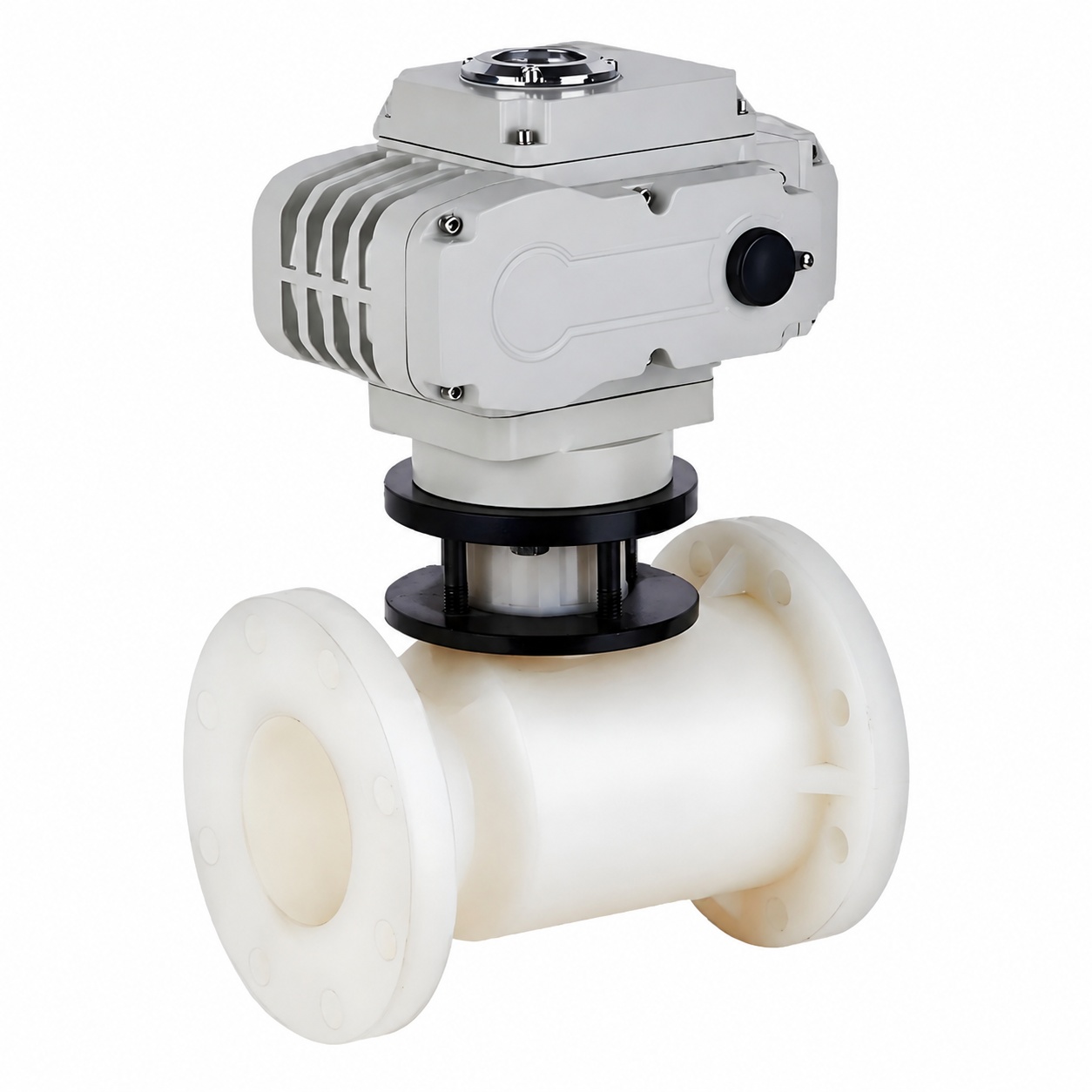
Electric PVDF flange ball valve Q941F-10F
Product positioning
The electric PVDF flange ball valve Q941F-10F is designed for chemical, electronic, pure water, and environmental protection equipment. It adopts the PVDF flange valve body and full bore floating ball structure, and is used for corrosion resistance, low pollution, and remote cutting of acidic and alkaline liquids, pure water, and chemical media compatible with PVDF. The combination of valves and corrosion-resistant electric actuators can be connected to the on-site control system, allowing manual operation points to be converted into monitored and interlocked automatic control nodes. Fouten Flow Control (Jiangsu) Co., Ltd. determines materials and actuators based on the medium, pressure difference, operating frequency, and safe position, and does not use similar shapes to replace specific operating conditions for selection.
Action and sealing characteristics
The output of the actuator is transmitted to the opening and closing components through the connecting components, enabling the valve to complete the rotation, straight movement, or compression action according to the structural specifications. The PTFE soft seal forms the main sealing interface, and the PVDF valve body bears the pipeline pressure and connection load. The actual closing ability is simultaneously affected by pressure difference, temperature, medium particles, sealing pre tightening, and opening and closing speed. After the control system issues a command, it should confirm the end of the action through in place feedback; If the feedback exceeds the time limit, continuous forced driving is not allowed to avoid damaging the valve stem, seal or actuator.
Selection Information
Before placing an order, it is necessary to confirm the actual diameter within the range of DN15-DN100, the design pressure of PN10, the working temperature from - 20℃ to 120℃, as well as the composition, concentration, viscosity, and solid content of the medium. Simultaneously explain the normal and maximum flow rates, pressure before and after the valve, number of actions, power or gas source conditions, requirements for faulty switches, and on-site protection level. The material combination of the electric PVDF flange ball valve must be compatible with acidic and alkaline liquids, pure water, and chemical media compatible with PVDF; High frequency operation, long-term shutdown, crystallization medium or outdoor corrosive environment should increase corresponding safety factors and protective measures.
Product Specifications
| Product Model | Q941F-10F |
| Structural form | PVDF flange valve body and full bore floating ball structure |
| Nominal Diameter | DN15-DN100 |
| pressure rating | PN10 |
| Valve body material | PVDF |
| sealing form | PTFE Soft Seal |
| Drive Type | Corrosion resistant electric actuator |
| Applicable temperature | -20℃ to 120℃ |
| Applicable Medium | Acid alkali solution, pure water, and chemical media compatible with PVDF |
| Application Industry | Chemical, electronic, pure water, and environmental protection equipment |
| Product Features | Corrosion resistant, low pollution, and remote cut-off |
Installation inspection
After arrival, first check the nameplate, model, interface, material, and accessories, and inspect for any bumps, looseness, or moisture during transportation. Before installation, remove welding slag, sand particles, and sealing debris from the pipeline, ensure that the interfaces at both ends are coaxial, and provide independent support for the pipeline and actuator. Do not use bolts to forcibly pull the interface in a positive or negative position, and do not let cables, air pipes, or accessories bear the weight of the valve. Position according to the valve body identification and process flow direction, while reserving space for disassembly, manual operation, and replacement of seals.
Debugging steps
The first debugging starts from no pressure point movement, checking the opening direction, mechanical limit, valve position indication, and feedback contacts, and then conducting a full stroke test. Check the voltage, phase sequence, grounding, overload protection, and cable sealing of electric products; Check the cleanliness of the air source, filtration and pressure reduction, direction of the solenoid valve, and air circuit leakage for pneumatic products. Subsequently, observe the action time and seal closure under low-pressure medium conditions, confirm that the local, remote, and emergency interlocks are consistent, and finally gradually increase to the working pressure and record the benchmark data.
operation and maintenance
Regularly check for external leaks, abnormal sounds, actuator temperature rise, loose connections, and changes in action time during operation. When it is found that the closure is not tight, first check the limit, pressure difference, debris, and seal wear; Check the power or gas source, transmission resistance, and valve stem coaxiality when the movement is slow. The replacement parts for maintenance must be consistent with the grade and size of the raw materials, and after completion, recalibrate the limit, feedback, and fault location. For media containing particles or prone to sedimentation, a flushing and periodic action plan should be developed to avoid a significant increase in starting torque after shutdown.
Safety Maintenance and Q&A
Before maintenance, close the upstream and downstream isolation points, drain the pressure and residual liquid, and lock the power or gas source. Only after confirming that there is no pressure in the valve chamber and the surface temperature is safe can it be disassembled; Toxic, corrosive, or flammable media must also undergo displacement testing and personal protection requirements. The common selection question is whether the actuator can be selected only based on the diameter, and the answer is no. It also needs to be calculated based on the maximum pressure difference, sealing friction, and fault safety factor. Before putting into operation, sealing, action, feedback, and interlocking re inspection should be completed, and isolation can only be lifted after the records are qualified.
Common problems in product selection
When using Q941F-10F for chemical solutions, does the PVDF valve body still need to check the sealing ring?
Need. The composition, concentration, temperature, and pressure of the medication should be confirmed simultaneously, and the compatibility of the PVDF valve body, valve seat, and sealing ring should be checked separately. The pressure and temperature data for this configuration should be used, and not just the valve body material name.
When replacing the old flange ball valve with Q941F-10F, is it enough to only check DN and PN?
It is also necessary to verify the flange standard, sealing surface, structural length, valve body and seat materials, as well as the allowable pressure at operating temperature. The installation space and connection bracket of the actuator should also be confirmed together with the site.
Will Q941F-10F automatically shut down after a power outage?
The power-off action cannot be determined solely by the name of the electric drive. Ordinary electric actuator cannot default to having automatic valve closing function when power is lost; If the process requires fault closure, the energy storage or other fault safety scheme of the actuator should be confirmed at the time of ordering, and the entire valve interlock verification should be completed.
 Home
 Valve selection
 news information
 Contact us