


 简体中文
 Japanese
 Korean
 Russian
 繁体中文
 Español
Valve selection
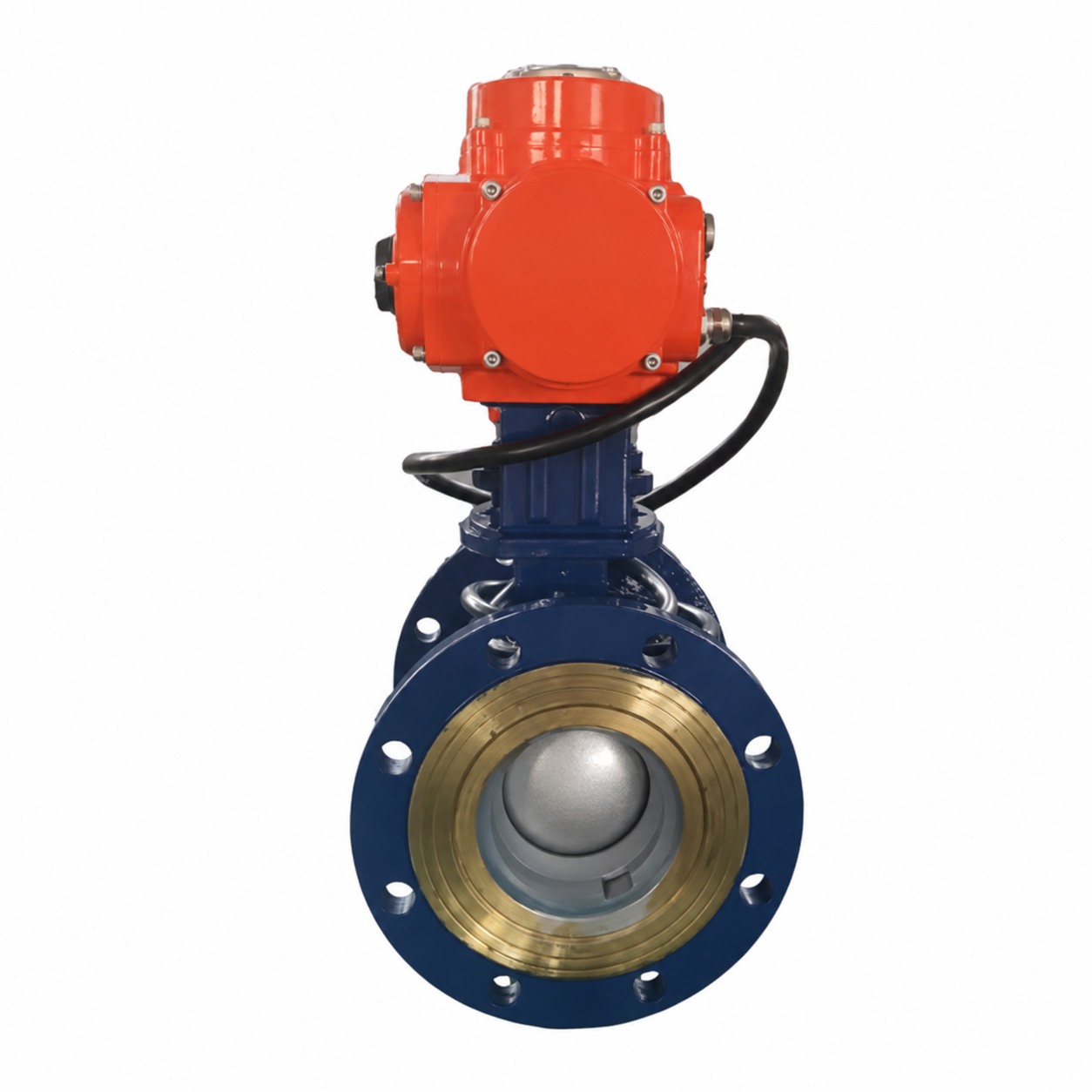
Electric Eccentric Ball Valve PQ940F-16C
| Specification | Value |
|---|---|
| Model number | PQ940F-16C |
| Specification and caliber | DN50-DN400 |
| Pressure level | PN16 |
| Material | WCB |
| Product Features | Eccentric disengagement from the seat, low operating torque, self-cleaning cut-off |
The PQ940F-16C electric eccentric ball valve is used for cutting off raw water, sewage, slurry, and verified particulate media. The eccentric motion causes the ball crown to leave the seat during certain stages of opening and closing, but this does not imply that any particles can pass through. Selection should first consider particle size, sedimentation, and maximum pressure difference, followed by verification of the sealing pair, actual closed position, and electric actuator load.
Product Parameters
| Product Model | PQ940F-16C |
|---|---|
| Structure Type | Flanged connection, eccentric ball opening and closing element, straight-through flow path |
| Nominal Diameter | DN50-DN400 |
| Pressure Rating | PN16 |
| Body Material | WCB |
| Sealing Type | Reinforced PTFE soft seal or metal seal |
| Actuation Method | Quarter-turn electric actuator |
| Applicable Temperature | -20â to 200â, confirmed by sealing material |
| Applicable Media | Raw water, sewage, slurry, and industrial media with small amounts of particles |
How Eccentric Disengagement Affects Opening and Closing
The ball crown moves away from or approaches the seat according to the eccentric mechanism, and there is a corresponding relationship between sealing contact and the angle of rotation, which helps reduce continuous rubbing during partial motion. The actual force is also related to the seat, media, and pressure difference, and the eccentric structure should not be understood as having no friction throughout the entire stroke.
After replacing the actuator or adjusting the limit, the actual switch position should be confirmed according to the corresponding structure. The valve body shape is similar to that of a conventional ball valve, which does not mean that the endpoint, drive connection, and closure requirements can be directly copied, especially not to redefine abnormal jamming points as closed positions.
Slurry Selection Should First Explain How Particles Move
Please provide particle size distribution, hardness, concentration, flow rate or flow volume, as well as whether sedimentation, crystallization, or fibers are present. Continuous fine particle scouring and large block sedimentation after stopping have different impacts on the flow path, sealing, and starting load; simply stating sewage or slurry is insufficient for comparing options.
The eccentric structure cannot eliminate all risks of material jamming and abrasion. If an old valve is already in use, retain records of damaged areas and cleaning, distinguishing between sealing surface scouring, particle bruising, and mechanical jamming before deciding on materials or maintenance plans, without first providing fixed service life commitments.
Soft Seals and Metal Seals Should Be Verified Separately
The contact, friction, and applicable conditions of reinforced PTFE and metal seals are different. Shut-off requirements should specify media, direction, pressure difference, and acceptance conditions; one cannot simply use soft or hard to judge which is always more durable, nor can material temperature resistance be directly treated as the rated condition for the entire valve.
The valve body, seat, packing, and other wetted parts should be verified as a complete configuration. The applicability of WCB is also related to corrosion and operating conditions; changing sealing materials requires re-confirmation of actuator load and matching dimensions, and should not be treated as a direct upgrade that does not require re-verification.
Actuator Protection Cannot Replace Mechanical Fault Diagnosis
Select the electric actuator based on the most unfavorable pressure difference, sealing friction, and starting torque after sedimentation, constrained by the allowable load of the valve stem and connecting parts. Normal operation, manual operation, and feedback interfaces should be confirmed simultaneously; ordinary actuators cannot be assumed to have automatic reset capabilities upon power failure.
If the operating current or action time continues to increase, record the pressure difference, valve position, and alarm stages, then check for sedimentation, seat, bearings, and limits. Do not maintain operation by raising the overload threshold or continuous strong closure; the adjustment purpose should also verify flow characteristics and working mode separately.
Installation, Cleaning, and Initial Commissioning Should Be Confirmed Step by Step
Verify flow direction, flanges, structural length, and maintenance space, clear welding slag and hard debris from inside the pipe, and avoid misalignment loads being transmitted to the valve body. Support and disassembly plans should cover the valve body, actuator, and on-site pipe sections, rather than only checking if the bolts can align.
Under approved low-risk conditions, jog and check the full stroke, confirm mechanical connections, actual closed position, and feedback, then check for external leaks and shut-off according to agreed conditions. Records after the first round with media can serve as a baseline for observing sedimentation and load changes.
What to Do If the Closed Position Indicator Shows Normal but There Is Still Leakage
First, confirm that the downstream flow is not from a bypass, parallel branch, or residual media, then verify the actual closed position and measurement conditions. Position feedback only indicates the status of the detection device and cannot independently prove that the ball crown has made correct contact with the seat or meets contractual leakage requirements.
Before maintenance, isolate the media, relieve pressure, and lock the power supply; cleaning and inspection should be carried out according to equipment procedures, without forcing the actuator to overcome foreign objects. After reassembly, verify actions, protection, external leaks, and shut-off separately, and record spare parts and adjustment content, not just leaving a qualified conclusion.
Common Customer Questions
If the pipeline contains a small amount of sand, do I not need to consider particle size when selecting an eccentric ball valve?
It is still necessary to provide particle size, hardness, concentration, sedimentation, and pressure difference. A small amount does not imply that particles will not jam in the sealing area; the structure and materials should be targeted at the actual materials, rather than judging solely based on the name of containing particles.
If I change from a soft seal to a metal seal, can I directly use the original actuator?
It is necessary to re-evaluate sealing load, starting torque, interfaces, and protection settings, and verify the allowable load of the valve stem. Changing materials does not mean that the original drive configuration is still suitable; direct replacement without verification is not allowed.
If there is still leakage after reaching the closed position, can I directly increase the closing torque?
Do not apply force when the cause is unknown. First, eliminate other inflows and verify the actual closed position, jamming, and seat damage; handle according to isolation maintenance procedures, and then re-verify using agreed leakage conditions.
What Information Is Needed When Ordering
When ordering, please attach media and particle information, normal and maximum flow rates, upstream and downstream pressures, temperatures, action frequency, and allowable leakage requirements. Power supply, feedback, manual operation, and power failure targets should be listed separately; for old valve replacements, include flange dimensions, structural lengths, damaged areas, and starting current records to facilitate comparison of the entire scheme.
For other structures, see Electric Valves, comparing connections, sealing, and control configurations under the same working conditions.
 Home
 Valve selection
 news information
 Contact us