


 简体中文
 Japanese
 Korean
 Russian
 繁体中文
 Español
Valve selection
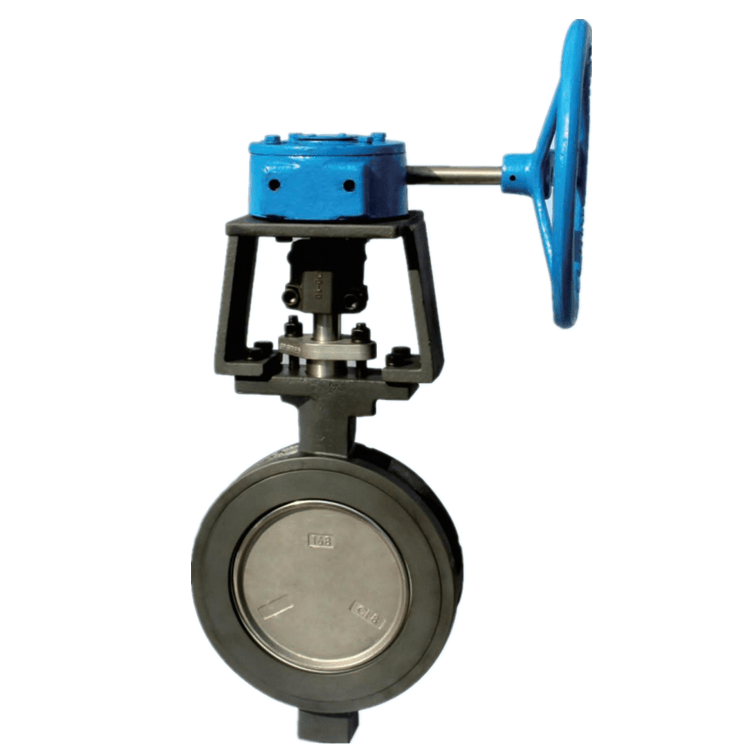
D372F worm-geared wafer butterfly valve
The D372F butterfly valve uses a handwheel and worm gearbox to turn the stem and disc for opening and closing. The body, disc, stem and seat form the valve assembly, while the gearbox transmits the operating torque. The handwheel turns the worm, which drives the worm wheel and valve stem. The reduction ratio changes handwheel effort and the number of handwheel turns needed for the valve stroke; the gearbox must transmit the required valve torque. In the double-offset arrangement, disc and seat geometry affect contact during the stroke. The seat construction, material pair and service differential pressure govern sealing, wear and the required torque.
Provide space for the handwheel to turn and for the gearbox to be serviced. The mechanical stops and gearbox output must match the valve travel and torque. The main materials are carbon steel and stainless steel. The valve seat, valve stem, and valve plate can be customized according to customer requirements.
Does a higher reduction ratio make operation faster?
No. It generally reduces required handwheel effort at the cost of more turns. Operating time and available torque must both suit the application and the limits of the valve and gearbox.
Can the gearbox be mounted in any orientation?
Only within its permitted mounting arrangement. Handwheel access, indicator visibility, coupling alignment and travel-stop adjustment must remain practical after installation.
How is the required gearbox torque determined?
It depends on the valve's torque over the full stroke under the actual differential pressure, including seat engagement. Selecting by pipe size alone can miss the highest load or exceed the valve's allowable input torque.
 Home
 Valve selection
 news information
 Contact us