


 简体中文
 Japanese
 Korean
 Russian
 繁体中文
 Español
Valve selection
Why are knife gate valves commonly used for sewage and particulate media? Pay attention to these six points when selecting
Knife gate valves can be used as one of the cutting solutions for pipelines containing fibers, slurries, or particles. First, distinguish whether the material will deposit, crystallize, or bridge, and then look at the flow channel, seal, and drive; Knife shaped gate is not a guarantee for solving all blockages.
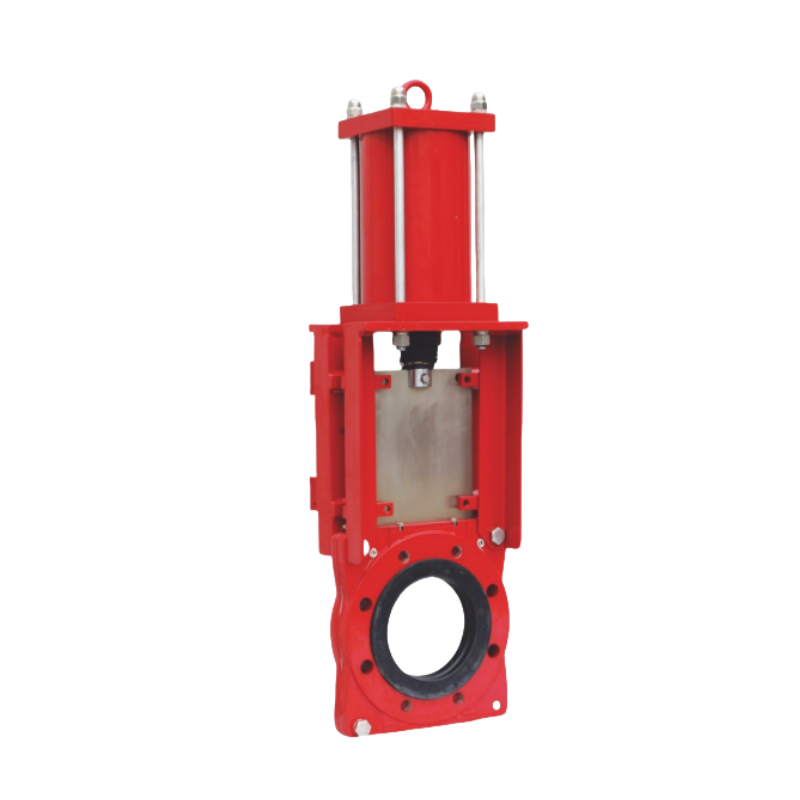
Related product entrance:Gate Valve Product Column Pneumatic wafer-type slurry knife gate valve Stainless steel 304 electric penetrating knife gate valve
1、 First, determine whether the medium is suitable for the knife type gate valve
Knife gate valves are mainly used to cut off media containing fibers, suspended solids, particles, or easily sedimented materials. Thinner gate valves can cut into the medium during the closing process, and the flow channel is simpler than ordinary wedge gate valves, which is conducive to reducing the risk of material accumulation in the valve chamber. Wastewater, pulp, slurry, powder, and some solid-liquid mixed media are common application directions.
Knife gate valves are usually not recommended to stay in the half open position for a long time to regulate flow. The throttling state will cause the high-speed medium to continuously flush the gate and valve seat, which can easily cause wear, vibration, or leakage of the sealing surface. If the system requires continuous adjustment, the regulating valve, V ball valve, and other structures that are more suitable for throttling should be re evaluated.
2、 Work pressure cannot be solely determined by the diameter of the pipeline
When selecting, it is necessary to confirm the nominal diameter, normal working pressure, instantaneous pressure fluctuation, and test pressure simultaneously. Taking the common pneumatic knife type gate valve as an example, DN50—DN600, PN10, or PN16 are only common configuration ranges and do not mean that all materials, connection dimensions, and actuators can cover the same working conditions.
Large caliber valves should also be checked for cylinder output force, gas source pressure, and gate pressure difference. Insufficient air source pressure or small cylinder selection may result in normal no-load operation but insufficient closing after pressure is applied. If the medium is prone to sedimentation, a margin should be left for the actuator to overcome adhesion resistance.
3、 The materials of the valve body, gate and stem should be confirmed separately
For general sewage conditions, valve bodies such as ductile iron and carbon steel can be selected based on temperature and corrosiveness; When dealing with weakly corrosive media or when cleanliness is required, stainless steel materials such as CF8 and CF8M can be evaluated. Abrasive media such as slurry and mortar require special attention to the surface of the gate, valve seat, and parts of the flow channel that are prone to erosion.
The valve body, gate, valve stem, and fasteners may not necessarily be made of the same material. The inquiry documents should indicate the materials of key components separately, and not just write "whole valve stainless steel" or "corrosion-resistant", otherwise it will be difficult to accurately compare different supply schemes.
4、 How to choose between soft seal and metal seal
Soft seals usually have good low-pressure sealing performance and are suitable for water and sewage media with moderate temperature and low particle hardness. When the medium temperature is high, the particles are sharp, or the erosion is strong, the metal seal and gate wear resistance treatment should be evaluated. The sealing material also needs to check the acidity, temperature, and solid content of the medium.
5、 Pneumatic actuators should have a clear indication of the state of loss of air
Pneumatic knife type gate valves can be equipped with double acting or single acting actuators. The double acting structure relies on the gas source to complete the opening and closing; The single acting structure with spring reset can be designed to close or open when the device loses air according to safety requirements. When participating in interlocking control, the voltage of the solenoid valve, limit switch, filter pressure reducing valve, air source interface, and protection level should also be checked.
If remote status feedback is required, the signal form and control system interface for opening and closing should be clearly defined. Choosing only the valve body and ignoring the accessory configuration often leads to mismatched gas sources, signals, or installation interfaces during on-site debugging.
6、 Installation and maintenance should avoid pipeline stress and material accumulation
Before installation, welding slag, hard particles, and other debris should be cleaned, and the valve flow direction requirements, actuator space, and gate maintenance distance should be confirmed. The flange bolts should be evenly tightened diagonally, and the valve body should not be used to forcibly correct pipeline deviations. Before putting into operation, perform no-load opening and closing first, and then gradually check the sealing and limit with pressure.
When the valve cannot be closed properly during operation, it can be checked in the order of "gas source pressure - solenoid valve - limit position - gate attachment - valve seat wear - pipeline pressure difference". It is not advisable to directly increase the output force of the actuator. If the gate is bent and the valve seat is damaged by hard particles, it should be stopped for maintenance instead of repeatedly forced opening and closing.
Conclusion
The advantages of knife type gate valves are simple flow channels, clear opening and closing strokes, and the ability to adapt to media containing fibers or particles. However, the correct selection still needs to be combined with pressure, materials, sealing, and driving methods. When comparing different structures and driving schemes, you can enterFouten Gate Valve Product ColumnReview existing products and confirm configuration based on real media, temperature, pressure, and control requirements.
Common customer questions
What is the difference between knife gate valve and ordinary gate valve?
Knife type gate valves use thinner gate plates and relatively simple flow channels, which are more suitable for cutting off sewage, pulp, slurry, and particulate media; Ordinary wedge gate valves are more commonly used for cleaner media such as water, steam, and oil. The two cannot be exchanged only by caliber, but also by comparing pressure rating, sealing structure, solid content of the medium, and installation size.
Should soft seal or metal seal be selected for sewage knife type gate valve?
When dealing with sewage at room temperature, low particle hardness, and requiring low-pressure sealing, soft sealing is usually evaluated first; When the temperature is high, the particles are sharp, or there is obvious erosion, the metal seal and gate wear-resistant treatment should be evaluated. The final confirmation needs to be based on the composition of the medium, temperature, solid content, and allowable leakage level.
How to troubleshoot if the pneumatic knife type gate valve cannot be closed properly?
Firstly, check the air source pressure and filter pressure reducing valve, and then confirm the action of the solenoid valve, cylinder stroke, and the limit of the closed position; Subsequently, inspect the attachment of the gate, wear of the valve seat, and pressure difference in the pipeline. Do not directly increase the air pressure and forcefully close it.
 Home
 Valve selection
 news information
 Contact us