


 简体中文
 Japanese
 Korean
 Russian
 繁体中文
 Español
Valve selection
Why can't the electric gate valve rotate multiple times and the ball valve rotate partially? Why can't we just exchange torque?
The multi rotation of gate valves and partial rotation of ball valves have different requirements for movement and connection. Before replacing the electrical components, check the stroke, interface, and load. It is not acceptable to assume that the matching is complete just because two torque numbers are equal.
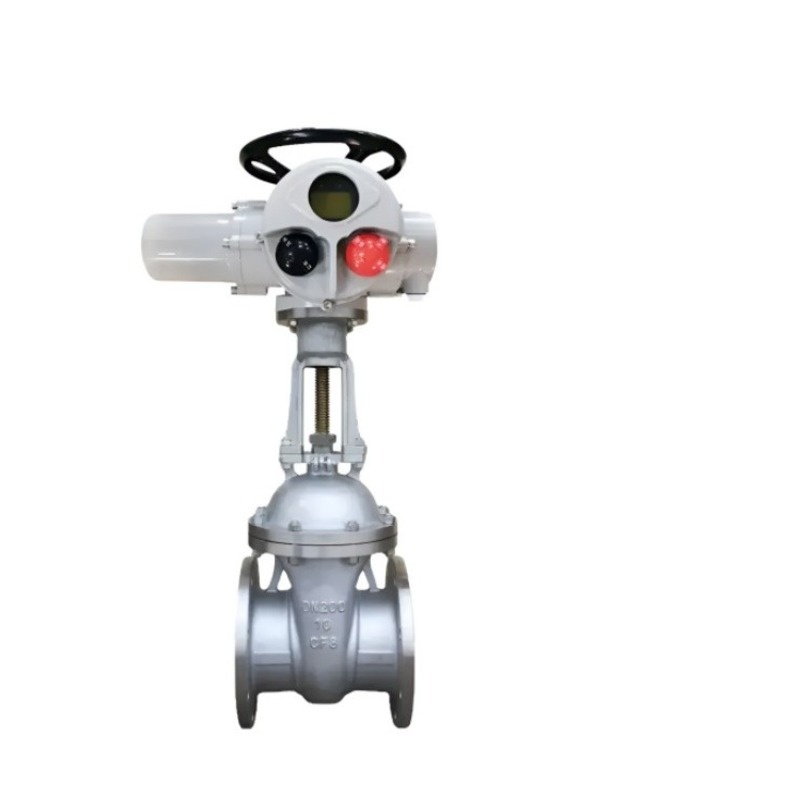
First identify what motion is required for the valve stem mechanism
The stem mechanism of a gate valve may form a gate lifting mechanism through multi turn transmission, while ball valves usually require partial rotation at corresponding angles. The actuator can form different outputs with the help of gears or other conversion devices, but the combined load, efficiency, and position detection need to be re matched. If you cannot see that the output shaft can be connected, it is considered that the matching has been completed. The actual valve stem threads, transmission interfaces, and finished product drawings are the basis for identification.
Rotation, speed, and thrust also participate in matching
Multi turn equipment needs to specify the output speed from fully closed to fully open, and some turn equipment needs to specify the angle. The action time is determined by the range of motion and actual speed, not just by the rated power. The gate valve mechanism may also transmit axial loads, and it should be confirmed which component bears them. If the torque is sufficient but the speed, support, or thrust do not meet the requirements, it may also be impossible to safely complete the action.
Location and protection settings depend on correct mechanical associations
A stable connection relationship is required between the travel detection and the true position of the valve. After the output format is changed, the original end position or travel settings cannot be automatically applied. Drive overload protection should match the allowable load of the valve stem, transmission, and seal, and cannot compensate for erroneous transmission by increasing the protection value. The renovation acceptance needs to recheck the mechanical interface, stroke endpoint, and protective function according to the finished product data, and confirm that the corresponding valve is truly in place when the drive is in place.
Write the renovation requirements into a complete mechanical interface table
It is recommended to record the movement of the valve stem, interface size, stroke or speed, load curve, action time, operating frequency, and installation space, and then provide power supply, control, and feedback. Manual emergency and fault safety plans should also be clearly defined, but not all electric drives are equipped by default. The automation transformation of old valves also needs to evaluate the status of the valve body and stem, and it is not appropriate to simply add new electrical components as the original valve has reached a new functional level.
Comparison of selection information
| Information | Corresponding focus points |
|---|---|
| Output motion | Clearly define multiple rotations, angles, or straight lines |
| Mechanical ability | Verify torque, thrust, and support |
| Control association | Real itinerary and protection verification separately |
Corresponding products and selection entrance
An automation transformation document should first describe the motion, then describe the output capability, and finally describe the control. Clear sequence can avoid using electrical functions to mask mechanical mismatches.
Related structures can be combinedElectric gate valve Z941H-16CandElectric flange ball valve Q941F-16CUnderstanding of specific product information. See more similar directionsElectric Valve Product Column。
Common customer questions
Can the angular actuator of an electric ball valve directly drive a gate valve?
It cannot be replaced directly by default. The lifting of the gate plate requires a matching motion and transmission structure.
Can electric gate valves select actuators based solely on torque?
It is also necessary to output rotational speed, speed, interface, and axial load, and torque is not a complete requirement.
Can the original valve position settings remain unchanged after adding the gearbox?
Cannot be automatically used, after the conversion relationship is changed, the position and protection association need to be re established according to the complete product.
 Home
 Valve selection
 news information
 Contact us