


 简体中文
 Japanese
 Korean
 Russian
 繁体中文
 Español
Valve selection
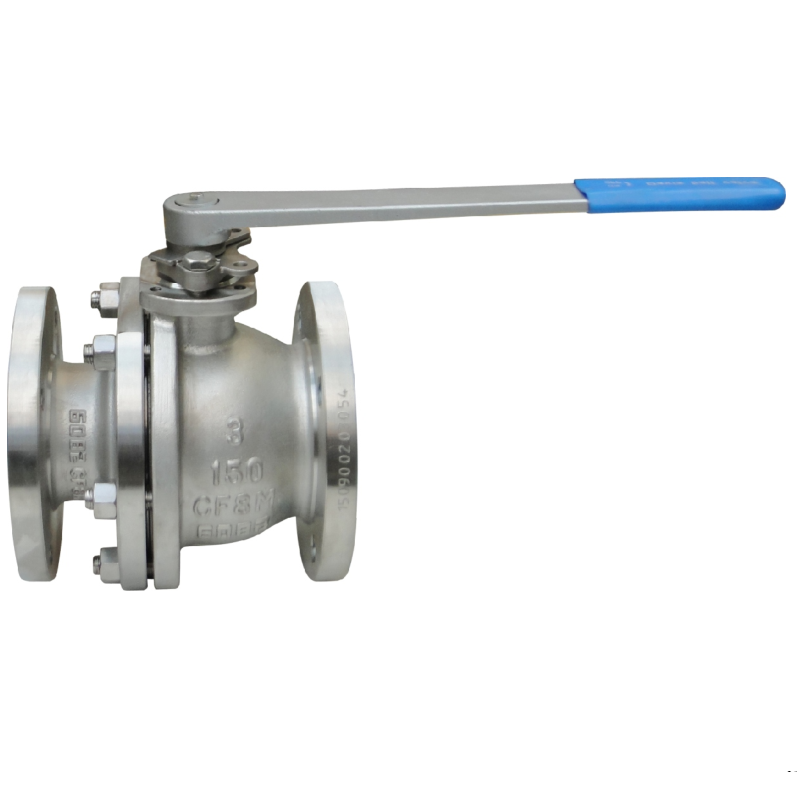
Stainless-steel Class 150 flanged ball valve Q41F-150LB
Class 150 flanged ball valve
The Q41F-150LB is a stainless-steel flanged ball valve identified for Class 150 service. The ball turns with the stem to open or close the passage. Selection brings together the actual body and trim materials, seat arrangement, pressure–temperature rating and piping connection.
The flange connection joins the valve to the pipeline; the ball and seats provide the internal shutoff contact. The stem packing has a separate sealing function. These parts have different material and load requirements, so a body-material name does not describe the complete assembly.
CF8M and 316L identify different material specifications
CF8M is a cast austenitic stainless-steel grade. The 316L designation identifies a low-carbon wrought stainless steel. They are related material families, but their product forms and standards are different; CF8M is not another name for 316L.
For a casting, use the specified casting grade and its material certificate. If a low-carbon casting is required, identify the appropriate cast grade rather than substituting the name of a wrought grade. Record the body, ball, stem and other wetted materials separately. Chloride concentration, temperature, cleaning chemicals and service conditions then guide the corrosion assessment.
Pressure rating, seat and operating duty
Class 150 is a pressure-class designation, not a fixed working pressure in psi. The allowable pressure at the design temperature comes from the applicable material rating and the limitations of the complete valve, including the seats and seals. A family catalogue listing other classes does not change the rating of the selected configuration.
A ball valve chosen for isolation is assessed for its closing duty. Continuous throttling involves flow characteristics, differential pressure, noise and possible seat erosion as well as the drive. Opening the ball part-way does not establish the capacity or behavior of a dedicated control valve.
Flange fit and operating load
When replacing an existing valve, compare the flange standard, drilling, sealing face, face-to-face length and actual bore. The same Class and nominal size do not establish that every flange and body length will fit. Piping supports should carry the pipe loads without pulling the valve into alignment.
The required operating torque depends on differential pressure, seat friction, temperature and idle periods. Match the selected operating device to that load and its stem connection and travel. Keep access for operation and maintenance, and isolate and depressurize before opening the valve or handling internal parts.
Frequently asked questions
How should I specify the materials?
Identify the product form, material standard and grade for the body, then list the ball, stem, seat and other wetted parts separately. CF8M is a casting grade and 316L is a low-carbon wrought designation; one name should not replace the complete component-material list.
What pressure can Class 150 handle?
Use the pressure–temperature rating for the actual material and the limits of the assembled valve. Seats and seals may impose additional limits. Class 150 is not a fixed 150 psi working-pressure value for every temperature.
Will another Class 150 valve fit?
Compare the flange standard, drilling, sealing face, face-to-face length and actual bore, together with operating space. Matching the Class designation and nominal size alone does not establish a direct replacement.
 Home
 Valve selection
 news information
 Contact us