


 简体中文
 Japanese
 Korean
 Russian
 繁体中文
 Español
Valve selection
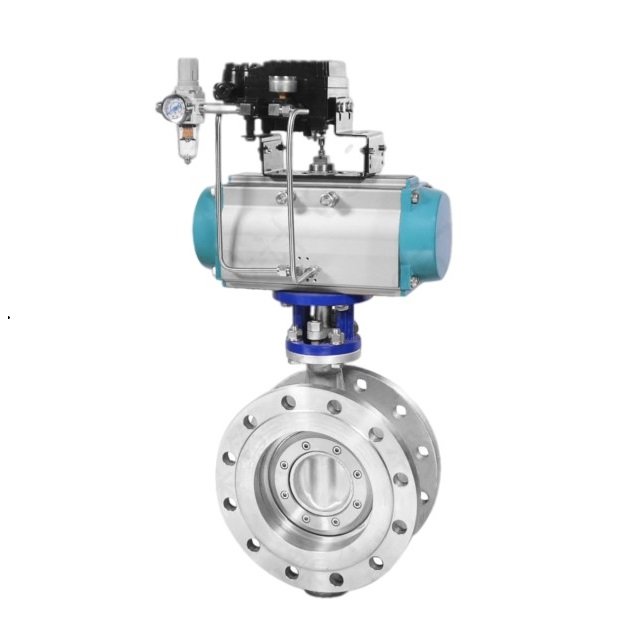
Adjustable pneumatic triple eccentric flange butterfly valve
TD643W Pneumatic Three Eccentric Flange Regulating Butterfly Valve
TD643W combines pneumatic actuation, flanged connections and a triple-offset butterfly disc arrangement. The series covers DN40-DN600, with PN16, Class150 and JIS10K pressure configurations selected with the corresponding connection and pressure-temperature requirements.
Which connection does TD643W use?
TD643W uses flanged connections. Replacing a wafer valve involves comparing mating flanges, face-to-face length, disc clearance and installation space, so the selected valve fits both the pipe connection and the surrounding equipment.
Sealing motion and flow control
Triple-offset geometry changes how the sealing surfaces separate during opening and approach each other near closure. Sealing load and running load vary over the stroke. For flow control, disc opening also changes the passage area and local pressure drop. Comparing capacity and differential pressure at the expected operating positions helps avoid concentrating normal operation near the closed end.
Pneumatic positioner and air supply
A pneumatic positioner compares the input command with actual shaft position and adjusts the actuator air supply to move the disc. Signal type, available air pressure and position feedback are matched to the control system. Spring-return and double-acting arrangements have different air-loss behaviour, which is selected alongside the torque needed across the valve travel.
More flange butterfly valves are availableflanged butterfly valves。
Frequently Asked Questions
Can this flanged valve replace an existing wafer butterfly valve?
Compare face-to-face length, mating flange details and disc clearance first. A flanged body may require different pipe spacing and bolting even when the nominal size matches.
Why does a large change in signal produce little change in flow?
Valve opening and flow depend on the installed capacity and pressure distribution. Check the actual shaft movement, operating differential pressure and whether normal flow lies in a useful portion of the disc travel.
What does a 4-20 mA positioner need from our air system?
It needs a compatible electrical input and an adequate air supply for the selected actuator. Supply pressure, air quality, flow capacity and the required air-loss action are specified together.
 Home
 Valve selection
 news information
 Contact us