


 简体中文
 Japanese
 Korean
 Russian
 繁体中文
 Español
Valve selection
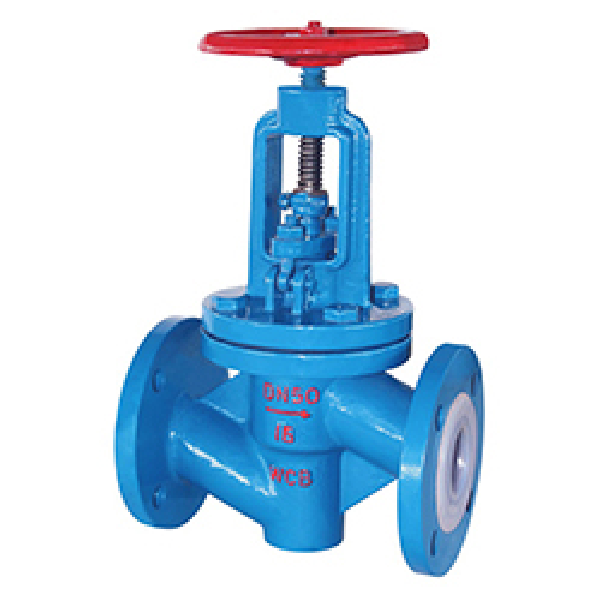
J41F46 cast steel fluoropolymer-lined flange globe valve (PFA/FEP optional)
J41F46 cast steel fluoropolymer-lined flange globe valve
J41F46 is composed of a WCB metal shell and a fluoroplastic lining. The handwheel drives the valve disc to rise and fall relative to the valve seat through the valve stem, achieving medium opening and closing. The shell bears the structural and connection loads, while the lining and sealing pair bear the medium contact conditions. Selection requires simultaneous verification of the metal structure, lining, and sealing components, and cannot be determined solely by the fluoropolymer name of the steel lining.
How to distinguish between PFA and FEP materials
F46 usually corresponds to FEP; PFA and PTFE are also different materials, and they cannot all be referred to as the same type of polytetrafluoroethylene. The materials for the valve body cavity, valve disc cover, valve seat, packing, and gasket should be listed item by item. Page PFA/FEP is a configuration option, which does not mean that the same valve body can use two types of lining at the same time, nor does it default to including other lining schemes such as PO.
Pressure, caliber, and temperature range
The existing caliber DN32-DN200, pressure PN16 or Class150 should be checked according to the grade and connection standards selected in the order. Two levels cannot be unconditionally equivalent; The actual work pressure also depends on temperature, shell material, lining, and sealing structure. High temperature, negative pressure, temperature cycling, crystallization or granular media need to be evaluated separately and cannot be directly applied to the temperature or negative pressure resistance values of other manufacturers.
Flow direction and usage boundary
The valve disc moves along the axis of the valve seat and requires sufficient axial sealing force when closed. The installation direction is based on the valve body arrow and confirmation diagram, and the rule of low in and high out cannot be applied to all configurations. Ordinary fluoropolymer-lined globe valves are mainly used for shut-off, and long-term throttling may cause local erosion, lining damage, and vibration; Continuous flow control should verify the professional adjustment plan.
Corrosive media and procurement data
Provide the medium name, concentration, impurities, temperature, design and working pressure, diameter, connection standards, and leakage requirements. For volatile, toxic or easily permeable media, it is also necessary to clarify the requirements for leakage, filling and inspection. The valve seat or lining is resistant to chemical corrosion, but it does not mean it can withstand all abrasion, thermal shock, or vacuum conditions.
Installation and maintenance precautions
Before installation, clean the pipeline and check the sealing surface of the lining, independent support of the pipeline, fastening and whether gaskets are used according to the specific lining structure instructions. Avoid excessive compression of the extension rod during operation; Improper closure should be checked for particle, limit, and seal damage. Before dismantling and inspection, isolate, relieve pressure, drain and replace, and collect and dispose of corrosive residue according to safety requirements.
Common problems in selection and procurement
Is it sufficient to quote only the concentration and DN when selecting J41F46 for the hydrochloric acid pipeline?
The maximum and normal temperature, design and working pressure, impurities, flow rate, and whether vacuum is applied are also required, and the flange standards and leakage requirements are clearly defined. These conditions jointly determine the PFA/FEP and sealing solution.
Can this fluoropolymer-lined globe valve be half opened for long-term flow control?
Ordinary fluoropolymer-lined globe valves should not be directly used as continuous regulating valves. The erosion and pressure drop caused by long-term throttling may damage the lining and sealing pair, and it is necessary to evaluate the structure of the regulating valve, Cv, and allowable pressure difference.
The old valve is also J41F46. Can the new one use the original flange gasket?
First check the flange standard, face distance, sealing surface, and lining end face structure, and then confirm the gasket and fastening requirements according to the installation instructions. The same model does not prove that the flange and lining details are completely consistent, and blind repetition of padding or force application is not allowed.
 Home
 Valve selection
 news information
 Contact us