


 简体中文
 Japanese
 Korean
 Russian
 繁体中文
 Español
Valve selection
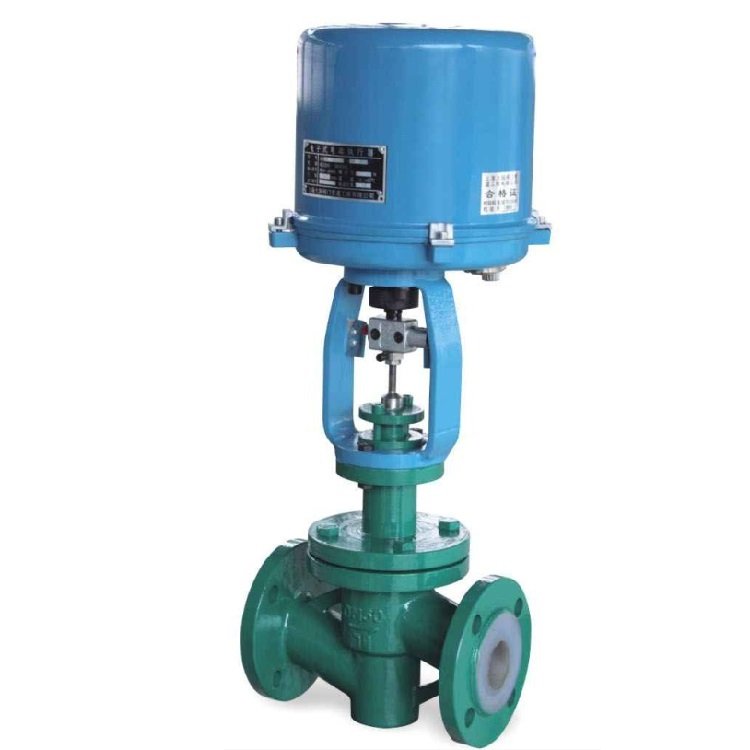
ZAZPF-16C electric fluoropolymer-lined single seat regulating valve (PFA/FEP/PTFE optional)
Product Specifications
| parameter | Configuration |
|---|---|
| series model | ZAZPF-16C |
| Valve Type | Electric fluoropolymer-lined single seat regulating valve |
| Nominal diameter series | DN20–DN200 |
| Nominal pressure | PN16 |
| Valve body structure | Direct single seat |
| Valve body material | WCB cast steel |
| Lining material | PTFE(F4)、FEP(F46)、PFA |
| connection method | flange connection |
| Valve core movement | linear stroke |
| actuator | Direct stroke electric actuator |
| Control method | Continuous valve position adjustment |
| control input | Configurable 4–20mA analog control |
| Feedback function | Configurable continuous valve position feedback |
| sealed structure | Matching with valve core, valve seat, and lining configuration |
| Main applications | Process flow regulation of corrosive medium pipelines |
Product Introduction
The ZAZPF-16C electric fluoropolymer-lined single seat regulating valve consists of a straight through single seat valve body, a fluoropolymer lining, a valve core and seat assembly, and a linear electric actuator. It is mainly used for continuous flow regulation in corrosive medium pipelines.
The valve adopts a design combining a metal pressure bearing shell and a fluoropolymer-lined liquid contact structure. The valve core is driven by an electric actuator to move axially along the valve stem, changing the flow area between the valve core and the valve seat, and cooperating with an automatic control system to adjust the medium flow rate.
The lining material can be selected from PTFE (F4), FEP (F46), or PFA. The three materials have different molding characteristics and application conditions, and should be selected based on the chemical properties, concentration, operating temperature, pressure, and lining structure of the medium.
1、 Direct single seat structure and adjustment principle
ZAZPF-16C adopts a straight through single seat throttling structure, and the main regulating part is formed between the valve core and the valve seat.
The electric actuator drives the valve stem to move according to the control instructions, causing the position of the valve core relative to the valve seat to change, resulting in a change in the flow cross-section.
The actual flow rate of a valve depends not only on its opening, but also on the properties of the medium, the pressure difference before and after the valve, and the flow characteristics of the valve internals.
When using a single seat structure, the valve core may experience unbalanced forces under working pressure differentials. Therefore, the output thrust of the actuator needs to meet the conditions of normal adjustment and maximum closing pressure difference, and cannot be selected solely based on the nominal diameter.
2、 Lining configuration for PFA, FEP, and PTFE
This series offers three fluoropolymer lining solutions.
PTFE (F4) lining
PTFE is polytetrafluoroethylene with good chemical inertness. The corresponding lining components can be manufactured by molding, sintering, and other suitable forming methods.
FEP (F46) lining
FEP is a perfluoroethylene propylene copolymer with the characteristic of melt processability, which can be used for the corresponding valve lining forming structure.
PFA lining
PFA is a fluorine-containing polymer that can be melt processed and applied to valves with corresponding lining forming and fixing designs.
The three materials cannot be mixed, and the working temperature and pressure of the valve cannot be determined solely by the material name.
When selecting, it is also necessary to clarify the actual materials of the valve core, valve seat, valve stem seal, and other liquid contact parts.
Special Topic on fluoropolymer-lined Valve Products
3、 Electric actuator and control configuration
ZAZPF-16C adopts a linear electric drive mode.
The electric actuator drives the valve stem to move axially through the transmission mechanism, causing the valve core to reach the specified adjustment position.
For pipelines that require continuous automatic control, adjustable electric actuators with analog input function can be optionally equipped, and valve position feedback should be configured according to the requirements of the control system.
The control input is used to transmit the target valve position, and the actual valve position feedback is used to reflect the position detection result. The two belong to different control functions.
The output thrust, stroke, power supply, and control interface of the actuator need to be matched with the valve specifications and control system.
For processes with interlocking requirements, the action requirements for losing control signals and losing main power should be clearly defined.
Electric control valve control and valve position feedback
4、 Flow coefficient and working pressure difference
The diameter of the fluoropolymer-lined regulating valve cannot be selected solely based on the pipeline size.
The selection should be based on the minimum, normal, and maximum flow rates, and the flow capacity under corresponding operating conditions should be calculated.
Under the same nominal diameter, different valve seat diameters and valve core structures may have different flow coefficients.
For larger throttling pressure differentials, it is also necessary to consider the risks of valve core stress, local flow velocity, cavitation, flash evaporation, and lining wear.
The nominal pressure PN16 belongs to the valve pressure rating identification, which does not equal the allowable closing pressure difference, nor can it be directly used as the allowable working pressure difference under the full opening of the regulating valve.
5、 Sealing Structure and Media Applicability
The lining of the valve body, the sealing of the valve seat, and the external sealing of the valve stem of the fluoropolymer-lined regulating valve play different roles.
Lining is mainly used to isolate the corresponding metal liquid contact surface; The fitting part of the valve core and seat affects the flow regulation and closing seal; The valve stem seal is used to limit the leakage of the medium along the valve stem.
When selecting, the compatibility between the medium and each liquid receiving material, as well as the corresponding sealing structure, should be confirmed separately.
For projects with clear requirements for closing leaks, acceptance requirements should be determined based on the combination of valve core and seat, working pressure difference, and specified test conditions.
6、 Installation and Debugging
Before installation, check the internal lining, flange sealing surface, valve core and seat, and connection parts of the valve to avoid damage to the lining caused by welding slag and hard impurities.
During installation, check the flange connection size, medium flow direction, and pipeline alignment to prevent additional pipeline stress from affecting the movement of the valve body and stem.
During debugging, the power supply, control signals, travel endpoints, actual action direction, valve position feedback, and limit protection should be checked.
When dealing with corrosive, toxic, or other hazardous media, isolation, pressure relief, and cleaning must be carried out according to on-site safety procedures before maintenance to confirm that the media and electrical hazards have been controlled.
7、 Selection and ordering
When purchasing ZAZPF-16C electric fluoropolymer-lined single seat regulating valve, the medium name, concentration, operating temperature, minimum and maximum flow rates, normal working pressure, maximum closing pressure difference, pipeline diameter, flange standard, lining material, and electric control requirements should be provided.
Fouten Flow Control (Jiangsu) Co., Ltd. can determine the valve structure, lining, and actuator combination based on the above conditions to form the corresponding product technical configuration.
Selection of fluoropolymer-lined Control Valve for Corrosive Media
Frequently Asked Questions FAQ
Can ZAZPF-16C choose PFA, FEP, and PTFE?
This series can choose PTFE (F4), FEP (F46) or PFA lining according to different working conditions. The molding process and applicable conditions of the three materials are different, and when selecting, it is necessary to simultaneously confirm the materials of the valve core, valve seat, and other liquid receiving parts.
Can the electric fluoropolymer-lined regulating valve be configured with 4–20mA control?
You can choose an electric actuator with corresponding analog input function. The control input, valve position feedback, and fault handling functions should be matched with the actual actuator control module and automation system.
Can PN16 fluoropolymer-lined regulating valve be directly used for 16bar differential pressure regulation?
It cannot be judged solely based on nominal pressure. The allowable adjustment pressure difference and maximum closing pressure difference of the valve also depend on the structure of the valve core and seat, flow conditions, and the output capacity of the actuator, which need to be separately calculated.
 Home
 Valve selection
 news information
 Contact us