


 简体中文
 Japanese
 Korean
 Russian
 繁体中文
 Español
Valve selection
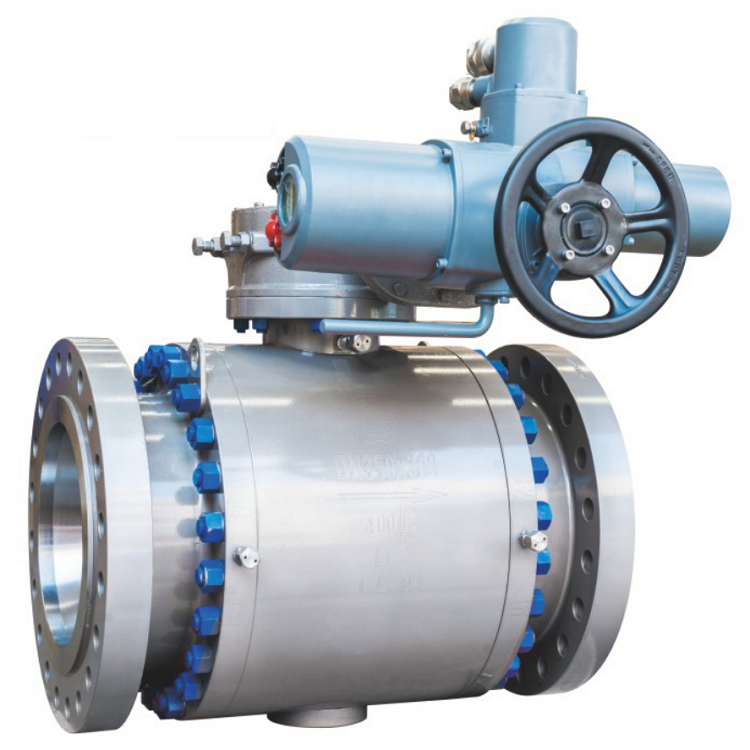
Electric American standard forged steel flange ball valve A105
Diagram A105 electric American standard forged steel flange ball valve
The illustrated valve uses an A105 forged-steel body and an electric actuator. A105 identifies a carbon-steel forging material; its suitability depends on the process medium and operating conditions. Other body materials are available for suitable configurations and should be specified when ordering.
Material customization and manufacturing forms
When selecting other carbon steel, stainless steel, or alloy materials, the material grade, product form, and applicable standards should be confirmed simultaneously. The casting grades WCB, CF8, CF8M, etc. cannot be mixed with the forging grades A105, F304, F316L, etc; If forging stainless steel is required, the corresponding forging standard should be used in the material list and material certification. CF8M cannot unconditionally replace the low-carbon requirements of 316L.
American standard pressure and flange
The pressure configuration of DQ947F-150LB should be confirmed according to Class150 and corresponding drawings. Other pressures and connection systems are customized and selected separately, and the grades of PN, Class, and JIS cannot be directly equated. The actual allowable pressure needs to be determined comprehensively based on temperature, valve body material, flange and valve seat ratings; The combination of caliber and pressure shall be implemented according to the project technical confirmation form.
Electric Drive and Procurement Information
Please provide the medium, temperature, upstream and downstream pressure, diameter, opening and closing frequency, power supply, and feedback requirements, and then calibrate the output torque and duty rating of the nuclear power installation. The switch type and the regulating type are not the same configuration, and the power-off action needs to be separately agreed upon. The quotation should also list the ball, valve stem, valve seat, packing, and inspection requirements, and should not only include the A105 valve body but also ignore the internal components.
Installation inspection
Verify flange standards, face spacing, sealing surfaces, and support conditions, confirm electric actuator space, grounding, and cable sealing. Before operation, check the valve position and feedback, isolate, release pressure and lock the power supply before maintenance, and do not forcefully pull the actuator or flange to the correct pipeline.
Common problems in selection and procurement
The photo is A105. Can it be made of stainless steel or other alloys?
Other materials can be customized according to the medium and design conditions. Please clarify the valve body, sphere, valve stem, and sealing materials, as well as whether forging is required. The quotation and material certification should be consistent with the final supply, and the material cannot be judged solely based on photos.
Can we only write CF8M on the order for forging 316L?
No. CF8M belongs to the casting grade and is not synonymous with low-carbon 316L. The forging of low-carbon stainless steel should specify the corresponding forging grade and material standards, and verify the material certification, heat treatment, and project inspection requirements.
Can the original electric actuator be used for purchasing Class150 ball valves of the same caliber?
It is also necessary to verify the valve stem and upper flange interface, operating torque, stroke, limit, power supply, and feedback. The same pressure and diameter do not prove that the electric actuator capability is the same as the installation interface. Matching verification should be completed before use.
 Home
 Valve selection
 news information
 Contact us