


 简体中文
 Japanese
 Korean
 Russian
 繁体中文
 Español
Valve selection
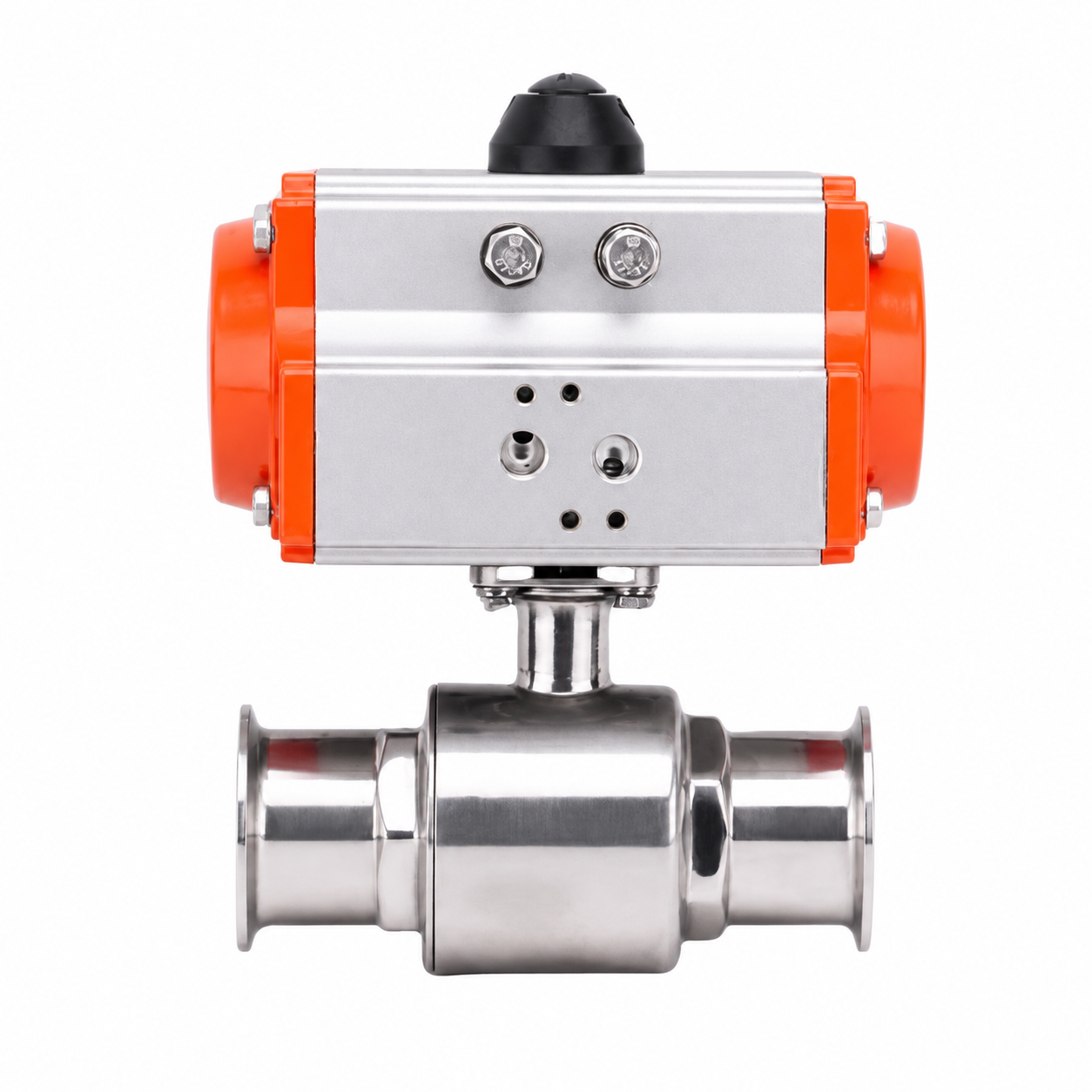
Pneumatic Sanitary Quick-Install Ball Valve Q681F-10P
| Specification | Value |
|---|---|
| Model number | Q681F-10P |
| Specification and caliber | DN15-DN100 |
| Pressure level | PN10 |
| Material | CF8 stainless steel configuration, other materials confirmed as per list |
| Product Features | Matching quick-install interfaces, traceability of contact materials, cleaning and fault position verification |
Q681F-10P pneumatic sanitary quick-install ball valve is used for clean pipelines that require easy disassembly and automatic opening and closing. The quick-install port solves interface and maintenance convenience, but the sanitary applicability still depends on the contact materials, valve cavity, seat, surface, and cleaning procedures, and cannot be determined solely by polished appearance.
Product Parameters
| Product Model | Q681F-10P |
|---|---|
| Structure Type | Quick-install port ball valve; valve cavity filling and draining structure confirmed according to supply drawings |
| Nominal Diameter | DN15-DN100 |
| Pressure Rating | PN10 |
| Body Material | CF8 stainless steel configuration, other materials confirmed as per list |
| Sealing Type | Food-grade PTFE soft seal |
| Actuation Method | Double-acting or single-acting pneumatic actuator |
| Applicable Temperature | Determined by seat, interface seal, and complete cleaning conditions |
| Applicable Media | Food liquids, beverages, pure water, and clean media |
Quick-install Standards and Pipe Diameters Must Match
The outer diameter, wall thickness, and clamp end dimensions of sanitary pipes should be consistent with on-site standards. Reporting only DN is insufficient to confirm the compatibility of clamps, gaskets, and pipes; in-situ replacements also require measuring face distances.
Interfaces should be aligned and assembled according to regulations, checking gasket positioning and compression, without forcing misaligned pipes to align using clamps. Order should include port dimension drawings and usage standards to reduce issues where interfaces are close but cannot be securely assembled.
Do Not Mix 316 and 316L Material Grades
The body, ball, end, and sealing materials should be clearly listed. CF8M typically corresponds to the 316 casting system, while CF3M typically corresponds to the 316L casting system; actual manufacturing forms and material certifications still need to be verified.
This configuration uses CF8 material. If 316L is required, the materials for the body, ball, and end should be separately listed with specific grades and manufacturing forms; CF8M and low-carbon 316L are not the same material grade.
Cleaning Requirements Depend on Actual Valve Cavity Structure
Standard ball valves may have cavity retention; when low retention or specific draining performance is needed, confirm the ball cavity filling, seat structure, installation direction, and verification methods. The sanitary grade name and quick-install port do not prove cleaning effectiveness.
When comparing quotes, include surface requirements, contact materials, and valve cavity design in the same list, rather than selecting solely based on the degree of external polishing.
Cleaning and Sterilization Conditions Must Be Independently Verified
List cleaning agents, concentrations, temperatures, durations, pressures, and circulation frequencies, then verify the applicable conditions for the seat, gaskets, and the entire valve. Short-term temperature resistance of materials does not represent long-term cycling life.
When CIP or SIP is required, specific configurations and verification requirements should be clearly defined; it cannot be assumed that steam sterilization is allowed based solely on quick-install structure, nor can temperatures be arbitrarily increased to improve cleaning.
Pneumatic Configuration Serves Production and Cleaning Logic
Before selecting single-acting or double-acting, determine the pathways that need to be retained during normal operation and after loss of air. Solenoid valves, feedback, and control units should match the automatic cleaning steps to avoid switching media before the valve is in position.
Check the air source pressure and exhaust during operation, then adjust throttling; too rapid action may cause pressure shocks, and the fastest opening and closing should not be the only acceptance criterion.
Check Interfaces and Seats Simultaneously After Assembly
External leaks at joints, external leaks at the stem, and internal leaks after closure should be handled separately. First verify the clamps and gaskets, then check the actual closed position of the ball and the state of the seat.
The first round of debugging should use approved processes to verify actions, feedback, and leaks, confirming that installation has not transferred pipeline loads to the valve body. Before disassembly, ensure safety isolation, depressurization, and control of cylinder energy storage; do not assume that there is no residual liquid inside just because cleaning has ended.
Spare Parts and Maintenance Records Must Be Traceable
Record sealing materials, spare part numbers, batches, and cleaning cycles. After replacing seals, check assembly according to supply drawings and re-verify shut-off and cleaning requirements; gaskets or seats of similar dimensions should not be mixed directly.
If maintenance intervals suddenly shorten, compare whether cleaning formulas, temperatures, pressures, and action frequencies have changed, while also checking assembly and mechanical conditions, rather than just replacing with harder seals.
Common Questions in Procurement and On-Site Use
Can a quick-install interface definitely be used for CIP or SIP?
Not necessarily. It is also necessary to verify the valve cavity, seat, gaskets, and complete cleaning and sterilization conditions, and to complete the verification required by the project.
Easy disassembly of the interface does not automatically satisfy sanitary processes.
Is CF8M material certification directly acceptable for project requirements of 316L?
Do not consider the two as the same grade. Verify according to project material standards, manufacturing forms, and material certifications, and clarify the materials for the body, ball, and end before acceptance.
Why do gaskets of the same diameter still leak when installed?
The actual port standards and gasket cross-sections may differ, and alignment and centering with flanges should also be checked. After verifying matching dimensions, assemble according to regulations, and do not rely on excessive tightening of clamps to resolve issues.
What information is needed when placing an order?
Provide sanitary pipe size standards, production and cleaning media, temperature and pressure cycles, surface, and draining requirements. Confirm contact material grades, valve cavity designs, clamp gaskets, and document delivery item by item; if 316L or special sanitary verification is required, it should be clearly stated at the time of ordering, without vague material combinations as substitutes.
For more similar structures, please refer to the pneumatic valve section, using the same operating conditions and acceptance requirements for comparison.
The images are for reference of shape and drive structure, not for proving specific materials, pressure ratings, or internal valve cores; actual configurations should be verified according to confirmed supply drawings.
 Home
 Valve selection
 news information
 Contact us