


 简体中文
 Japanese
 Korean
 Russian
 繁体中文
 Español
Valve selection
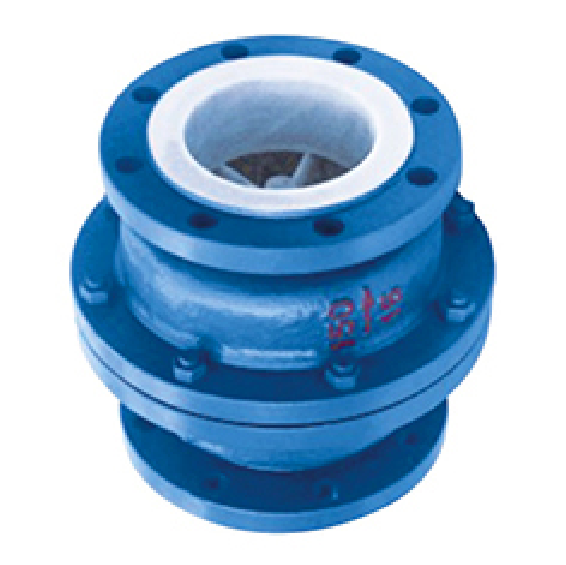
Vertical Lift Type Cast Steel PTFE Lined Flanged Check Valve
| Specification | Value |
|---|---|
| Model number | H42F46 |
| Specification and caliber | DN50-DN800 |
| Pressure level | PN16/CLASS 150 |
| Material | WCB&PFA/FEP |
| Product Features | Steel Lined PTFE |
H42F46 Vertical Lift PTFE Flanged Check Valve
The H42F46 vertical lift PTFE flanged check valve features a lift type disc and flange connection structure, used for controlling unidirectional flow of media in pipelines. The valve relies on the pressure differential of the media to open the disc, and when the forward flow decreases or a backflow trend occurs, the disc closes towards the seat to limit media backflow. This product uses a WCB cast steel valve body, with lining materials including PFA and FEP (F46).
How Does the Lift Check Structure Work?
The disc of the lift check valve moves along its guiding structure, with the opening and closing states influenced by media flow and the internal structure of the valve. The actual opening pressure differential, seating performance, and closing leakage depend on the weight of the disc, guiding clearance, sealing pair, and specific design, and cannot be solely determined based on the H42F46 model to predict fixed opening pressure, zero leakage level, or complete elimination of water hammer.
How to Choose WCB Valve Body and PFA, FEP Lining?
The WCB cast steel valve body bears the structural pressure and flange connection, while the fluoroplastic lining separates the corresponding metal surface from the media. PFA, FEP (F46), and PTFE (F4) belong to different materials, each with specific chemical resistance and processing structure conditions. When selecting the lining, compare the media concentration, temperature, pressure, and particle conditions; the contact materials of the disc, seat, and flange sealing surface collectively affect the corrosion resistance and sealing performance of the entire valve.
H42F46 Diameter, Pressure, and Connection Parameters
| Selection Item | Product Parameters |
|---|---|
| Product Model | H42F46 |
| Valve Structure | Vertical Lift Check Valve |
| Nominal Diameter | DN50âDN800 |
| Pressure Rating | PN16, Class 150 (confirmed according to corresponding flange standards) |
| Valve Body Material | WCB Cast Steel |
| Lining Material | Options of PFA, FEP (F46) |
| Connection Type | Flange |
PN16 and Class 150 belong to different pressure and flange standard systems and cannot be directly equated. The actual diameter, pressure rating, flange size, and lining material combinations should be confirmed according to the corresponding product drawings and ordering technical requirements.
What Should Be Noted About Installation Direction and Operating Conditions?
Before installing the H42F46, verify the flow direction markings on the valve body, corresponding structural drawings, paired flange sizes, and allowable installation positions. The vertical lift structure should not be directly interpreted as being installable in any horizontal or vertical pipeline. The evaluation of the disc action should also consider flow rate, media density, opening and closing pressure differential, and system pressure fluctuations to avoid affecting closing performance due to mismatched installation direction, insufficient flow, or frequent fluctuations.
What Information Is Needed for Procurement and Maintenance?
When procuring, clarify the media name and concentration, design temperature, working pressure, DN, flange standards, PFA or FEP lining requirements, installation direction, and whether there are particles, negative pressure, and significant pressure fluctuations. During maintenance, after isolating the pipeline, relieving pressure, and completing necessary media disposal, check for wear or damage on the disc movement, guiding parts, sealing pairs, and lining, following the specific disassembly sequence according to the corresponding product structural documentation.
Selection and Usage Information
Verify flow direction and installation position according to the valve structure, and refer to check valve installation direction to confirm actual selection and installation information. Other similar structures can be found at lined valves.
Common Questions About H42F46 Vertical Lift PTFE Check Valve
Can H42F46 Be Installed Directly on Horizontal Pipelines?
It cannot be assumed that it can be installed horizontally based solely on the model. The guiding structure of the disc, allowable flow direction, and installation drawings should be verified before confirming suitability for the site pipeline direction.
What Conditions Are Needed to Choose PFA or FEP Lining?
At least the media name and concentration, working temperature, pressure, particle conditions, and negative pressure conditions are needed. PFA and FEP (F46) are not the same material, and specific compatibility also depends on the lining structure and other contact parts.
Can PN16 and Class 150 H42F46 Be Interchanged Directly?
They cannot be directly interchanged. The paired flange standards, bolt hole sizes, sealing surfaces, structural lengths, and the allowable pressure of the selected materials at design temperature should be verified separately.
 Home
 Valve selection
 news information
 Contact us