


 简体中文
 Japanese
 Korean
 Russian
 繁体中文
 Español
Valve selection
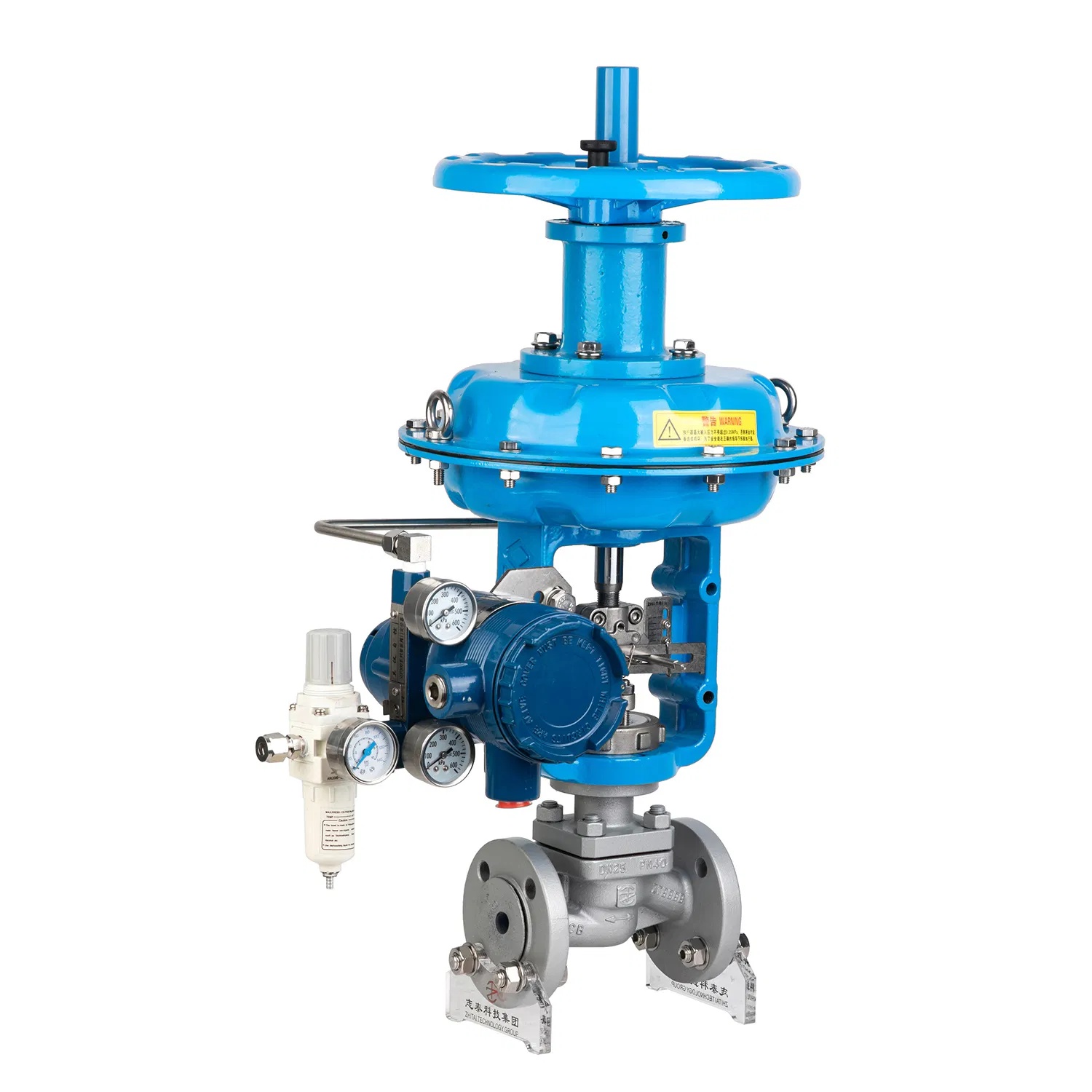
Pneumatic dual seat regulating valve ZJHN-16C
Pneumatic Double Seat Regulating Valve ZJHN-16C Product Description
The ZJHN-16C pneumatic double seat regulating valve adopts a straight through double seat, up and down guide, and pneumatic diaphragm actuator, which is used for continuous regulation of industrial pipeline flow and related process variables. This model follows the configuration instructions for PN16 and WCB carbon steel valve bodies. The double seat structure changes the flow area through the cooperation of two valve cores and valve seats. When selecting, attention should be paid to flow capacity, working pressure difference, allowable leakage, and actuator output thrust. It cannot be determined that the double seat structure is suitable for all tight cutting conditions just because of it.
Product Specifications
| Product Model | ZJHN-16C |
| Structural form | Straight through double seat, up and down guide, flange connection |
| Nominal Diameter | DN25-DN200 |
| pressure rating | PN16 |
| Valve body material | WCB |
| sealing form | Metal seal, allowing leakage level to be confirmed according to operating conditions |
| Drive Type | Multi spring thin film pneumatic actuator |
| Applicable temperature | -17℃ to 450℃, configured according to packing and valve cover |
| Applicable Medium | Steam, gas, water, oil and non crystalline process media |
Structure and working mode
ZJHN-16C adopts straight double seat, upper and lower guide, and flange connection. The multi spring thin film pneumatic actuator converts the air pressure into a linear thrust of the valve stem, driving the dual valve core to move and adjust by changing the flow area of the two valve seat positions. The double seat structure can reduce the unbalanced force of the medium acting on the valve core in the corresponding design, but it does not automatically reach a certain leakage level. This valve is a two-way regulating structure and does not undertake the function of multi way reversing. Pneumatic actuators should be selected according to the required thrust, stroke, air source, and safety requirements for loss of air.
Caliber pressure and material
The nominal pressure of this ZJHN-16C is PN16, and the valve body material is WCB cast carbon steel. It adopts a straight through double seat and metal sealing structure. The working temperature, allowable pressure difference, and leakage closure requirements should correspond to the actual valve core, valve seat, valve stem packing, and actuator configuration. For steam, easily crystallizable or particulate media, the material of valve internals, erosion conditions, and operating frequency should also be checked. Other pressure or stainless steel configurations belong to series options that require specific model specifications, and cannot be directly mixed with ZJHN-16C specific parameters.
Product Features and Applications
The dual seat structure of ZJHN-16C is suitable for continuous control circuits that require selection based on flow capacity and actuator thrust. When using thermal systems, chemical utilities, and metallurgical pipelines, capacity calculations should be based on actual flow rates, pressure differentials, and valve core characteristics. The sealing performance of a single seat valve should not be directly applied, as the closure leakage requirements of a double seat valve need to be verified separately. When used in hazardous areas, it is necessary to verify whether the electrical accessories such as locators, solenoid valves, limit switches, etc. equipped with pneumatic actuators match the on-site explosion-proof conditions.
Installation and commissioning
Before installation, the valve nameplate, specified flow direction, flange standard, and structural dimensions should be checked, and any debris inside the pipe should be removed to ensure that the matching flanges are aligned. Space for disassembly and assembly should be reserved around the pneumatic actuator, and the instrument air source should meet the pressure and quality requirements of the actuator and accessories. During debugging, check the air opening or closing action, valve stem stroke, locator feedback, safety position and interlocking requirements for air loss, and then check the valve core action, sealing of connection parts, and actual operating status.
operation and maintenance
During operation, attention should be paid to instrument air supply, valve position feedback, working pressure difference, abnormal noise, and external leakage. When there is a delay in action or valve position deviation, the filter pressure reducing device, locator, pneumatic diaphragm actuator, and valve stem drive should be checked, and then the status of the two valve cores, valve seats, and packing should be checked. When the double seat sealing pair is worn, the contact and sealing conditions of the upper and lower valve seats should be checked separately. Before maintenance, it is necessary to isolate the medium, relieve pressure, and release residual energy such as gas source. After maintenance, complete the travel and sealing inspection as required.
Q&A on Selection of Pneumatic Double Seat Regulating Valve
Can the single seat valve be directly replaced when ZJHN-16C needs to be tightly shut off?
Cannot simply replace with the same DN. The internal components and sealing paths of dual seat and single seat valves are different, and the allowable leakage requirements should be clearly defined, followed by checking the flow coefficient, design pressure difference, actuator output force, and installation dimensions.
Do I need to confirm the input signal and valve position feedback when connecting ZJHN-16C to DCS?
It is necessary to confirm the control input, valve position feedback, power or gas source conditions, interfaces, and fault location separately. Input and feedback are not the same function, and it cannot be assumed that all analog signals or communication protocols are fully equipped based solely on the name "regulating type".
ZJHN-16C needs to be turned off after gas interruption. How should the actuator be configured?
The safety position required for the process in case of gas loss should be clarified first, and then the single or double acting scheme, output force or torque, and accessory circuit should be checked. You cannot select cylinders based solely on valve diameter, nor can you assume that all pneumatic configurations will close when there is a loss of air.
Order Information List
It is recommended to provide information on the medium name and composition, working and design temperature, pressure before and after the valve, normal maximum and minimum flow rates, allowable leakage requirements, flange standards, instrument air supply, control signals, gas opening and closing methods, and safe location for gas loss. Fouten Flow Control (Jiangsu) Co., Ltd. can be used to verify the dual seat valve core, valve seat material, pneumatic diaphragm actuator, and control accessory configuration of ZJHN-16C.
 Home
 Valve selection
 news information
 Contact us