


 简体中文
 Japanese
 Korean
 Russian
 繁体中文
 Español
Valve selection
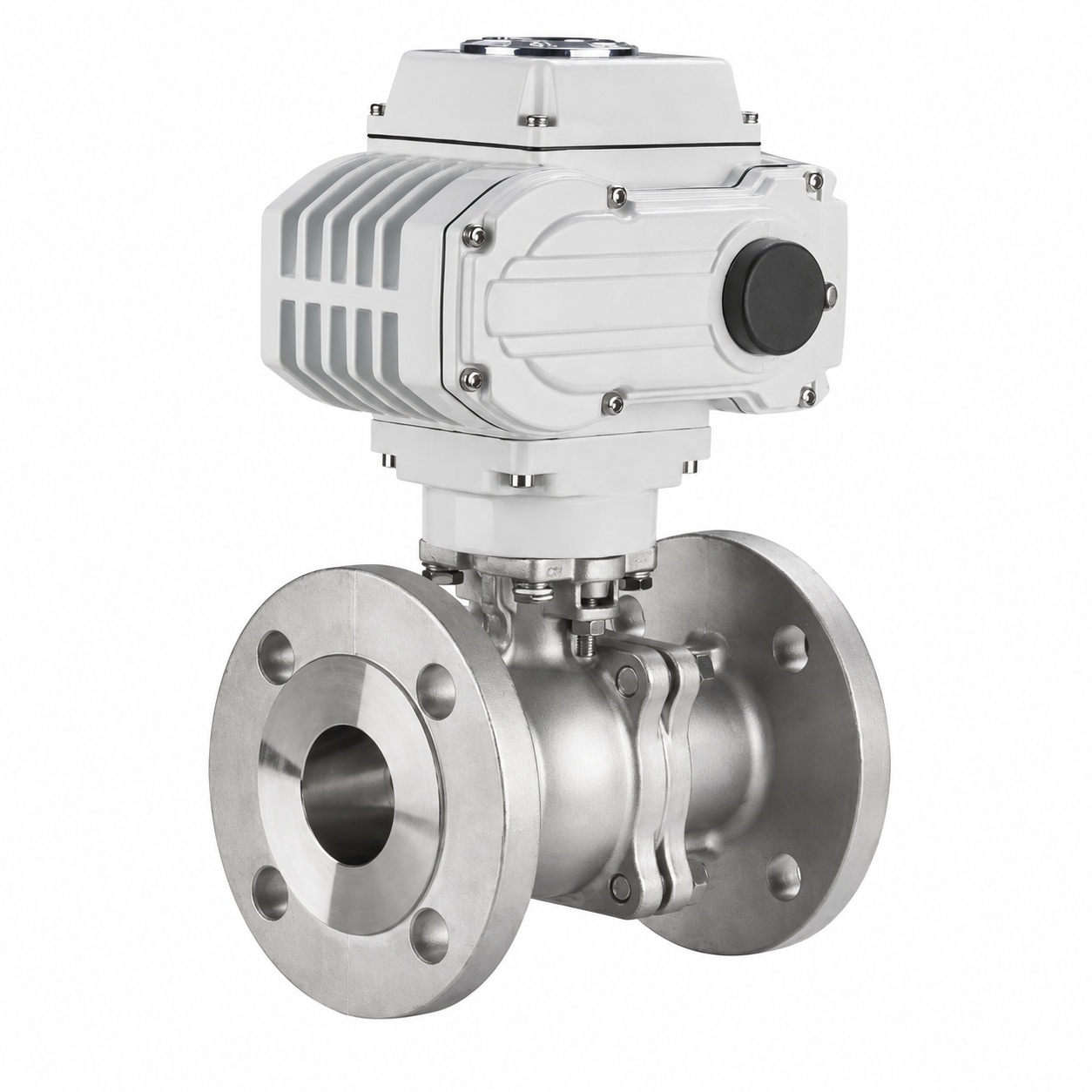
Electric stainless steel flange ball valve Q941F-40R
Q941F-40R electric stainless steel flange ball valve is used for process pipelines that require remote opening and closing. When purchasing, first clarify the maximum closing pressure difference, medium, and operating frequency, and then determine the valve seat and electric actuator configuration; PN40 is a pressure rating and cannot be understood as allowing the same pressure to work at any temperature.
Product Specifications
| Product Model | Q941F-40R |
|---|---|
| Structural form | Two piece stainless steel flange full bore ball valve structure |
| Nominal Diameter | DN15-DN150 |
| pressure rating | PN40 |
| Valve body material | CF8M stainless steel |
| sealing form | Enhance PTFE soft seal |
| Drive Type | Electric switch or regulating actuator |
| Applicable temperature | Determine based on the valve seat, packing, and overall valve temperature pressure curve |
| Applicable Medium | Water, gas, light oil, and general corrosive media |
First check the flange, and then confirm if it can be replaced in place
The original pipeline is of DN specification, and the flange standard, pressure rating, sealing surface, and installation surface distance should also be checked. Take a picture of the old valve nameplate and measure the distance between the two ends to confirm the actual size of the bolt hole and the pipeline.
The shape of the actuator, manual operation position, and cable entry also require space, and installation cannot be arranged solely based on the valve body photo. When the pipeline is misaligned, first correct the support and interface, and do not use bolts to pull the skewed pipeline onto the valve.
How to watch PN40 together with working temperature
PN40 indicates the pressure rating, but actual use is also limited by the material, valve seat, packing, and temperature. CF8M is a valve body material grade, not a commitment to resist all corrosive media.
Provide the composition, impurities, and design temperature of the medium for the supplier to verify the complete contact material and temperature pressure curve; Especially, cleaning, thermal cycling, and abnormal working conditions should be included as conditions, and a sealed temperature resistance data should not be applied to the entire series.
Switch control and continuous adjustment are not the same configuration
The switch type mainly performs fully open and fully closed; Continuous regulation requires corresponding control interfaces, feedback, and electric actuator working mechanisms, and the valve structure should also be suitable for the required operating conditions. When a regular ball valve is stopped at a small opening for a long time, the pressure difference, flow rate, and particle erosion should be evaluated. It is not enough to simply connect analog signals to determine that the entire valve is suitable for continuous adjustment.
Clearly state the control tasks and action frequencies in the procurement table for a more complete configuration.
The torque should cover the working conditions and also protect the valve stem
Closing the pressure differential, seat friction, and adhesion after deactivation will affect the required torque. The selection of electric actuator should use the torque data and allowable load of the current valve, and cannot be based solely on the diameter or the maximum output.
Record the angle, direction, pressure difference, and alarm code during torque alarm, and then check the mechanical and electrical status. Repeatedly resetting or increasing the protection value may temporarily restore the action, but leave the valve stem and seal at risk of damage.
Clean the pipe before installation and verify the true position after installation
Before installation, remove welding slag, sealing tape, and hard particles to avoid entering between the ball and valve seat during the first action. Keep the interface coaxial and set appropriate supports. The actuator cannot be used as a lifting or connecting point for force application.
Perform controlled jog according to the supply procedure, compare on-site indication, actual sphere travel, and remote feedback; The control cabinet display is in place and cannot replace the actual mechanical position and seal inspection.
First debugging to separate and verify the three actions
Verify the status of normal switches, loss of control signals, and power interruption separately, and then confirm what actions will be taken when power is restored. Ordinary electric actuator does not necessarily automatically return to a safe position, and the fault reset capability should be based on the selected configuration instructions.
Wiring and protection checks should be carried out by qualified personnel. Due to different power supply systems, the three-phase phase sequence requirements should not be applied to all electric actuators. Record travel time and feedback as a benchmark for subsequent maintenance.
Different inspection paths should be used for internal and external leaks
The flange or valve stem leakage should be located on the specific joint surface; If there is still traffic after shutdown, first check the shutdown position, pressure difference, and agreed leakage indicators. The test results of water, gas, and actual media cannot be compared unconditionally.
Before disassembly, isolate, relieve pressure, and cut off energy. Check for foreign objects and sealing surfaces, and select replacement parts according to the corresponding drawings. Verify the actions, feedback, and sealing after repair, rather than just confirming that the alarm light is off.
Common problems in procurement and on-site use
The old valve is also PN40. Can the new valve be replaced directly?
First check the flange standard, face distance, sealing surface, and actual material configuration, and then look at the electric actuator space and interface. The same pressure level cannot prove the compatibility of the size or control system. The replacement plan will be determined after measurement.
Will this electric ball valve automatically close after a power outage?
It depends on the electrical configuration. The normal configuration may stop or maintain the current mechanical position, and a reset plan should be clearly defined when power-off shutdown is required, and verified under the testing conditions allowed by the actual working conditions.
Can the electric actuator torque be increased if the high-pressure pipeline is not tightly closed?
First check the true position, foreign objects, and valve seat status, and then verify the allowable torque and test conditions. Without proper calculation, increasing the output may damage the transmission components, and greater closing force cannot be used as a substitute for troubleshooting.
What needs to be provided when placing an order
Please attach the list of media, normal and maximum pressure difference, design temperature, flange size, power supply and control signals for inquiry. Request confirmation of valve body and seat materials, torque data, action time, fault status, and delivery documents; The installation photos only help to determine the space and cannot prove the material or pressure level of the physical object.
More similar structures can be viewedElectric Valve ColumnWhen comparing, use the same operating conditions and acceptance requirements.
The accompanying drawings are for reference in terms of appearance and drive structure, and are not intended to prove specific materials, pressure ratings, or internal valve cores; Verify the physical configuration according to the confirmed supply drawings.


 Home
 Valve selection
 news information
 Contact us