


 简体中文
 Japanese
 Korean
 Russian
 繁体中文
 Español
Valve selection
What is required to close an electric valve when it is powered off? Energy storage, action load and fault safety
The electric valve needs to actively close after a power outage, requiring corresponding energy and control solutions. After a power outage, there is no new energy source for the operation of a regular motor; The inquiry should first specify the fault target and load, and then confirm the actual energy storage or other implementation methods.
Maintain original position and automatic reset, different goals
Maintaining the current opening after a power outage and reaching fully open or fully closed after a power outage are two different design goals. Which one is safer depends on the process risk, not all equipment should automatically shut down. The disappearance of power supply, control signal, and communication interruption may also trigger different logics. The inquiry should describe each type of fault separately, as well as the location and action time allowed by the process, to avoid treating power-off shutdown as a standard option that does not require conditions.
The energy storage capacity needs to correspond to the complete operational load
The capacity of batteries, capacitors, or mechanical energy storage solutions should cover the corresponding stroke, valve load, and environmental conditions. Rotating once without load does not prove that the same action can still be completed under the maximum closing pressure difference or low temperature environment. The available energy storage may also change over time and status, therefore maintenance and status monitoring plans are required. We cannot only compare battery capacity numbers, nor can we assume that all electric ball valves already come with this module.
Manual mechanisms and self-locking do not provide the same capability
The manual operation device provides backup operation mode for personnel, not automatic fault reset energy. Transmission self-locking may help maintain position and will not automatically produce a closing action. The interlocking and operating conditions for manual automatic conversion should be matched with the actuator, and the presence of a handwheel cannot be used as an acceptance basis for automatic reset. Only by listing these functions separately can we determine whether the project needs automatic reset, position maintenance, or manual emergency response.
Acceptance checks both ensure proper inspection and the necessary sealing
Fault testing should adopt project approved conditions, comparing real action loads, energy storage status, time, and final position. Reaching the closed position does not alone prove that the sealing requirements have been met. The delivery documents should specify the energy storage scheme, allowable load, status monitoring, maintenance, and failure notification. The safety interlock project also requires system level verification, and it cannot be claimed that a certain safety level has been obtained by simply equipping a regular actuator with a battery.
Comparison of selection information
| Information | Corresponding focus points |
|---|---|
| Fault scenario | Distinguish between power outage, signal loss, and communication interruption |
| Energy capacity | Check the complete travel according to the most unfavorable load |
| Acceptance object | Separate location, action time, and sealing |
Corresponding products and selection entrance
Power off shutdown is a verifiable fault action plan, not an inherent attribute of the electric valve name. Only by separating energy, load, logic, and acceptance can we compare the true capabilities of different solutions.
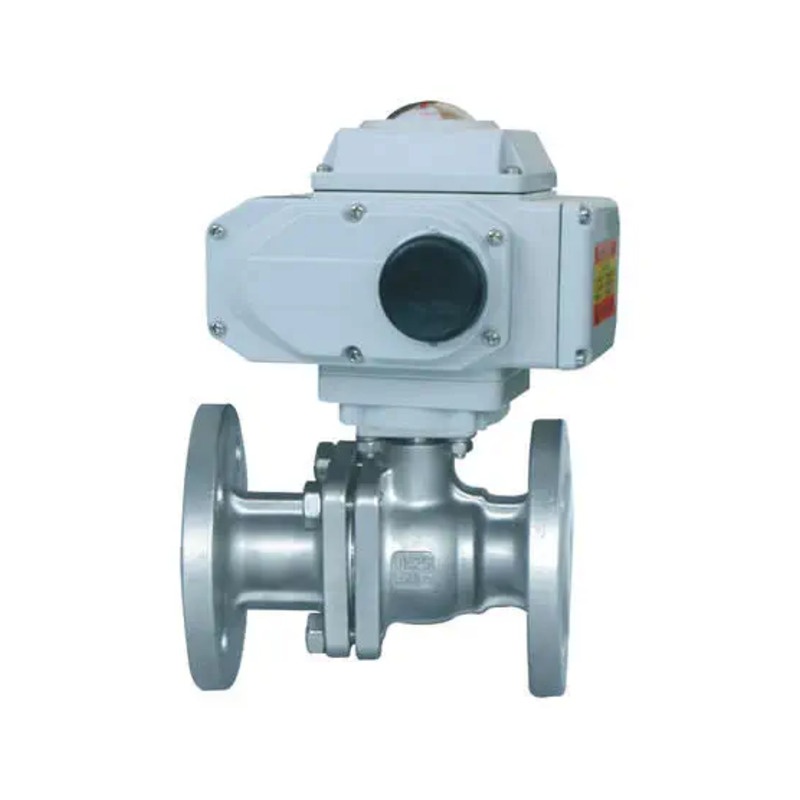
Related structures can be combinedElectric flange ball valve Q941F-16CUnderstanding of specific product information. See more similar directionsElectric Valve Product Column。
Common customer questions
Q941F electric ball valve with handwheel, does it automatically close when power is cut off?
No. The handwheel is a manual backup operating device, and automatic reset requires corresponding energy and control design.
Can adding a backup battery ensure that it closes under all pressure differentials?
No. Energy storage and actuator output need to cover actual loads and environments, and be validated according to project conditions.
Should all processes be closed after a power outage?
No, the location of the fault is determined by process risk and system design, and may also require full opening or holding.
 Home
 Valve selection
 news information
 Contact us