


 简体中文
 Japanese
 Korean
 Russian
 繁体中文
 Español
Valve selection
Why is it necessary to check the closing direction and torque curve of the pneumatic triple eccentric butterfly valve?
The endpoint and load of the three eccentric butterfly valve should be confirmed according to the specific structure. The customer provides the actual pressure difference direction, temperature, and shut-off requirements, and then checks the shut-off direction and torque curve to avoid comparing solutions using only one maximum torque number.
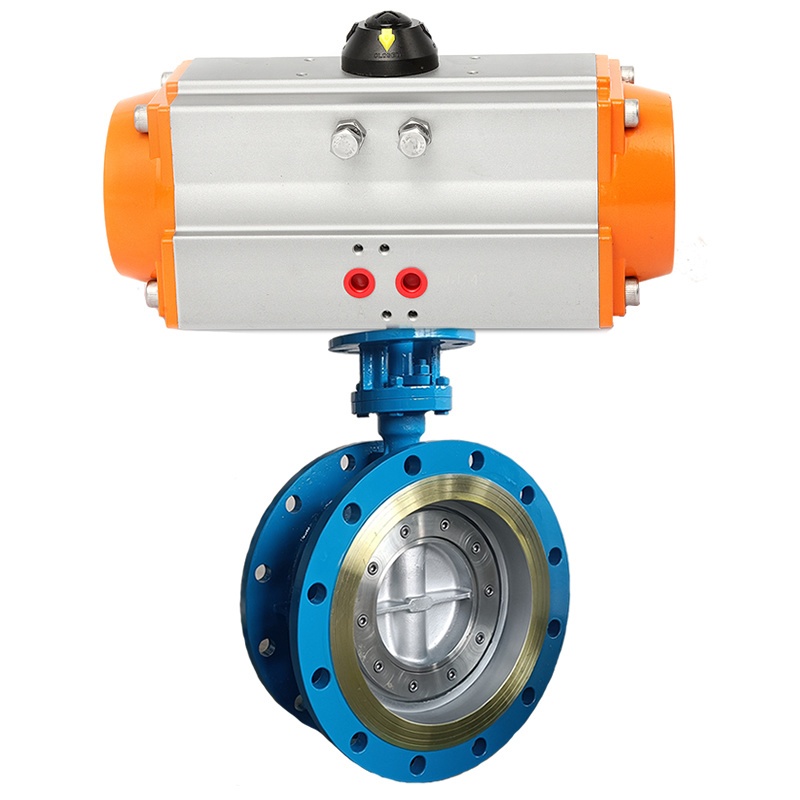
Structural geometry changes the contact mode, but does not cancel the load
The three eccentric design controls the movement of the butterfly plate and the sealing contact process through the geometric relationship between the axis and the sealing surface. It has a different contact method with the centerline rubber seat butterfly valve, but still needs to be driven to overcome fluid and sealing effects. The supplier should explain the sealing structure and closing requirements of the finished product, and cannot derive the fixed torque from the three eccentric names. Using different seals with the same diameter may also result in different loads.
The flow direction and back pressure should be compared according to the rated conditions of the finished product
The effects of forward and reverse pressure on the contact between the butterfly plate and the seal may be different. The product can have corresponding bidirectional capabilities, but it must be supported by specific structure, allowable pressure difference, and acceptance results, and not automatically established by the model name. When there is bidirectional flow or back pressure after valve closure in the project, the requirements for both directions should be listed separately. The results of ordinary forward tests should not be directly used as proof of all reverse operating conditions.
The actuator output should cover key positions
The available output of the rotary cylinder may not be the same at different angles, and the output of the spring reset will also vary with the angle. The load of the valve in the closed contact, open disengagement, and intermediate position needs to correspond to it. There is only one pair of maximum values, making it difficult to determine whether the most unfavorable position matches. To increase the cylinder capacity, it is necessary to check the allowable load of the valve stem and connection. The larger the torque margin, the safer it is.
Temperature and operating conditions need to be entered into the data table together
Hot sealing and component deformation, actual pressure difference, operating frequency, and prolonged shutdown can all affect load evaluation. The valve fluid temperature should also be separated from the surrounding environmental conditions of the cylinder and accessories. Inquiry should provide directional working conditions, sealing requirements, minimum gas source, key position torque, and action window. When delivering, compare the drive and valve data under the same conditions to avoid mistaking the cold no-load switch for the hot pressurized capacity.
Comparison of selection information
| Information | Corresponding focus points |
|---|---|
| Sealing direction | Column forward, reverse, and allowable pressure difference |
| Output curve | Comparing key perspectives, not just looking at peak values |
| working conditions | Indicate the hot state, shutdown, and operating frequency |
Corresponding products and selection entrance
When selecting the drive, placing the direction, angle, and operating conditions on the same load curve can explain why the same DN requires different cylinders. This can not only avoid insufficient capacity, but also prevent excessive output from damaging the valve stem and seal.
Related structures can be combinedPneumatic triple eccentric butterfly valve D643H-16CUnderstanding of specific product information. See more similar directionsPneumatic Valve Product Column。
Common customer questions
Can D643H triple eccentric butterfly valves be sealed in both directions under the same pressure?
It cannot be judged uniformly by the three eccentric names. The rated conditions and sealing requirements for each direction of the corresponding finished product should be obtained.
Is it enough for the maximum torque of the cylinder to be greater than the maximum torque of the valve?
It is also necessary to compare the available output, lowest gas source, and reset direction of each key angle, as peaks may appear at different positions.
Can it prove that the no-load action is normal and the pressure closing is normal?
No. Additional loads generated by pressure, hot state, and sealed contact need to be verified according to project conditions.
 Home
 Valve selection
 news information
 Contact us