


 简体中文
 Japanese
 Korean
 Russian
 繁体中文
 Español
Valve selection
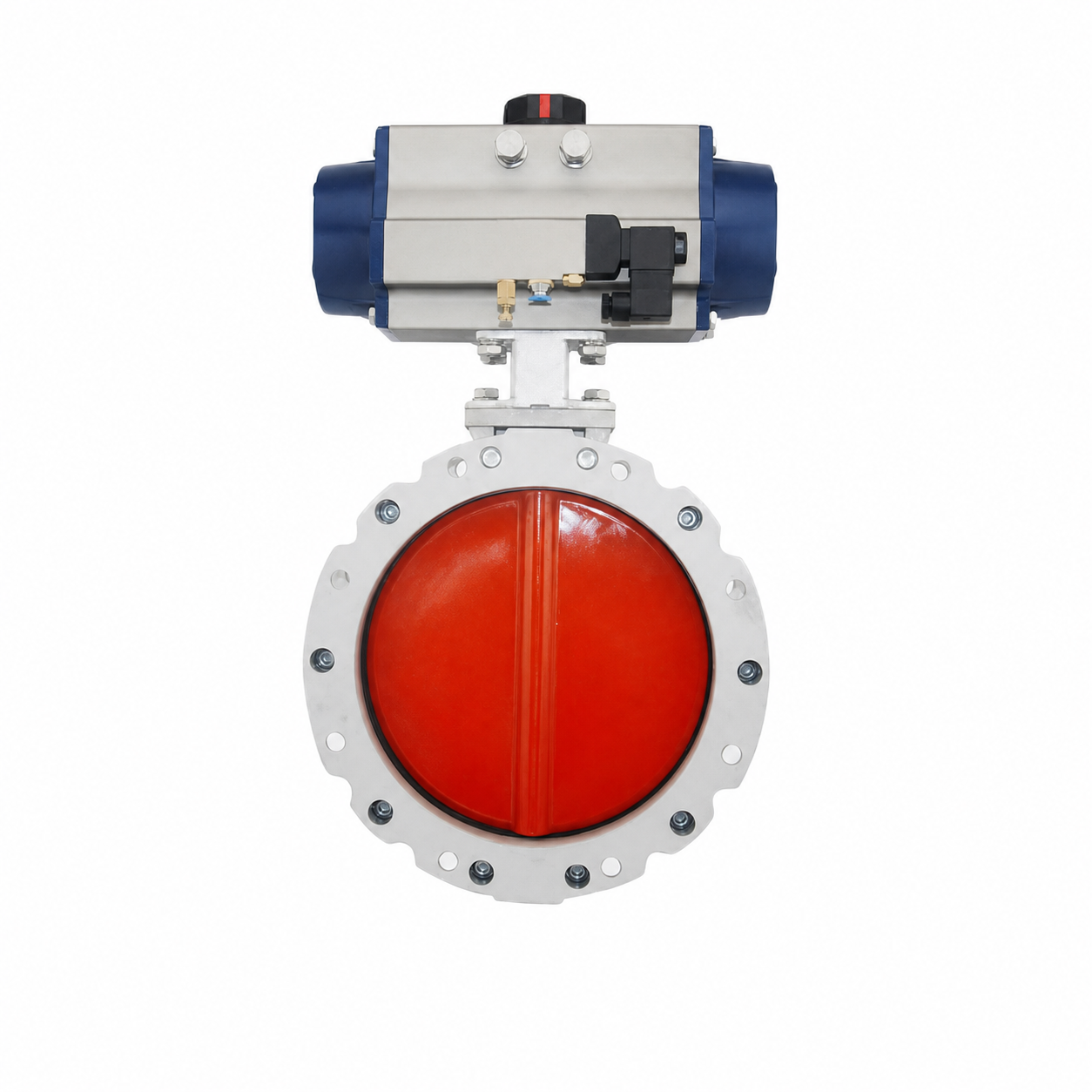
Pneumatic powder butterfly valve FP1000-22E4
FP1000-22E4 Pneumatic Powder Butterfly Valve
Product Specifications
| Product Model | FP1000-22E4 |
| Structural form | Disc type powder butterfly valve, flange connection |
| Nominal Diameter | DN100-DN300 |
| pressure rating | 0.2MPa |
| Valve body material | Aluminum alloy/carbon steel |
| sealing form | Polymer soft seal |
| Drive Type | Double acting pneumatic actuator |
| Applicable temperature | -15℃ to 100℃ |
| Applicable Medium | Cement, fly ash, particles, and powder media |
Structure and Application Description
FP1000-22E4 pneumatic powder butterfly valve is used for opening and closing powder in silos, screw conveyors, and pneumatic conveying pipelines. The disc valve plate rotates 90 degrees under the drive of the pneumatic actuator to complete rapid switching. The selection should verify the particle size, bulk density, moisture content, temperature, working pressure, and operating frequency of the powder to avoid determining valve configuration solely based on the connecting diameter.
Structure and Application Description
The commonly used caliber can be selected from DN100 to DN300, and the pressure range is suitable for low-pressure powder conveying conditions. The valve body can be made of aluminum alloy or carbon steel, and polymer soft sealing helps reduce dust leakage. The actual material should be confirmed based on the abrasive and corrosive properties of the medium and the ambient temperature. For media containing hard particles or prone to clumping, the wear cycle of the valve plate and seals should also be evaluated.
Structure and Application Description
The double acting pneumatic actuator is powered by compressed air in both directions of the switch, making it suitable for frequent opening and closing and remote interlocking. The gas source should be clean and dry, and equipped with a filtering and pressure reducing device. When valve position feedback or fault interlocking is required, limit switches, solenoid valves, and on-site control accessories can be equipped; All electrical components should be selected according to environmental protection and hazardous area levels.
Structure and Application Description
Before installation, the connecting surface and pipeline debris should be cleaned to ensure that both ends of the valve are coaxial and to avoid the weight of the silo or pipeline directly acting on the valve body. The first debugging should check the fully open and fully closed positions, action time, air source pressure, and interlock signals. If there is a delay in movement, dust leakage, or failure to close properly during operation, the gas source, actuator, valve plate, sealing ring, and sediment should be checked in sequence.
Structure and Application Description
Before maintenance, it is necessary to stop feeding, isolate the gas source, and confirm that there is no residual pressure in the equipment. Check fasteners, valve shafts, sealing rings, and pneumatic accessories during maintenance, and record wear and replacement cycles. Fouten Flow Control (Jiangsu) Co., Ltd. suggests providing information on powder properties, temperature and pressure, interface size, operating frequency, gas source conditions, and control requirements when placing an order, in order to verify the combination of valve body, seal, and actuator.
Structure and Application Description
FP1000-22E4 pneumatic powder butterfly valve is used for opening and closing powder in silos, screw conveyors, and pneumatic conveying pipelines. The disc valve plate rotates 90 degrees under the drive of the pneumatic actuator to complete rapid switching. The selection should verify the particle size, bulk density, moisture content, temperature, working pressure, and operating frequency of the powder to avoid determining valve configuration solely based on the connecting diameter.
Structure and Application Description
The commonly used caliber can be selected from DN100 to DN300, and the pressure range is suitable for low-pressure powder conveying conditions. The valve body can be made of aluminum alloy or carbon steel, and polymer soft sealing helps reduce dust leakage. The actual material should be confirmed based on the abrasive and corrosive properties of the medium and the ambient temperature. For media containing hard particles or prone to clumping, the wear cycle of the valve plate and seals should also be evaluated.
Structure and Application Description
The double acting pneumatic actuator is powered by compressed air in both directions of the switch, making it suitable for frequent opening and closing and remote interlocking. The gas source should be clean and dry, and equipped with a filtering and pressure reducing device. When valve position feedback or fault interlocking is required, limit switches, solenoid valves, and on-site control accessories can be equipped; All electrical components should be selected according to environmental protection and hazardous area levels.
Structure and Application Description
Before installation, the connecting surface and pipeline debris should be cleaned to ensure that both ends of the valve are coaxial and to avoid the weight of the silo or pipeline directly acting on the valve body. The first debugging should check the fully open and fully closed positions, action time, air source pressure, and interlock signals. If there is a delay in movement, dust leakage, or failure to close properly during operation, the gas source, actuator, valve plate, sealing ring, and sediment should be checked in sequence.
Structure and Application Description
Before maintenance, it is necessary to stop feeding, isolate the gas source, and confirm that there is no residual pressure in the equipment. Check fasteners, valve shafts, sealing rings, and pneumatic accessories during maintenance, and record wear and replacement cycles. Fouten Flow Control (Jiangsu) Co., Ltd. suggests providing information on powder properties, temperature and pressure, interface size, operating frequency, gas source conditions, and control requirements when placing an order, in order to verify the combination of valve body, seal, and actuator.
Common problems in product selection
Can FP1000-22E4 be directly installed on pneumatic conveying pipelines?
Delivery pressure and pressure difference, powder particle size, bulk density, and abrasion resistance need to be provided, and checked against the design pressure and sealing structure of the configuration. The use of powder cutting does not imply the applicability of any pneumatic conveying pressure.
Will this butterfly valve get stuck when the powder is prone to clumping?
Agglomeration, moisture, or compaction of the material column may increase the resistance of the butterfly plate movement. The outlet position of the hopper, moisture content and crystallization status of the powder, opening and closing frequency, and material accumulation status should be explained. The structure and pneumatic output should be checked, and increasing air pressure should not be used as a substitute for selection.
Do I need to confirm the cylinder and control accessories together when ordering FP1000-22E4?
It is necessary to verify the on-site gas source, required torque, solenoid valve voltage, in place feedback, and gas loss position. When dealing with combustible dust, the entire configuration should also be reviewed according to the site zoning, and the qualification for explosion-proof should not be determined solely based on the purpose of the valve.
 Home
 Valve selection
 news information
 Contact us