


 简体中文
 Japanese
 Korean
 Russian
 繁体中文
 Español
Valve selection
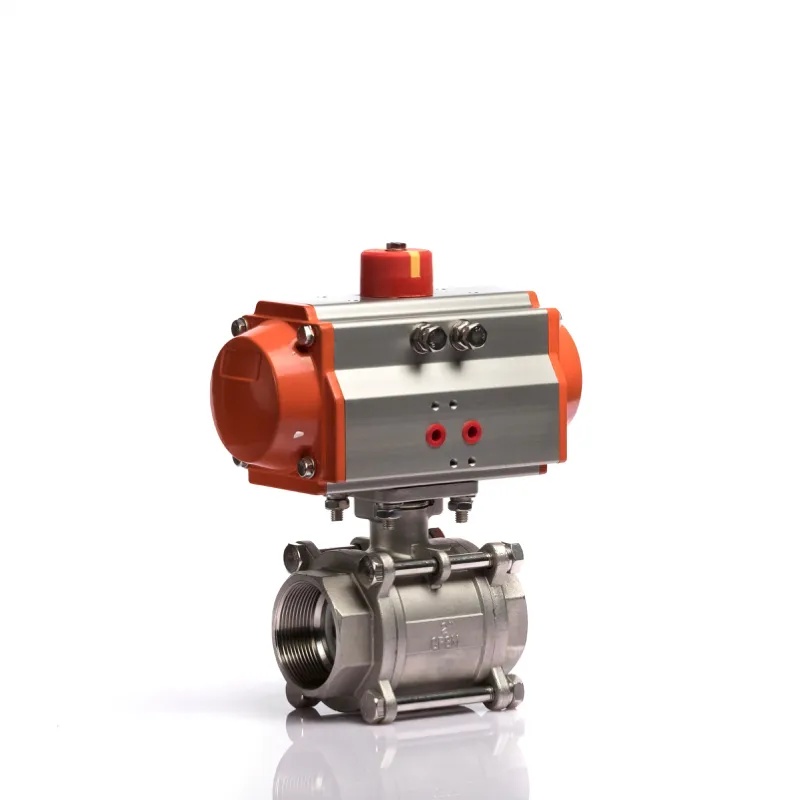
Pneumatic Three-Piece Threaded Ball Valve Q611F-16R
| Specification | Value |
|---|---|
| Model number | Q611F-16R |
| Specification and caliber | DN15-DN80 |
| Pressure level | PN16 |
| Material | CF8M |
| Product Features | Three-Piece Structure and Maintenance Space, Torque and Air Source for Small Diameter Ball Valves, Thread Connection and Sealing Boundaries |
The Q611F-16R pneumatic three-piece threaded ball valve is used for automatic shut-off in small diameter pipelines. The three-piece design facilitates maintenance of the middle body but still requires isolation and depressurization; when selecting, confirm the thread type, disassembly distance, and minimum supply pressure together to avoid situations where the interface can connect but maintenance cannot be performed.
Product Parameters
| Product Model | Q611F-16R |
|---|---|
| Structure Type | Three-piece floating ball, internal threaded connection |
| Nominal Diameter | DN15-DN80 |
| Pressure Rating | PN16 |
| Body Material | CF8M |
| Sealing Type | PTFE seat |
| Actuation Method | Pneumatic actuator, action type determined by safety position |
| Applicable Temperature | -20â to 150â, based on seat and valve temperature-pressure curve |
| Applicable Medium | Water, air, and compatible clean process liquids |
Three-Piece Structure and Maintenance Space
The three-piece valve body separates the middle body from the two end connections, facilitating inspection of the ball and seat, but does not imply that disassembly can occur under pressure in the pipeline. When selecting internal threaded connections, clarify G, Rc, or NPT standards to avoid mixing different thread types. The installation space should cover the extraction path of the middle body, the disassembly height of the pneumatic actuator, and the tool operation range, and should not be estimated solely based on nominal diameter.
Torque and Air Source for Small Diameter Ball Valves
A smaller valve diameter may still generate a larger starting torque due to high pressure differentials, medium viscosity, or prolonged inactivity. The actuator must be calculated based on seat friction and maximum pressure differential; for single-acting types, the spring end output must also be verified. A double-acting cylinder will not naturally return to the safety position when depressurized; systems requiring depressurized shut-off should confirm spring return configuration and accessory logic at the time of ordering.
Thread Connection and Sealing Boundaries
The temperature-pressure capability of the PTFE seat will change with temperature; PN16 does not imply that the same working pressure can be maintained at any temperature. The sealing materials also need to be verified against solvents, cleaning agents, and action frequency. When tightening the ports, force should be applied on the corresponding connection plane to prevent torque from transferring to the middle valve body and actuator. For pipelines that require frequent maintenance or are affected by vibrations, consider comparing flange or welded structures before determining the connection type.
Installation and On-Site Verification
Before connecting, confirm the thread type, sealing method, and allowable insertion length against G, Rc, or NPT standards, applying force at the specified valve body wrench position and providing counter support without gripping the cylinder while twisting the pipe. Leave sufficient distance around the three-piece middle body for bolt extraction and seal replacement, with the end pipeline supported by the design.
After assembly, check the middle body connection and interface for external leakage according to supply requirements, and then verify the full stroke of the ball; the structure being disassemblable does not imply that bolts can be loosened under pressure.
Abnormal Troubleshooting and Maintenance Acceptance
When the switch slows down, record dynamic air pressure, action direction, and stop duration, first checking the air tube, filter, and solenoid valve, then determining if there is an issue with the ball adhesion or seat. If there is still flow after closing, compare the actual closed position with the agreed leakage conditions, rather than just looking at the limit light.
After replacing the middle body seal or seat, reassemble according to the corresponding diagram, and reconfirm the action and feedback; if depressurized reset is required, also verify the shut-off capability of the spring end.
Frequently Asked Questions (FAQ)
Can the Q611F-16R threaded ball valve be maintained without stopping the pipeline?
The three-piece structure facilitates maintenance, but isolation of the medium, depressurization, and disconnection of the air source must still be performed before disassembly; retaining the end connections does not imply that maintenance can be performed under pressure.
How to select single-acting for pneumatic threaded ball valves?
Determine based on the required safety position during depressurization, maximum pressure differential, and spring end output; double-acting cylinders do not automatically provide spring return.
Can G, Rc, and NPT threads be mixed?
They should not be mixed; the thread type and sealing method should be unified in the ordering and connection drawings to avoid forced fittings that may cause damage and leakage.
What information is needed when placing an order?
The procurement data should include actual thread specifications, pipeline material, medium and impurities, design temperature and pressure, maximum closing pressure differential, and minimum dynamic air pressure. List CF8M body, ball, seat, and end seals separately, and specify the solenoid valve voltage and feedback interface.
Request assembly diagrams, allowable torque, spare part numbers, and testing requirements; use photos to verify space but do not confirm pressure or connection material based on appearance.
For similar products, you can browse the pneumatic valve section, ensuring to compare under the same medium and control conditions.
The images are for reference of shape and drive structure, not for proving specific materials, pressure ratings, or internal valve cores; actual configurations should be verified against confirmed supply drawings.
 Home
 Valve selection
 news information
 Contact us