


 简体中文
 Japanese
 Korean
 Russian
 繁体中文
 Español
Valve selection
Angle type regulating valve or straight through regulating valve? Select both pipeline steering and throttle position together
The angle regulating valve is not just about eliminating the elbow next to the straight through valve. It turns the flow path inside the valve body, changing the equipment interface, outlet direction, throttled flow, and maintenance space together. When choosing, first look at the overall equipment layout and media status, and then compare the internal components; Just because the pipeline is about to turn, it cannot be assumed that any angle valve is suitable for that working condition.
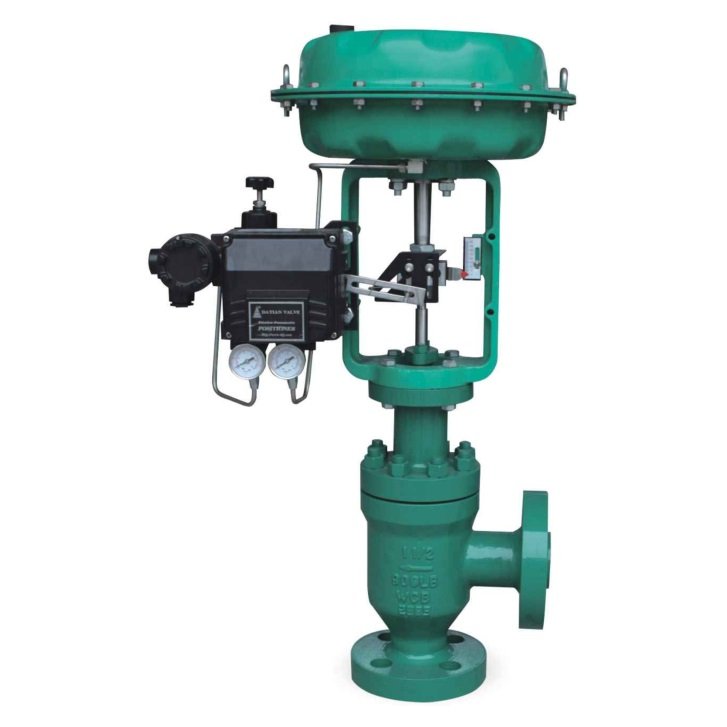
Which section of the flow path should be changed first, angle type or straight through type
The two main interfaces of the direct structure are usually arranged along the same straight line, and there may still be internal bends; The angular structure arranges the inlet and outlet in different directions. The actual flow resistance and flow capacity of the two are also determined by the valve body channel and internal components, and cannot be compared solely by drawing a straight line on the outer shape.
Corner layout near the bottom or side outlet of the equipment is sometimes convenient for organizing pipelines. But first, check the connection position, flange, valve stem direction, and support arrangement of the equipment to confirm that the valve is not being used as a connector for absorbing pipeline misalignment.
Why is the export condition after throttling worth looking at separately
After passing through the throttling point, the fluid may carry higher velocity, bubbles, or particles. The flushing position is related to the flow path direction and needs to be evaluated in conjunction with the valve core, valve seat, outlet, and downstream pipe section. Changing the valve body to an angled design will not automatically eliminate cavitation, flash evaporation, or abrasion.
For media that already contain solid or gas-liquid mixtures, the inlet state and range of variation should be specified. Writing only a normal pressure often cannot express how the medium moves after throttling, and it is difficult to compare different outlet and internal component schemes.
Do not confuse the steering of the valve body with the form of the valve internals
Angle type "describes the arrangement of flow paths, while" single seat "and" balanced type "describe the relationship between internal components and forces. They are not classified at the same level. For the same angular shape, the selected capacity, guide, seal, and actuator may vary, and the quotation should include these items.
The high differential pressure task also depends on the permission to close the differential pressure and drive output; The strict closure of tasks depends on the corresponding leakage requirements. We cannot use angular names to replace calculations, nor can we bring the rated capacity of another manufacturer with a similar appearance to this configuration.
On site replacement, compare the final assembly and pipeline diagram first
Same caliber straight through valves usually cannot be directly replaced with angle valves without changing the pipeline. Ask the supplier to provide the interface direction, structural dimensions, drive envelope, and necessary disassembly and assembly space on the final assembly drawing, and compare them with the on-site pipeline diagram, which is more effective than just asking if the same model can be supplied.
When inquiring, provide the composition of the medium, flow rate and temperature pressure of each load, particle and phase state, installation orientation, and shutdown requirements. If the project wishes to improve erosion or maintenance issues, the original fault location and usage conditions should also be attached, so that the solution is targeted at the cause rather than just replacing the appearance of the valve body.
Bring this information when inquiring or comparing proposals
| project | What needs to be expressed |
|---|---|
| Flow path layout | Direct interface or right angle steering |
| Media outlet | Speed, phase and scour position |
| Internal component function | Capacity, orientation, balance, and sealing |
| Replacement conditions | Direction of takeover, final assembly dimensions, and support |
Common customer questions
Is adding an elbow to a regular globe valve equivalent to an angle valve?
Cannot be directly equated. The flow path, local pressure changes, and flushing positions behind the internal components may be different. The capacity and layout of the complete components should be compared, rather than just counting the number of bends in the pipeline.
Is angle regulating valve suitable for media containing particles?
It is necessary to check whether the channels, gaps, turning areas, and materials are suitable for particle conditions. Providing particle size, hardness, content, and flow rate range cannot provide universally applicable conclusions based solely on angular flow paths.
What other documents are needed for the replacement of angle type old valves besides DN and PN?
At least supplement the takeover direction, flange and pipeline diagram, medium and various load conditions, driving space, and closure requirements. The location of erosion or blockage of the original valve also helps to determine whether the replacement is targeted at the real problem.
Related products:Pneumatic angle regulating valveSee similar schemesControl valveWhen discussing specific supply, please provide the corresponding working conditions and functional requirements in the text together.
Extended reading:How to choose between single seat regulating valve and sleeve regulating valve?。
Technical reference:Emerson/Fisher Control Valve ManualReference materials are used for corresponding structures or engineering principles, and specific finished products are evaluated based on their corresponding configurations and rated conditions.
 Home
 Valve selection
 news information
 Contact us