


 简体中文
 Japanese
 Korean
 Russian
 繁体中文
 Español
Valve selection
How to choose between electric O ball valve and V ball valve? The difference between cutting off and continuous adjustment
If the task is to reliably switch pipelines, first compare the cutting performance; If it is necessary to continuously change the flow rate with the signal, it is necessary to compare the throttling channel and the adjustment capability after installation. O ball valve and V ball valve can both be electrically driven, but the ball opening and sealing fit are different. Installing an actuator that can stop in the middle will not automatically turn the ordinary cut-off ball valve into a suitable regulating valve.
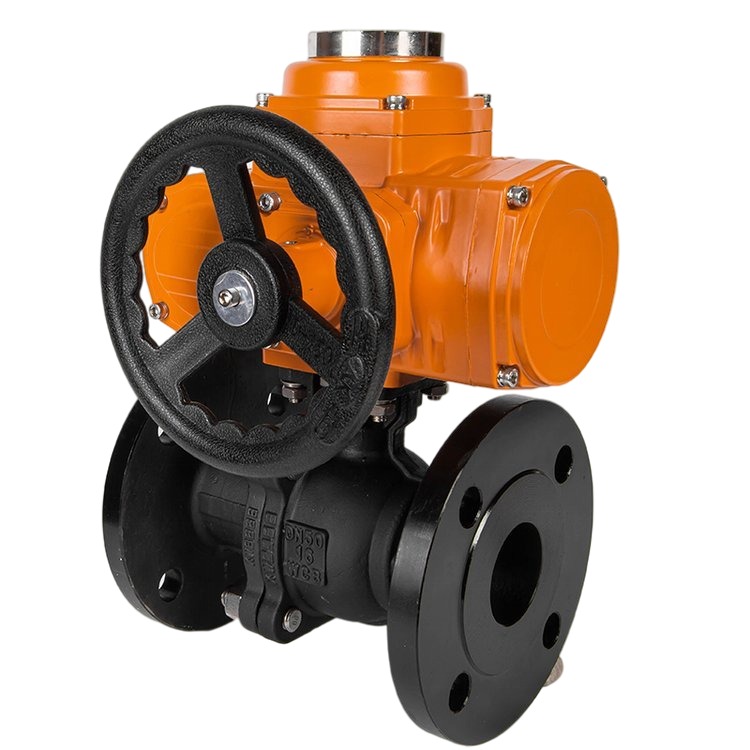
Why is the O channel commonly used for switching tasks
The commonly used O ball valve forms a more direct flow path when fully open, making it suitable for projects that focus on opening, closing, and sealing. When making a purchase, one should still consider the actual channel size, valve seat, pressure and temperature conditions, and driving capability. The "O type" does not guarantee all flow resistance and sealing indicators.
When it is necessary to stop throttling at a small opening for a long time, the local flow velocity and the flow conditions in the sealing contact area will change. Just because it can rotate to a certain angle, it cannot be assumed that the continuous adjustment life and stability have been verified.
How to change the small opening flow area of V shaped opening
The V notch creates a specific relationship between the change in opening and the effective flow area, which is beneficial for designing characteristics around the adjustment task. The performance of different notches, spheres, and sealing structures varies. Inquiry should request the flow coefficient and characteristic data of this configuration, rather than just comparing the letters V.
For fiber containing media, some V ports have shear effects when combined with seals, but this does not mean that they can handle any hard particles, clumps, or high solid content slurries. The composition, particle size, and abrasiveness of the medium will still change the sealing and driving selection.
The actuator should also be selected according to the task, not just the power supply
The switch project focuses on the action load, opening and closing times, endpoint, and fault status; Continuous adjustment projects also need to pay attention to work schedules, position resolution, and signal interfaces. The two tasks have different requirements for electrical load, and cannot be compared solely based on rated torque and voltage.
If the customer needs to control the actual flow, there should also be corresponding measurement and control circuits. The valve position feedback indicates the position of the sphere, without directly stating how much flow is currently inside the pipe; Changes in branch pressure can also alter the flow rate at the same opening.
How to clarify the selection issue in one go
First, explain whether it is "switch off" or "continuous adjustment", and then list the medium, three sets of flow rates, inlet and outlet pressure, and temperature. For regulation projects that require strict closure, allow leakage as an independent requirement and do not consider regulation capability as isolation capability.
When replacing the old valve, compare the structural length, flange, installation space, and control interface at the same time. It is possible to specify the normal operating opening and maximum closing load separately in the plan, in order to determine whether the selected valve body and electrical components are serving the same task.
Bring this information when inquiring or comparing proposals
| project | What needs to be expressed |
|---|---|
| main task | Turn off the switch or continuously change the flow rate |
| Traffic data | Rated coefficients, characteristics, and operating points |
| Driver data | Work schedule, load and control feedback |
| Close Request | Differential pressure, direction, and allowable leakage |
Common customer questions
Why choose the V model when ordinary electric ball valves can temporarily regulate flow?
Short term changes in opening and long-term continuous adjustment are not the same requirement. The V scheme should provide corresponding throttling characteristics and application conditions; Whether it is needed depends on the flow range, pressure difference, and sealing flow situation.
Is the sealing ability of V ball valve necessarily worse than that of O ball valve?
The conclusion cannot be drawn solely from the shape of the opening. The closing performance also depends on the sealing material, structure, and testing conditions. Specific finished products should be compared according to the allowable leakage of the project, rather than giving absolute rankings to two types of products.
PLC can already output 4–20mA. Can I adjust it by buying any electric ball valve?
It is also necessary to confirm that the electric actuator has corresponding input and adjustment working mechanisms, and that the valve body has applicable throttling characteristics. The signal provided by the control system cannot replace the matching between the valve body, electrical components, and actual working conditions.
Related products:Electric flange ball valveSee similar schemesElectric ValveWhen discussing specific supply, please provide the corresponding working conditions and functional requirements in the text together.
Extended reading:How to choose butterfly valve and ball valve? Engineering comparison from flow resistance, sealing to automation control。
Technical reference:Fisher Vee-Ball Structural Data、Swagelok 60 series structure and option informationReference materials are used for corresponding structures or engineering principles, and specific finished products are evaluated based on their corresponding configurations and rated conditions.
 Home
 Valve selection
 news information
 Contact us