


 简体中文
 Japanese
 Korean
 Russian
 繁体中文
 Español
Valve selection
Is a communication interruption of an electric valve equivalent to a power outage? Missing Action and State Validity
Communication interruption does not equal power interruption, and electric actuator may still have energy and local control capabilities. The customer shall separately explain the requirements for disconnection, loss of signal, and power outage, and then verify the actual control and effective feedback.
Missing does not mean the actuator loses its ability to move
When the bus or network is interrupted, the actuator may still have power supply or may retain received commands. Its subsequent state depends on the actual control configuration and may not immediately stop, let alone automatically shut down. For complete sets of valves using switch or analog signals, signal loss must be defined according to the corresponding interface, and another communication method cannot be used as a criterion.
Power interruption is another type of event: whether the motor can continue to operate, whether the control board is still maintained by other power sources, and whether it has energy storage all need to be confirmed separately. Having a display or communication capability does not necessarily indicate that the motor power supply is normal. Technical documents should describe the status of control, drive, and communication separately, rather than summarizing them with just one online light.
The disconnection strategy should be determined by the process task first
Some complete control configurations allow for staying, moving to designated positions, or performing other defined actions after loss of contact, but these capabilities are not the default functions of all electric actuators. The target valve position, triggering conditions, determination waiting time, and available energy must all be implemented in this finished product. The manufacturer's ability to program a certain function does not mean that the project has been enabled and validated.
Different processes have different requirements for the location of faults. Cutting off incoming materials, maintaining cooling, and preventing overpressure may require different actions, and all electric valves cannot be uniformly set to lose contact and close. Normal control, interlocking, and independent protection may have different permissions, and the priority relationship should be clearly defined by the system design to prevent communication fault handling from conflicting with other tasks.
The last valve position value may not still be valid
The values retained on the monitoring screen may only be the result of the last successful transmission before the malfunction. The data update time, communication quality, or corresponding invalid status must be displayed simultaneously, and the stationary percentage cannot appear as real-time measurement. The alarm information should also distinguish between communication interruption, equipment failure, and valve failure, in order to facilitate the correct positioning of on-site personnel.
When purchasing signal tables, in addition to valve position and switch status, the operation, control mode, remote availability, and critical fault information should also be checked. Not every interface can provide all diagnostic data. The control system should explain how to manage missing states and not fabricate normal values to make the image appear complete.
Restoring communication should not be equivalent to directly re executing old commands
After the link is restored, the actuator may have been in a different position from the control system settings, or it may have been operated by on-site personnel. The recovery strategy should clarify whether it is necessary to confirm permissions, verify the current valve position, re receive commands, or enter the specified mode. If the command before the fault is directly used, it may cause unexpected actions on site.
The test should cover three stages: loss, continuous loss, and recovery, and distinguish between normal shutdown and fault states. Test record storage instructions, real feedback, mode, and event time. When it comes to production interlocking, it shall be arranged by an approved testing program, and the function shall not be demonstrated by randomly unplugging communication lines or cutting off power supply on the operating pipeline.
Valve model and communication protocol need to be ordered separately
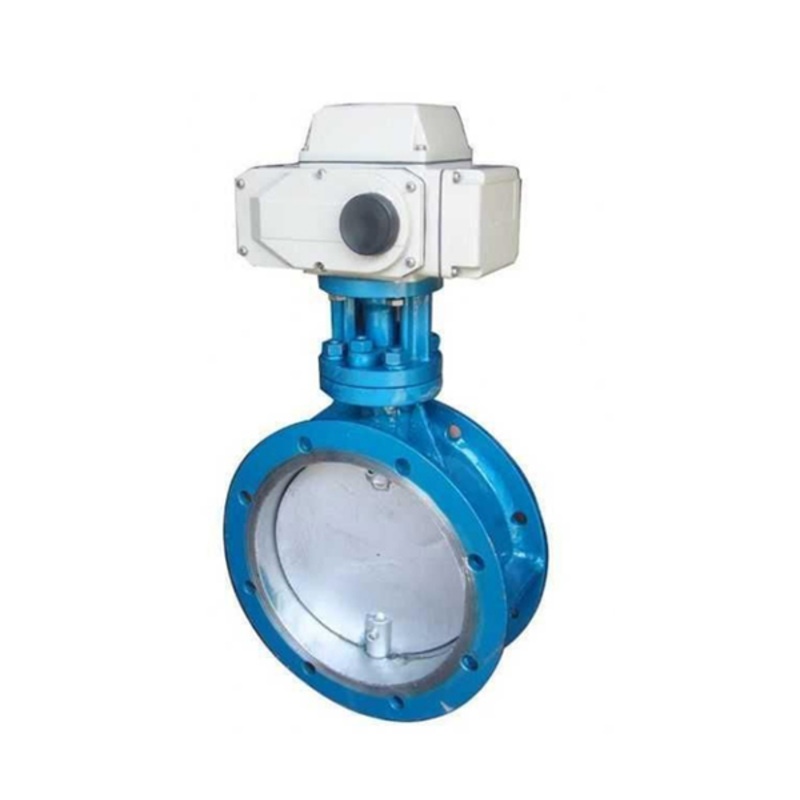
The D941W-16P electric regulating butterfly valve of Fouten adopts electric angular stroke drive, and its remote interface is confirmed according to the actual actuator and project requirements. The D941W model itself does not mean that it is already equipped with any kind of bus, network, dual power supply, or automatic reset when lost. When quoting, the actuator model, interface description, point list, and fault handling conditions should be attached.
When comparing different quotations, first check whether the protocol, command, and feedback functions are the same, and then look at the power supply and fault strategy. The same protocol name cannot omit functional verification: data content, update methods, and status determination may still be different. Deliver the interface data together with the process status table, so that there is a common basis for subsequent maintenance and replacement.
Confirmation Form for Missing and Power Outing Items
| event | Status to be confirmed |
|---|---|
| Communication interruption | Identifying conditions, available energy, and subsequent actions |
| Command signal loss | Interface definition, detection conditions, and processing rules |
| Abnormal power supply to the motor | Confirm the control status and movement ability separately |
| Data update stopped | Timestamp, quality identification, and alarm display |
| Link recovery | Current valve position, control permissions, and reacquisition command |
Corresponding products and further selection
The reliability of remote control of electric valves depends not only on whether the valve can operate, but also on whether the system correctly recognizes the fault state. Defining disconnection, power loss, data validity, and recovery permissions separately can reduce misjudgments and unexpected actions during failures.
Can be combinedElectric regulating butterfly valve D941W-16PThe actual product information confirms the structure and selection requirements. For more similar products, please refer toElectric Valve Column。
Related questions can continue to be read:What is required to close an electric valve when it is powered off? Energy storage, action load and fault safety。
General principle reference:AUMA Controller Communication and Fault Status Data;Siemens/AUMA actuator operation and feedback instructionsThe specific functions of the finished product are based on the corresponding structure and verification data.
Common customer questions
Can the electric valve continue to open and close just because the display screen is still on?
not always. Controlling display and motor drive may involve different power supply conditions, and it is necessary to verify the motor power supply, mode, and protection status.
Can the valve position on the screen still be used as real-time value after communication is lost?
Update time and validity identification should be checked. The last transmitted value before the fault cannot be directly used as the current true valve position.
Do smart electric valves automatically close when they lose contact by default?
No. The interface capability, fault action, and activation parameters need to be confirmed according to specific actuator and process requirements, and complete a complete set of verification.
 Home
 Valve selection
 news information
 Contact us