


 简体中文
 Japanese
 Korean
 Russian
 繁体中文
 Español
Valve selection
Why does the casing of the electric valve still get damp even though it hasn't received rainwater? Anti condensation configuration and shutdown management
Without rainwater entering, condensation may still occur inside the casing due to temperature and humidity changes. The customer provides the environment, shutdown, and power status, checks the corresponding anti condensation configuration, and not only looks at the IP level of the shell.
Rainwater entering and internal condensation belong to two paths
Rainwater may enter from inappropriate cable entrances, seals, or damaged areas; Condensation requires attention to the humidity and surface temperature of the air inside the chamber. There was no obvious water accumulation after a certain rain, which does not prove the absence of internal condensation. On the contrary, when moisture is seen, the outer shell should not be directly judged as leaking. It should be located based on the time, location, and weather changes.
The protection level of IP is mainly evaluated based on the corresponding shell test conditions, and is not a unified commitment for all temperature differences, internal water vapor, and long-term operating conditions. The coordination of gland heads, plugs, seals, and cables on site can also affect the overall protection. The shell identification and actual installation integrity should be checked separately.
Anti condensation heating and environmental temperature rise are not the same requirement
Some actuators are equipped with heating devices to reduce internal condensation, while others may have different heating schemes for low-temperature operation. The purpose, installation location, and control method may not be the same, and "with heater" cannot be used as proof of all moisture-proof and low-temperature capabilities. The power supply and monitoring conditions should be clearly specified in the finished electrical data.
A heater cannot replace a suitable cable seal, nor can it infinitely eliminate external water ingress. Installing heating elements of unknown power on site may affect temperature rise, insulation, and suitability for hazardous areas. Whether to configure and how to control it shall be jointly confirmed by the equipment and electrical design, and the power or temperature parameters of another manufacturer shall not be copied to this product.
Long term shutdown and temporary storage also need to be arranged separately
When the valve has not been put into operation or has been out of service for a long time, the power supply may not be connected and the anti condensation device may not work. At this point, the storage and inspection requirements of the corresponding equipment should be adopted to confirm whether the packaging, temporary cable entry, and environment are suitable. It is not acceptable to expose actuators that have not yet been sealed and assembled directly to rainwater on the grounds that the equipment will eventually be installed outdoors.
Shutdown management should specify whether the equipment maintains control or heating power supply, and whether this arrangement is compatible with maintenance isolation. Different circuits have different disconnection requirements, and unidentified live circuits cannot be retained during maintenance for moisture prevention. The work permit and electrical isolation shall still be carried out by qualified personnel in accordance with the approved procedures.
Installation inspection should cover the entrance and maintenance status
The gland head and cable outer diameter, unused inlet sealing, sealing status, and actual installation method should be checked. After repairing the cover, replacing the wires or accessories, confirm the integrity of the protection again. When ventilation, drainage or other measures are required, the design allowed by the finished product should also be used, and drilling holes on the shell should not be used as a moisture-proof method.
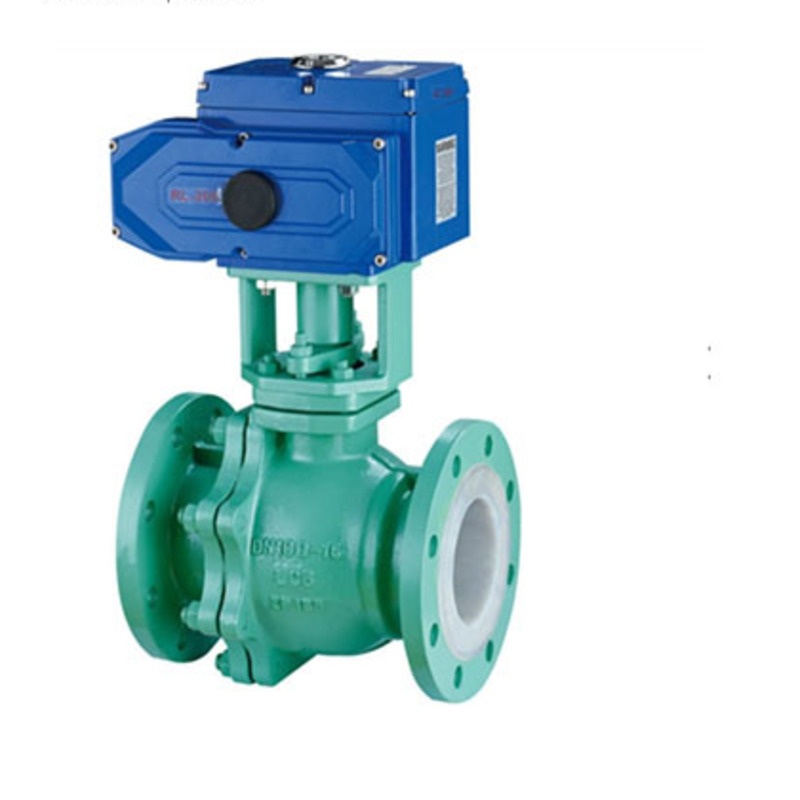
In places with corrosive atmospheres, flushing, salt spray, or frequent temperature differences, these conditions must be handed over to the supplier. The corrosion resistance of the medium side and the external environmental resistance of the actuator are different tasks. The Q941F46-16C electric fluoropolymer-lined ball valve of Fouten is used for corresponding corrosive medium pipelines, but the fluoropolymer-lined valve body does not prove that the electrical chamber is naturally suitable for all external chemical environments.
List all protection requirements and handover documents during procurement
Inquire about the environmental temperature range, humidity and weather conditions, indoor and outdoor locations, shutdown methods, and possible corrosion or flushing conditions. The supply information specifies the shell protection, surface protection, cable entry, anti condensation configuration, and corresponding power supply requirements. This can distinguish between standard configuration and optional items, avoiding discovering the lack of necessary accessories only on site.
When moisture, corrosion, or insulation abnormalities are found during inspection, they should be handled according to safety procedures and not directly opened and dried during operation before continuing to use. Recording the location, occurrence stage, and maintenance history of moisture can help distinguish external water ingress, internal condensation, and assembly changes. After addressing the root cause, recheck according to equipment requirements, and do not only observe whether the surface of the shell is dry.
Outdoor electric actuator Moisture Proof Confirmation Checklist
| object | Conditions that need to be confirmed |
|---|---|
| environment | Temperature difference, humidity, rainfall, flushing, and corrosive atmosphere |
| Shell entrance | Cable coordination, gland, plug and sealing status |
| Internal configuration | The different functions of anti condensation and low-temperature heating |
| Shutdown temporary storage | Packaging, power supply, and safety isolation arrangements |
| Maintain handover | Protection review record after opening or changing the cable |
Corresponding products and further selection
Outdoor moisture resistance cannot be solely based on the shell as one indicator. By checking the sources of moisture, temperature changes, internal configuration, and shutdown arrangements together, it is possible to reduce repeated moisture exposure and maintain the integrity of the complete set of protection during subsequent maintenance.
Can be combinedElectric fluoropolymer-lined ball valve Q941F46-16CThe actual product information confirms the structure and selection requirements. For more similar products, please refer toElectric Valve Column。
Related questions can continue to be read:What is the difference between protection and explosion-proof of electric valve IP? Verify outdoor and hazardous areas separately。
General principle reference:Siemens/AUMA actuator storage and anti condensation instructionsThe specific functions of the finished product are based on the corresponding structure and verification data.
Common customer questions
Does it necessarily mean that internal condensation will not occur if the IP grade of the shell is high?
I can't understand it this way. External protection and internal air condensation are different issues that require simultaneous verification of the environment, inlet sealing, and anti condensation configuration.
Can the heater compensate for the poor sealing of the cable entry?
It cannot replace a suitable seal. The inlet path should be handled correctly, and the heating configuration should be confirmed according to the actual equipment and electrical data.
Are fluoropolymer-lined valves corrosion-resistant, and are electric actuators naturally corrosion-resistant as well?
No. Confirm the protection of the liquid receiving lining layer and the external environment of the actuator separately, and the inquiry should specify the on-site atmosphere, humidity, temperature difference, and flushing conditions.
 Home
 Valve selection
 news information
 Contact us