


 简体中文
 Japanese
 Korean
 Russian
 繁体中文
 Español
Valve selection
Electric valves can be opened on site, but DCS cannot be controlled? Local, remote, and stop permissions
On site operation is possible, but DCS cannot be controlled. First check the control rights, stop permission, and effective signals, and then check the wiring or communication. Do not repeatedly replace electrical components or bypass interlocks without confirming permission logic.
The operation mode determines where ordinary commands enter from
Equipped with locally controlled actuators, it is possible to distinguish between on-site and remote commands through selection switches or control logic. When in the local state, remote ordinary switch commands may not be accepted; In remote mode, the available range of on-site buttons is also determined by the finished product configuration. The names of selection switches and internal permissions from different manufacturers cannot be simply equated.
Remote control may also be divided into functions such as switch control and setting value following. The interface has been connected, which does not mean that the required mode has been enabled. The procurement signal table should specify the task, command form, and mode switching conditions for this task, so that the control system and actuator can work for the same function.
The stop position is not fully electrically isolated
Choosing to stop or disable normal operation permissions usually describes the control status and does not necessarily disconnect the motor, electrical accessories, and other power supplies. There may still be live parts inside the device, and some high priority functions may also use different processing rules. Entering the stop mode cannot be directly used as evidence to allow opening, disconnecting wires, or dismantling valves.
The energy isolation, locking, and residual status confirmation required for maintenance shall be carried out in accordance with the approved on-site procedures. The engagement state of the mechanical manual mechanism cannot be solely proven by the mode switch. Operation permissions, mechanical transmission, and safety isolation have their own objects, and technical documents should avoid covering all matters with the word 'stop'.
The priority relationship between interlocking and emergency actions should be clearly stated
Normal switch commands, adjustment commands, interlocks, and emergency functions may come from different paths. What conditions prevent actions, which commands have what priority, need to be determined by the process and control design, and then confirm how the actuators can cooperate. It is not possible to determine that all remote functions are disabled based on the "local" name, nor can it be assumed that emergency commands will always override all modes.
It is better to use a state table to describe priority relationships, rather than making temporary decisions after conflicts arise on site. Record modes, commands, permissions, protections, and expected actions in the table. The remote function of ordinary products cannot be directly written as an independent security protection. When special interlocks are involved, there must be corresponding system design and verification basis.
The control room requires more than just opening and closing in place
If the operating mode affects the availability of remote commands, the control room should be able to obtain corresponding status or clear operational handover information. When the valve is in place but in the local state, displaying "closed in place" does not mean that the next remote command is ready to be received. Mode, remote availability, operation, and fault information should be defined separately according to interface capabilities.
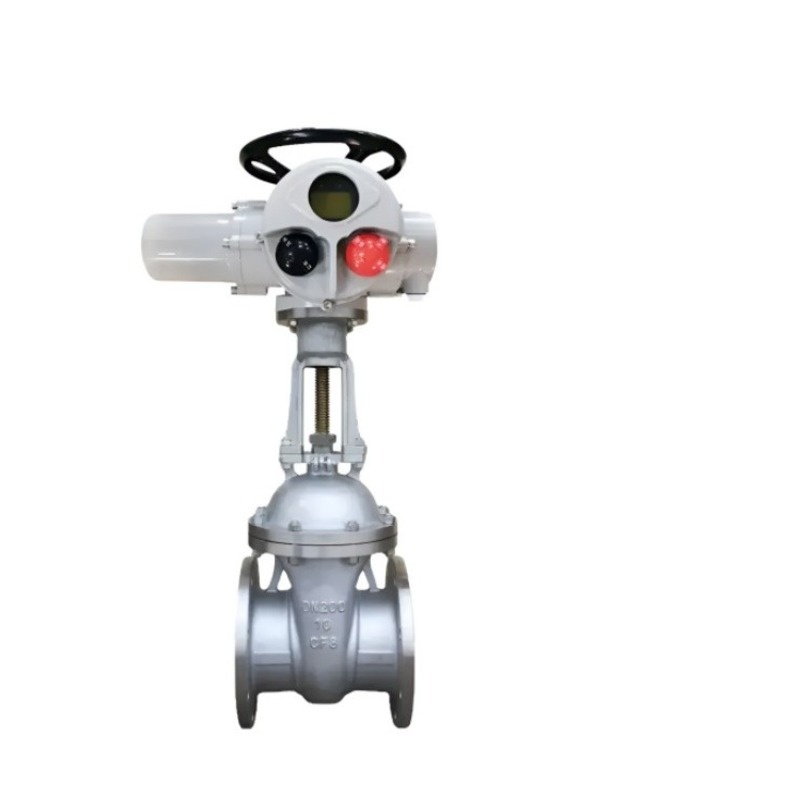
The Z941H-16C electric gate valve of Fouten uses multi turn electric drive. The specific local panel, selection switch, and feedback functions are confirmed according to the optional actuator. Names such as multi turn or intelligent do not represent a unified permission logic. When supplying, the actuator identity, control instructions, and actual point table should be matched.
Complete the acceptance of the complete set using the pattern matrix
Acceptance can be compared item by item based on actual modes such as on-site, remote, and stop, allowing for normal commands, visible feedback, and protection status. Test first to confirm the allowable conditions of the process, and then record whether the command is accepted, whether the valve is activated, and whether the feedback is consistent. This can distinguish permission issues from motion faults and reduce the need for repeated valve disassembly and inspection.
Before switching back to remote mode, it is also necessary to confirm the current command and actual valve position of the control system to avoid unexpected actions immediately after mode recovery. Parameter and permission modifications should be recorded and cannot be proven to be "active" by short circuiting permissions or canceling protection. The final handover includes mode, valve position, control permissions, and unreleased restrictions.
Elements of Operation Mode and Permission Matrix
| Information | What should be clearly stated |
|---|---|
| pattern | Definition of on-site, remote, and actual stop states |
| command | Switch or setpoint control and input source |
| Priority relationship | Normal operation, interlocking, and special function rules |
| Feedback | Mode, remote availability, valve position, and faults |
| handover | Restore remote command and valve position verification |
Corresponding products and further selection
'On site active, remote inactive' should be located according to the command path and permissions first, and not directly attributed to valve mechanical failure. Establishing a clear pattern matrix during the procurement phase and verifying each item during acceptance can enable operation and maintenance personnel to form a consistent understanding of the same set of equipment.
Can be combinedElectric gate valve Z941H-16CThe actual product information confirms the structure and selection requirements. For more similar products, please refer toElectric Valve Column。
Related questions can continue to be read:What is the difference between two-wire, three wire, and analog control for electric ball valves? First look at the functions, then look at the number of lines。
General principle reference:AUMA AM Local and Remote Control Configuration;Siemens/AUMA Operation Mode and Remote Feedback InstructionsThe specific functions of the finished product are based on the corresponding structure and verification data.
Common customer questions
Does the fact that the local button can be turned on and off indicate that there must be no problem with the remote circuit?
No. The on-site action only verifies the corresponding path, and remote verification still needs to check whether the mode, signal, permission, and control functions match.
Can I open the electrical cover for maintenance by turning the mode switch to stop?
Mode cannot replace energy isolation. The live state, other power sources, and residual energy must be confirmed according to approved electrical and maintenance procedures.
Will the valve immediately activate when switching from on-site to remote?
It depends on the command and actual control configuration at that time. Before switching, the current command and valve position should be checked, and the mode recovery should be completed according to the approved procedure.
 Home
 Valve selection
 news information
 Contact us