


 简体中文
 Japanese
 Korean
 Russian
 繁体中文
 Español
Valve selection
Can the fluoropolymer-lined flange bolts still use their original torque after lubrication? Tightening condition verification
Lubrication changes the friction conditions, and the original tightening torque cannot be automatically used. The customer confirms the fasteners, surface, and lubrication conditions used in the original table, and then constructs the lining and connection plan according to this time, without relying on continuous force to eliminate leaks.
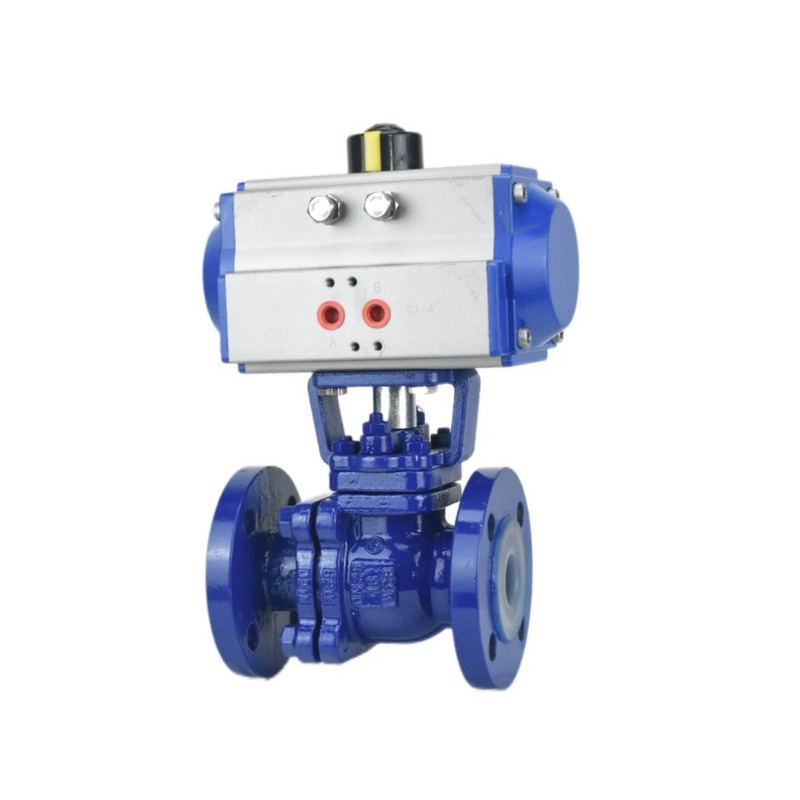
The torque value must have fastening conditions
The same torque applied to connections with different friction states may result in different preload effects. The tightening data should indicate the bolts, nuts, washers, surface condition, and whether they are lubricated. A number that deviates from these conditions cannot be regarded as a unified requirement for all flanges of the same caliber.
The bolt grade, size, and matching flange should also correspond. Torque meters from other manufacturers are only applicable to their specified conditions and should not be applied to finished products on this site. When there is a lack of basis for procurement or maintenance data, it should be supplemented by the corresponding complete set of design, and it is not possible to rely on commonly used experience until there is no leakage.
Lubrication changes conditions and may also involve material compatibility
The type and location of lubricant should be confirmed according to the allowable plan, and should not be applied arbitrarily just for smooth tightening. When it comes to liquid receiving areas, cleaning processes, or special environments, it is also necessary to check for contamination and compatibility. Where to apply and how much to use cannot be directly applied from the experience of another connection.
Replacing the coating, using new nuts, or changing washers will also alter the actual connection conditions. The maintenance records list these changes for the convenience of the supplier's judgment. It is difficult to prove that the compression effect is consistent by only stating "according to the original torque" without original configuration information.
The end face of the lining layer is not a cushion layer that can be infinitely compressed
There are specific fitting requirements for lining flanging or related sealing areas. Excessive tightening may cause local deformation, damage, or subsequent relaxation, and cannot be assumed to absorb any misalignment just because the material is soft. Pipeline alignment and support must first meet the requirements before discussing proper clamping.
When leakage occurs on site, check the sealing surface, gasket, parallelism, and working conditions. Cannot continuously add torque to the pressurized joint. Whether, when, and under what conditions re tightening is necessary should be determined according to the approved procedures for the finished product and site, and a fixed time is not recommended uniformly.
Match the fastening table with the actual finished product
The installation requirements for the pneumatic fluoropolymer-lined ball valve on this site are confirmed based on the valve, lining, and connection information provided in this project. The technical table combines torque values, lubrication conditions, fasteners, and end face structures together to avoid leaving only one number on the construction order.
Verify the identity of spare parts and fasteners during delivery acceptance. The construction records include the use of file versions, tool status, and completion checks, and do not consider "used torque wrenches" as all evidence of correct methods. The tool can display numerical values, but it will not determine whether the input target is suitable for the current connection.
Repeated leakage requires tracing the root, therefore continuous force application is necessary
If the same joint leaks repeatedly, record the cold and hot status, pipeline load, and maintenance changes. Sealing materials, end face damage, or support issues can all cause fastening to become a surface phenomenon. If necessary, the design and manufacturing parties shall jointly inspect and not simply replace harder bolts.
After replacing the lining or gasket, recheck the assembly basis. The success of a certain value in history does not mean that the new material and surface are still applicable this time. Leaving a trace of the connection conditions and processing procedures can help to review them with the same caliber in the future, rather than repeating them every time.
The torque file should be recorded simultaneously
| Verify project | Clear information is required |
|---|---|
| fastener | Size, grade, surface and matching parts |
| Friction state | Dry state, allowed lubricant and usage location |
| sealed structure | End face, lining and gasket conditions |
| Construction Basis | File version, tools, and inspection records |
Corresponding products and further reading
Reliable fastening is not about finding a larger torque, but about using a set of matching connection conditions. Writing lubrication, fasteners, and lining structure in the same document can reduce installation and maintenance disputes.
Can be combinedPneumatic fluoropolymer-lined ball valveData compilation for this working condition; See for similar structurespneumatic valveColumn. The specific configuration and delivery basis need to be confirmed separately.
Extended reading:What is the difference between fluoropolymer-lined valve penetration and chemical corrosion? We can't just check the chemical resistance list。
General technical basis:Example of installation conditions for CRP lining connectionThe specific configuration and rated conditions of the finished product shall be subject to the information provided in this supply.
The original repair table only had one Nm value, how can it be supplemented
Confirm with the original supplier the bolts, nuts, washers, and friction state used for this value, and then explain whether lubrication or surface has been changed this time. When the information is incomplete, supplement the basis first, and do not treat dry state records and lubrication assembly as the same conditions. The alignment between the sealing surface and nature should also be checked separately.
Common customer questions
Can the original torque remain unchanged after adding oil to the bolt?
Cannot be left unchanged by default. It is necessary to verify the friction and assembly conditions used for the original values, as lubrication may alter the pre tightening effect.
Can using a torque wrench ensure that the fluoropolymer-lined flange does not leak?
It cannot be guaranteed solely by tools. The target value, connection status, and sealing surface must also be correct.
Can the soft lining and slightly skewed flange be remedied by tightening more?
This should not be handled in this way. Firstly, meet the alignment and support conditions to avoid damaging the liquid contact layer by excessive compression.
 Home
 Valve selection
 news information
 Contact us