


 简体中文
 Japanese
 Korean
 Russian
 繁体中文
 Español
Valve selection
How to write the leakage rate of vacuum valves for acceptance? Units, test gases, and boundaries
Leakage rate, vacuum pressure, and pumping capacity are different quantities. The customer provides the complete unit, test gas, method, and leakage path, and then compares the report without using the instrument detection lower limit as the valve guarantee value.
Leakage rate is not the ultimate pressure, nor is it an ordinary volumetric flow rate
The vacuum leakage rate is often expressed in the form of the product of pressure and volume divided by time, such as Pa · m ³/s or mbar · L/s. It is not simply a pressure value and cannot be directly compared with the maximum pressure of the equipment. Unit conversion first confirms the dimension, and does not consider the size of numbers as superior or inferior.
The pumping capacity describes another system performance that is affected by factors such as pump, pipeline, and process gas loads. Even when a vacuum system reaches a certain pressure, it cannot alone prove that the valve has a certain leakage rate. Procurement should separately specify the range of work pressure and allowable leakage conditions.
Gas detection and methods need to be explained next to the data
Helium testing and other gas testing should record the actual gas and method used. The boundaries and detection conditions of vacuum method, suction gun or other methods are different, and the results cannot be directly ranked by the same unit. The lower limit of instrument detection does not equal the guaranteed leakage rate of the tested valve.
The report explains the testing direction, pressure conditions, valve position, and testing object. The leakage entering the system from the outside and the leakage between the two sides of the valve seat are different paths. Suppliers are required to specify the projects used separately, and cannot use any one of them to prove all sealing paths of the entire valve.
The tooling and system background also belong to the measurement boundary
Flange sealing, testing fixtures, and connection parts may be involved in the measurement, and it is necessary to identify whether the results are evaluating bare valves, assemblies, or a certain section of the system. Background signals, instrument status, and calibration conditions affect interpretation, and a single reading should not be used as a long-term guarantee for the method.
Pfeiffer and other vacuum testing data provide dimensions and measurement principles. This article does not use the sensitivity of the testing instrument as a product parameter for this site. For specific projects, the judgment values and testing methods shall be specified in the technical confirmation document, and then accepted with appropriate evidence.
Vacuum valve selection still requires material and interface information
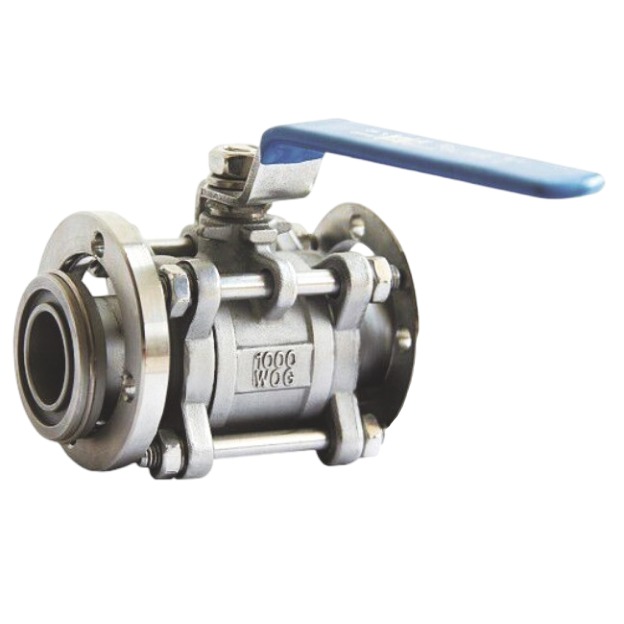
The manual vacuum ball valve on this site can be used as the product inlet, and the specific leakage rate range, sealing material, and interface will be confirmed by this configuration. The identity of ISO vacuum connection also needs to be clarified. Writing high vacuum in the name does not imply that any gas, temperature, or cleaning task is applicable.
The gas release, cleaning status, and temperature conditions of the liquid receiving material will be evaluated separately. Do not ignore the compatibility of process gases or cleaning solutions just because a helium test meets the requirements. After seal replacement, interface modification, or baking process changes, the actual usage boundary needs to be rechecked.
Keep the original data format when comparing quotations
Require the supplier to provide numerical values, units, gases, methods, directions, and conditions for comparison after standardization. Statements in the report that are below the detection range should maintain their true meaning and not be rewritten as absolute zero leakage. The qualification criteria refer to specific finished products or clear coverage areas.
The correspondence between the delivery preservation report and the product number shall be maintained, and the retest items shall be determined according to the changes after maintenance. If the on-site performance deviates, first check the system and test boundary, and then diagnose the valve. There is no need to replace the result with a more sensitive instrument to directly negate the original product.
What is the minimum clear indicator for leakage rate
| Verify project | Clear information is required |
|---|---|
| Quantity and Unit | Allowable leakage rate and its complete units |
| Path | External leakage, valve seat leakage, or actual assembly boundary |
| test | Gas, method, valve position and pressure conditions |
| trace back | Instrument basis, report and finished product identity |
Corresponding products and further reading
The leakage rate data should be read together with the method. Complete unit, clear path and finished product traceability, making vacuum valve sealing acceptance from vague propaganda to comparable and recheckable requirements.
Can be combinedVacuum ball valveData compilation for this working condition; See for similar structuresVacuum valveColumn. The specific configuration and delivery basis need to be confirmed separately.
Extended reading:Can fluoropolymer-lined valves be used for vacuum negative pressure? Guidelines for Lining Risk and Engineering Selection。
General technical basis:Pfeiffer Vacuum Leak Detection Basic DataThe specific configuration and rated conditions of the finished product shall be subject to the information provided in this supply.
Units can be converted, testing gases cannot just change their names
In dimensional conversion, 1, Pa · m ³/s is equal to 10, mbar · L/s, because 1, mbar is 100, Pa, 1, L is 0.001, m ³. This is just a unit conversion, it does not automatically convert the helium test result into air leakage rate. When comparing reports, the detection gas and method should still be retained.
Common customer questions
Can the low vacuum pressure prove that the valve leakage rate is qualified?
It cannot be judged solely based on pressure. Leakage rate is an independent quantity that requires corresponding methods and evidence of detection boundaries.
Can two reports be compared directly with the same unit?
It is also necessary to verify the gas, method, direction, and conditions. Consistent units do not necessarily mean that the test objects are the same.
The lower limit of the detection instrument is very low, can the product also guarantee the same leakage rate?
Instrument capability cannot be written as product guarantee. The finished product indicators should be supported by actual testing and technical confirmation.
 Home
 Valve selection
 news information
 Contact us