


 简体中文
 Japanese
 Korean
 Russian
 繁体中文
 Español
Valve selection
Can PN16 and Class150 be directly interchangeable? Verification of valve pressure rating and flange connection
PN16 and Class150 belong to different level systems and cannot be directly exchanged based on their names. When replacing the valve, check the temperature and pressure rating conditions, flange size, and sealing surface at the same time, and then decide whether it can be matched in situ.
PN and Class are level identifiers, not a unified conversion formula
PN and Class are respectively used in the corresponding standard systems. Class150 cannot be directly understood as allowing 150psi for all materials and at all temperatures; The PN logo cannot be separated from the standards and materials used, and should remain at a constant working pressure throughout the entire temperature range. Comparing two configurations, the pressure temperature rating of the corresponding material group at the design temperature should be obtained, rather than substituting the grade number into a fixed ratio.
The operating pressure of the equipment is only one of the selection inputs. The design pressure, design temperature, and abnormal operating conditions should be provided by the system design and verified under the same set of conditions. Passing the room temperature hydrostatic test does not mean that it has been proven to be suitable for hot working conditions; A higher shell pressure rating will not automatically increase the temperature boundary of the soft seal or lining layer.
Under suitable pressure conditions, the flange may not be directly connected
Flange matching requires a comprehensive standard, diameter, number and diameter of bolt holes, bolt center circle, sealing surface form, and connection thickness. The fact that the outer diameters of the two flanges are close does not mean that the hole position and sealing surface are consistent. The butterfly valve also involves clamping space, fastener and butterfly plate movement clearance, and installation cannot be confirmed just by finding a similar outer diameter on the flange table.
The structural length is another replacement condition. Even if the flanges of the old and new valves can be paired, length changes may still require pipeline adjustments. Installation cannot be done by forcefully pulling the pipeline, expanding the hole, or changing the sealing surface. When replacing old parts, the nameplate, original flange standard, and measurement drawing should be submitted to the supplier together to avoid providing only one appearance photo.
Multiple levels of the same product series are configuration options
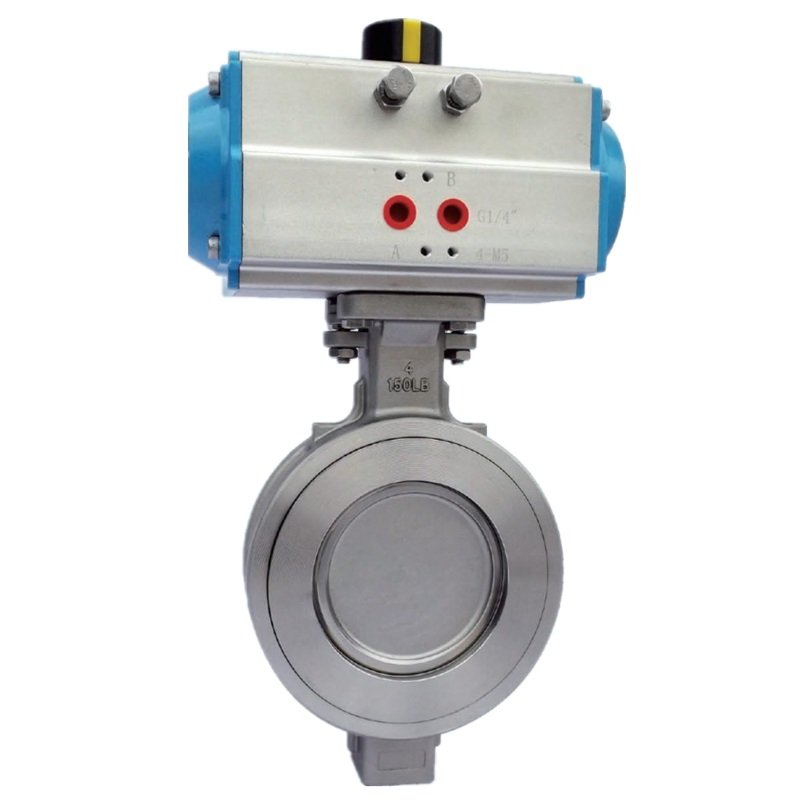
The product information for D672F pneumatic high-performance butterfly valve of Fouten includes configurations for PN16, Class150, and JIS10K. This should be understood as confirming the connection and grade according to the order, rather than a finished product naturally compatible with three types of flanges. The purchase order needs to specify which system will be used this time, and the drawings and delivery documents should be checked accordingly. The optional range of product series cannot replace the interface diagram of specific specifications.
The material options also need to be implemented in the finished product. The valve body, fasteners, valve seat, and gasket jointly affect the usage conditions, and cannot be summarized as a complete set of connections using only three words: stainless steel. When comparing different quotations, first make the standards, materials, and temperature and pressure conditions consistent, and then compare the drivers, accessories, and prices; Otherwise, two seemingly identical quotations may correspond to different products.
Three separate tables should be checked for replacement projects
The first one is the operating condition table: design and normal pressure, temperature, medium, and cleaning status. The second sheet is the rating and material list: actual material grades, adopted standards, and corresponding temperature and pressure capabilities. The third sheet is the connection dimension table: flange, sealing surface, structural length, and installation space. After the three tables are consistent, determine whether it is possible to replace them directly without changing the pipeline.
If an adapter is required, the pipeline design should verify the interface, pressure bearing, sealing, load, and space at both ends. Adapter is not just a metal plate that connects holes together. The inner diameter, lining or gasket insertion around the butterfly valve should also be included in the motion clearance check to avoid the flange being installed but the butterfly plate not being able to open.
Write the procurement requirements in a complete statement that can be accepted
Don't just write 'PN16 or Class150 are both acceptable'. A clearer statement is: specify the flange standard and grade, indicate the sealing surface, finished material, and design temperature and pressure, attach the connection diagram and on-site dimensions, and clarify whether adapter is allowed. Confirm each item after receiving the quotation, and verify the nameplate, drawings, materials, and test records upon delivery, rather than using pressure test reports as a substitute for interface size acceptance.
Replace checklist
| project | Information to be verified |
|---|---|
| Level system | Using standards and versions, PN or Class, not just numbers |
| Temperature, Pressure, and Materials | Rated capacity at design temperature, actual material combination |
| connect | Hole position, sealing surface, fasteners, and structural length |
| Butterfly valve clearance | Does the inner diameter of the pipe, gasket, and lining affect the movement of the butterfly plate |
Corresponding products and further selection
The pressure level solves how to evaluate pressure under corresponding standards and materials; The flange standard solves how connections are paired. Only by checking the grade, temperature and pressure, and size separately can we reduce the problem of "parameters looking the same but cannot be installed on site" in the replacement of old parts.
Can be combinedHigh performance wafer-type pneumatic stainless steel butterfly valveThe actual product information confirms the structure and selection requirements. For more similar products, please refer toPneumatic Valve Column。
General principle reference:ASME B16.5 standard rangeThe specific functions of the finished product are based on the corresponding structure and verification data.
Common customer questions
It turns out to be a PN16 flange. Is it certain that the Class150 valve can be installed?
No. First, verify the standards, hole positions, and sealing surfaces used, and then check the structural length and installation space. Pressure resistance and interface compatibility are two different acceptance criteria.
Is it a universal interface to list PN16, Class150, and JIS10K simultaneously on the product page?
It should be understood as a series of configuration options. The order must determine the actual standards and grades used, and be confirmed with the finished product drawings of that specification, without assuming universality based on multiple names.
Can the problem of high temperature use be solved by simply increasing the pressure level?
We cannot make such a judgment. The working temperature is also limited by conditions such as materials, valve seats, and packing, and it is necessary to verify the complete temperature and pressure capacity and liquid contact materials.
 Home
 Valve selection
 news information
 Contact us