


 简体中文
 Japanese
 Korean
 Russian
 繁体中文
 Español
Valve selection
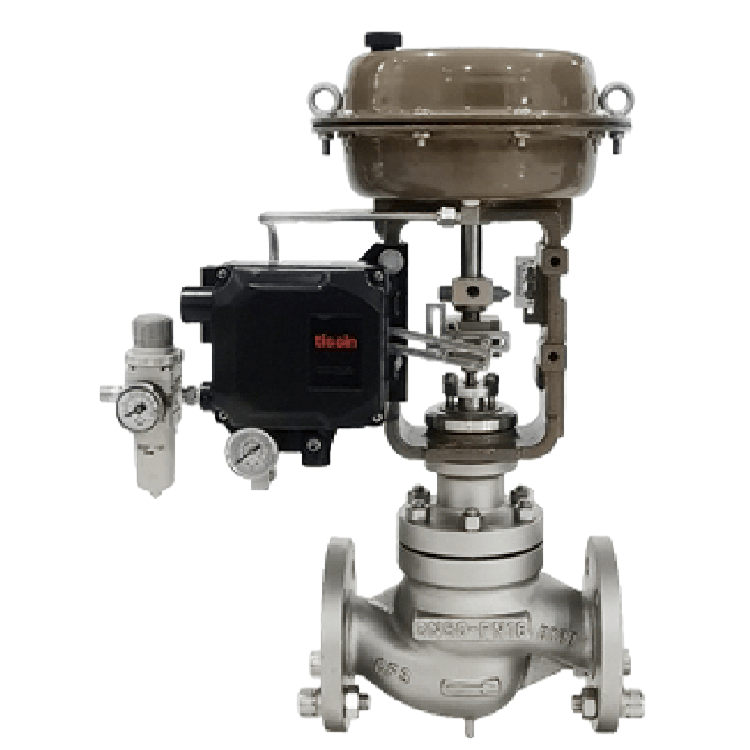
Pneumatic straight through cage type regulating valve
The stainless steel CF8 pneumatic straight through cage type regulating valve is a fluid control device designed specifically for industrial pipeline systems, suitable for regulating the flow, pressure, and temperature of media such as liquids, gases, and steam. The valve body material is made of CF8 stainless steel (corresponding to 304 stainless steel in the ASTM standard), which has both corrosion resistance and high temperature resistance. It can operate stably in the working environment from - 196℃ to 400℃, especially suitable for fields such as chemical, petrochemical, power, and food and medicine that require high material purity.
The valve adopts a cage structure design, with the valve core and cage shaped guide sleeve cooperating to form a multi-stage throttling channel. This structure effectively balances fluid pressure, reduces wear on valve components caused by medium impact, while reducing vibration and noise, and improving regulation stability. The precision machining of the valve seat and valve core ensures sealing performance, and the leakage level meets the standards of ANSI Class IV or higher, meeting the sealing requirements of harsh working conditions. The straight through channel design reduces the flow resistance coefficient and is suitable for applications with high flow rates or large pressure differentials.
As a driving unit, the pneumatic actuator supports single acting spring reset or double acting configuration, and is compatible with control signals such as 4-20mA and 0-10V, with sensitive response and high control accuracy. By adjusting the locator, linear control of valve opening can be achieved to meet the fast response requirements of automation systems. The outer shell of the actuator is made of aluminum alloy material, with a lightweight design that balances strength. It can also be equipped with explosion-proof certification to meet safety regulations for flammable and explosive environments.
This regulating valve has shown outstanding performance in fields such as oil and gas transportation, steam regulation in thermal systems, pH value control in water treatment, and flow management of food processing media. Its modular design simplifies the maintenance process, and the valve internals can be quickly disassembled and replaced, reducing downtime. Users can choose sealing materials such as PTFE and graphite according to the characteristics of the medium, or customize special surface treatment processes to enhance wear resistance. The overall design complies with international standards such as GB and API, balancing reliability and economy, providing efficient solutions for precise control in process industries.
Common problems in product selection
ZJHZ is used for larger pressure differentials, do we still need to choose specialized valve internals?
Need. Please provide the upstream and downstream pressure, medium temperature, and flow range to assess the risks of noise, cavitation, flash evaporation, and erosion. The name of sleeve or cage does not equal the already configured multi-stage pressure reducing or anti cavitation valve internals, and the specific plan should be confirmed according to the working conditions.
Do I need to confirm the input signal and valve position feedback when connecting ZJHZ to DCS?
It is necessary to confirm the control input, valve position feedback, power or gas source conditions, interfaces, and fault location separately. Input and feedback are not the same function, and it cannot be assumed that all analog signals or communication protocols are fully equipped based solely on the name "regulating type".
ZJHZ needs to be turned off after gas interruption. How should the actuator be configured?
The safety position required for the process in case of gas loss should be clarified first, and then the single or double acting scheme, output force or torque, and accessory circuit should be checked. You cannot select cylinders based solely on valve diameter, nor can you assume that all pneumatic configurations will close when there is a loss of air.
 Home
 Valve selection
 news information
 Contact us