


 简体中文
 Japanese
 Korean
 Russian
 繁体中文
 Español
Valve selection

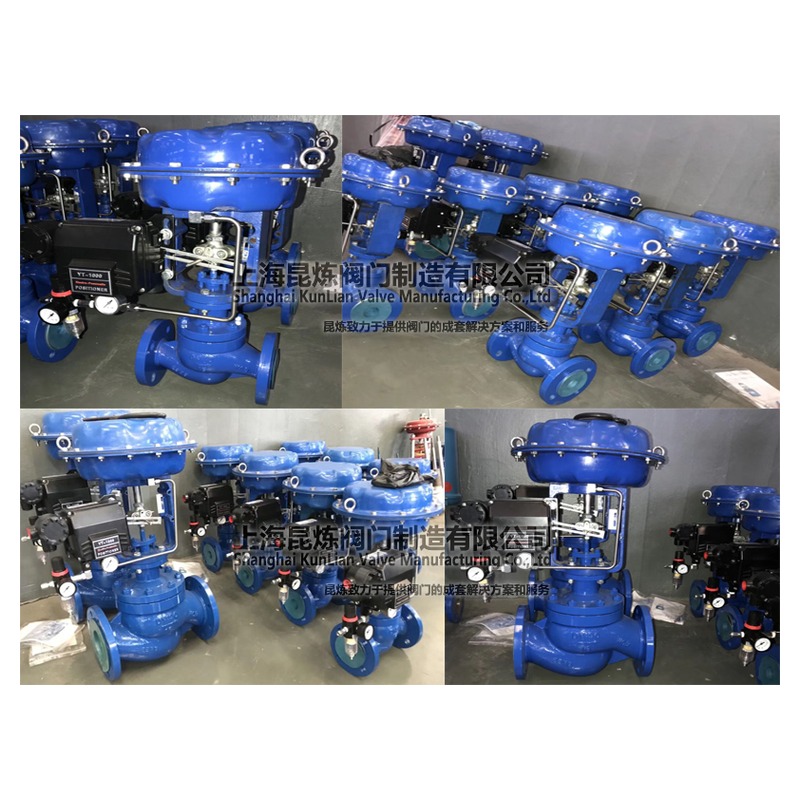
Electric single seat regulating valve
Electric single seat regulating valve is a core fluid control equipment in the field of industrial automation control. It is powered by an electric actuator and equipped with a single seat valve body structure to achieve precise and continuous adjustment of fluid flow rate, pressure, temperature and other parameters in pipelines. It is widely used in various industries such as petrochemicals, water treatment, food and medicine, HVAC, etc.
The core of this valve consists of an electric actuator and a single seat valve body, with a compact and simple structure. The electric actuator can receive 4~20mA standard electrical signals, convert electrical energy into linear mechanical displacement, and drive the valve stem to drive the valve core to move accurately; The single seat valve body adopts a single valve core and valve seat sealing combination, with excellent sealing performance and a leakage rate of up to ANSI IV level or above, which can effectively avoid losses and safety hazards caused by medium leakage.
Its working principle is based on closed-loop regulation. After the control system sends a signal, the actuator drives the valve core to change the flow area with the valve seat, thereby adjusting the medium flow rate. At the same time, the position feedback function feeds back the real-time opening of the valve to the control system to ensure regulation accuracy, and the positioning error can be controlled within ± 1%. The valve core can be customized with linear, proportional, and other flow characteristics according to the working conditions, to meet different control requirements.
Common problems in product selection
ZDLP pipeline is DN50, must the regulating valve also be selected as DN50?
not always. Please provide the minimum, normal, and maximum flow rates, upstream and downstream pressures, media, and temperature. First, calculate Cv/Kv and the available opening range, and then determine the valve diameter; Choosing too large may also make small flow regulation unstable.
Do I need to confirm the input signal and valve position feedback when connecting ZDLP to DCS?
It is necessary to confirm the control input, valve position feedback, power or gas source conditions, interfaces, and fault location separately. Input and feedback are not the same function, and it cannot be assumed that all analog signals or communication protocols are fully equipped based solely on the name "regulating type".
Will ZDLP automatically shut down after a power outage?
The power-off action cannot be determined solely by the name of the electric drive. Ordinary electric actuator cannot default to having automatic valve closing function when power is lost; If the process requires fault closure, the energy storage or other fault safety scheme of the actuator should be confirmed at the time of ordering, and the entire valve interlock verification should be completed.

 Home
 Valve selection
 news information
 Contact us