


 简体中文
 Japanese
 Korean
 Russian
 繁体中文
 Español
Valve selection
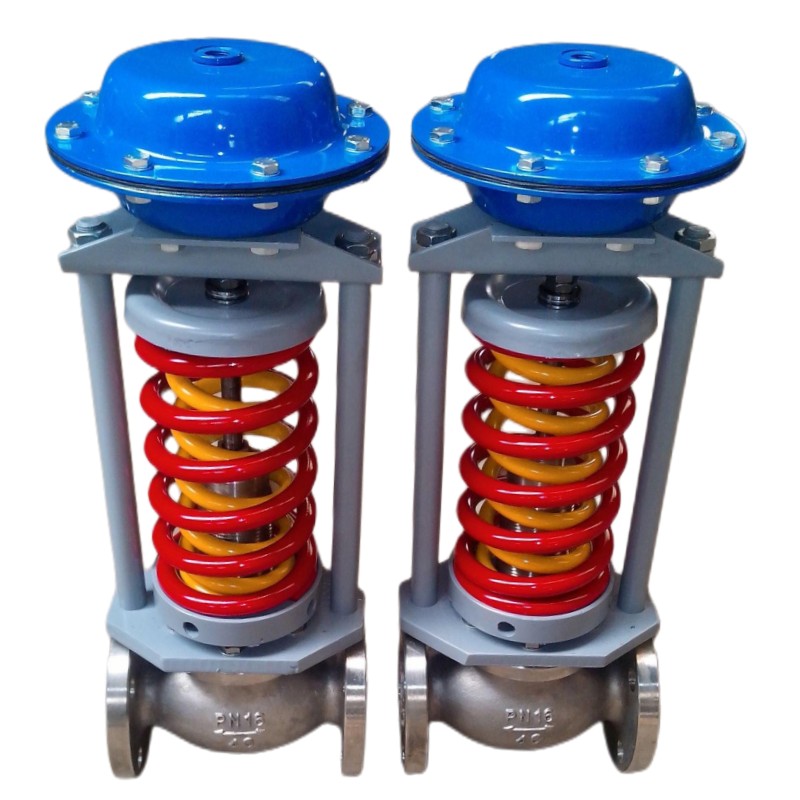
Proportional self operated pressure regulating valve ZZY-16C
The ZZY-16C proportional self operated pressure regulating valve adopts a straight through single seat, flange connection, and self operated drive structure. It uses the pressure feedback of the regulated medium to drive the valve core movement, regulate the flow section and controlled side pressure. The pressure regulating action of the valve does not rely on external power supply or compressed air, and the nominal diameter series is DN15–DN300.
The control object of this valve is pressure. When the valve core changes its opening, the flow rate will also change accordingly, but this does not mean that the pressure and flow rate are independently controlled at the same time, nor does it mean that the pressure before and after the valve always remains in a fixed proportion. When selecting, first determine whether the controlled pressure is located in front of or behind the valve, and then match the action form, pressure measurement position, and setting range.
Direct single seat structure and self operated working principle
The straight through single seat valve body forms a throttling section through the gap between the valve core and the valve seat. The valve stem drives the valve core to make linear motion, changing the area of the medium passing through the valve seat; The valve body is responsible for pipeline connection and pressure load, while the valve internals are responsible for throttling and closing.
The controlled side pressure is transmitted to the pressure sensitive element through the pressure guiding channel, converted into a force, and balanced with the force of the set spring. When the pressure deviates from the set state, the balance of force changes, and the actuator drives the valve stem to adjust the opening, causing the controlled pressure to return to the set state.
The pressure channel is a part of the pressure feedback loop, not an external driving gas source. Blockage, leakage, or inappropriate pressure tapping points in the pressure conduit can all affect the transmission of pressure signals; Therefore, not requiring external power does not mean that pressure pipelines and their installation inspections can be saved.
Pre valve and post valve pressure control and proportional regulation
Valve pressure control is used to reduce and stabilize downstream pressure: In the corresponding valve pressure control configuration, the valve moves in the direction of closing when the downstream pressure increases, and in the direction of opening when the downstream pressure decreases. The regulation process also requires sufficient upstream supply pressure and available pressure difference, and the valve cannot raise the inlet pressure below the required value to the outlet target value.
Pre valve pressure control is used to maintain upstream pressure: In the corresponding pre valve control configuration, when the upstream pressure increases, the valve moves in the direction of opening to increase the outflow; When the upstream pressure decreases, move in the direction of decreasing. The direction of action of the two types of controls is different, and it cannot be assumed that the same valve has completed the conversion just by connecting one pressure pipe.
Proportional adjustment refers to the continuous change of valve opening by the mechanism when the pressure deviation changes, rather than just switching between fully open and fully closed. Direct acting pressure regulation may result in a certain steady-state pressure deviation when the load changes. The pressure regulation performance should be evaluated based on the operating flow rate and inlet and outlet pressures, and cannot be derived from a fixed flow ratio, zero deviation, or fixed adjustment accuracy using a "proportional formula".
Further instructions on valve front control, valve rear control, and pressure tapping circuit can be readWorking principle and selection of self operated pressure regulating valve。
Nominal pressure, set pressure, and material temperature
The nominal pressure rating, pressure setting range, and operating pressure difference are three different parameters. PN16 and PN40 belong to the pressure grade identification; Setting pressure is the target pressure that the regulating mechanism needs to maintain; The operating pressure difference is the difference between the actual pressure before and after the valve. When inquiring and debugging, they should be listed separately and cannot be used to replace the other two items.
PN16–PN40 represents the pressure rating range of this product series, and does not mean that a ZZY-16C can withstand pressure according to the upper limit of the series, nor does it mean that the outlet pressure can be continuously set between 1.6–4.0MPa. Each valve must correspond to its model, nameplate rating, and material pressure and temperature rating, and the setting range is determined by the matching sensitive components and springs. PN identification does not include MPa units; The actual pressure measurement values use units such as MPa and kPa, and distinguish between gauge pressure and absolute pressure.
The main material series includes WCB, 304, and 316, and the selection of materials needs to be combined with the composition of the medium, corrosiveness, and design temperature. The valve body, valve core, valve seat, valve stem seal, and pressure sensitive components undertake different tasks, and the temperature resistance range of a certain shell material cannot be directly used as the allowable temperature of the entire valve.
Steam or high-temperature medium operating conditions require consideration of the thermal impact of the pressure circuit on sensitive components. When using a condensation isolation scheme, the liquid in the condensation container and pressure conduit is used to transfer pressure and reduce the direct impact of the heat medium on sensitive components; Before putting into use, the required liquid filling and exhaust checks for the supporting circuit should be completed, and the condensing accessories should not be considered as a unified standard for all operating conditions.
Structural parameters and installation debugging
| project | Structure and selection content |
|---|---|
| Product Model | ZZY-16C |
| Nominal diameter series | DN15–DN300 |
| Flow channel structure | Direct single seat |
| connection method | flange connection |
| Drive energy | The pressure energy of the regulated medium itself |
| Control method | Pressure feedback and set spring force balance, continuously changing opening degree |
| Pressure level series | PN16–PN40; Not equivalent to the rated value or pressure regulating range of a single valve |
| Main material series | WCB、304、316 |
| Order control objectives | Clearly define the pressure control before or after the valve, and match the form of action and pressure measurement position |
| Traffic selection data | Minimum, normal, maximum flow rates and pre - and post valve pressures at each operating point |
The valve capacity should be matched with the flow rate and pressure difference, and cannot be selected solely based on the diameter of the pipeline. When comparing self operated, pneumatic, and electric regulating structures, reference can be madeIndustrial Control Valve Selection ColumnThe pressure regulating valve is responsible for process pressure control and cannot replace the independent overpressure protection and maintenance isolation device of the system.
- Clean up pipeline debris, install according to the valve body flow direction markings, check the flange alignment and maintenance space around the valve, and do not forcefully correct pipeline misalignment with the valve.
- Connect the pressure sensing circuit according to the selected control target, check the pressure guiding pipe, joint, and pressure sensing point to ensure that the circuit is unobstructed, leak free, and does not confuse the pressure sensing before and after the valve.
- When using a condensation isolation configuration for high-temperature media, the corresponding liquid filling, exhaust, and circuit inspection should be completed first before putting it into operation to avoid direct impact of the thermal medium on sensitive components that are not suitable for high temperatures.
- Gradually establish the medium pressure during operation, adjust the set value under representative operating flow rates, and observe the controlled pressure, valve action, and oscillation under different loads.
- Before maintenance, isolate and release the pressure in the main channel and pressure circuit, and drain the residual medium; When disassembling the setting mechanism, it is also necessary to safely release the spring energy storage, and the cover cannot be opened simply by resetting the main line pressure gauge to zero.
When placing an order, provide Fouten Flow Control (Jiangsu) Co., Ltd. with the medium, temperature, pressure before and after the valve, target set pressure, operating flow rate, connection standards, and installation conditions, which can respectively determine the pressure configuration, pressure regulating mechanism, and pressure accessories.
ZZY-16C Self operated Pressure Regulating Valve Common Problems
Does ZZY-16C require an external power supply or compressed air?
The basic pressure regulation action utilizes the pressure energy of the regulated medium itself, without relying on external power sources or compressed air. The pressure pipe is responsible for transmitting the controlled pressure, not the driving gas source pipe; When using independent electrical monitoring accessories, accessory power supply and valve self regulating pressure are two different things.
Is PN16–PN40 the outlet pressure regulating range of ZZY-16C?
No. It represents the series pressure rating and cannot be used as an export setting range, nor can the upper limit of the series be used as the rated capacity of each valve. The set pressure of the outlet or inlet needs to be matched with the actual sensitive components, springs, and operating pressure difference, and it should be clearly controlled whether it is the pressure before or after the valve.
Why do we need to pay attention to condensation isolation in the pressure circuit when using ZZY-16C for steam?
Steam directly reaching sensitive components that are not resistant to the corresponding temperature can pose a risk of thermal damage. When using a matching condensation isolation structure, pressure is transmitted through liquid and direct heat effects are reduced. Before use, the prescribed liquid filling, exhaust, and connection checks are completed. The allowable temperature of the entire valve is still limited by the shell, seal, sensitive components, and circuit configuration.
 Home
 Valve selection
 news information
 Contact us