


 简体中文
 Japanese
 Korean
 Russian
 繁体中文
 Español
Valve selection
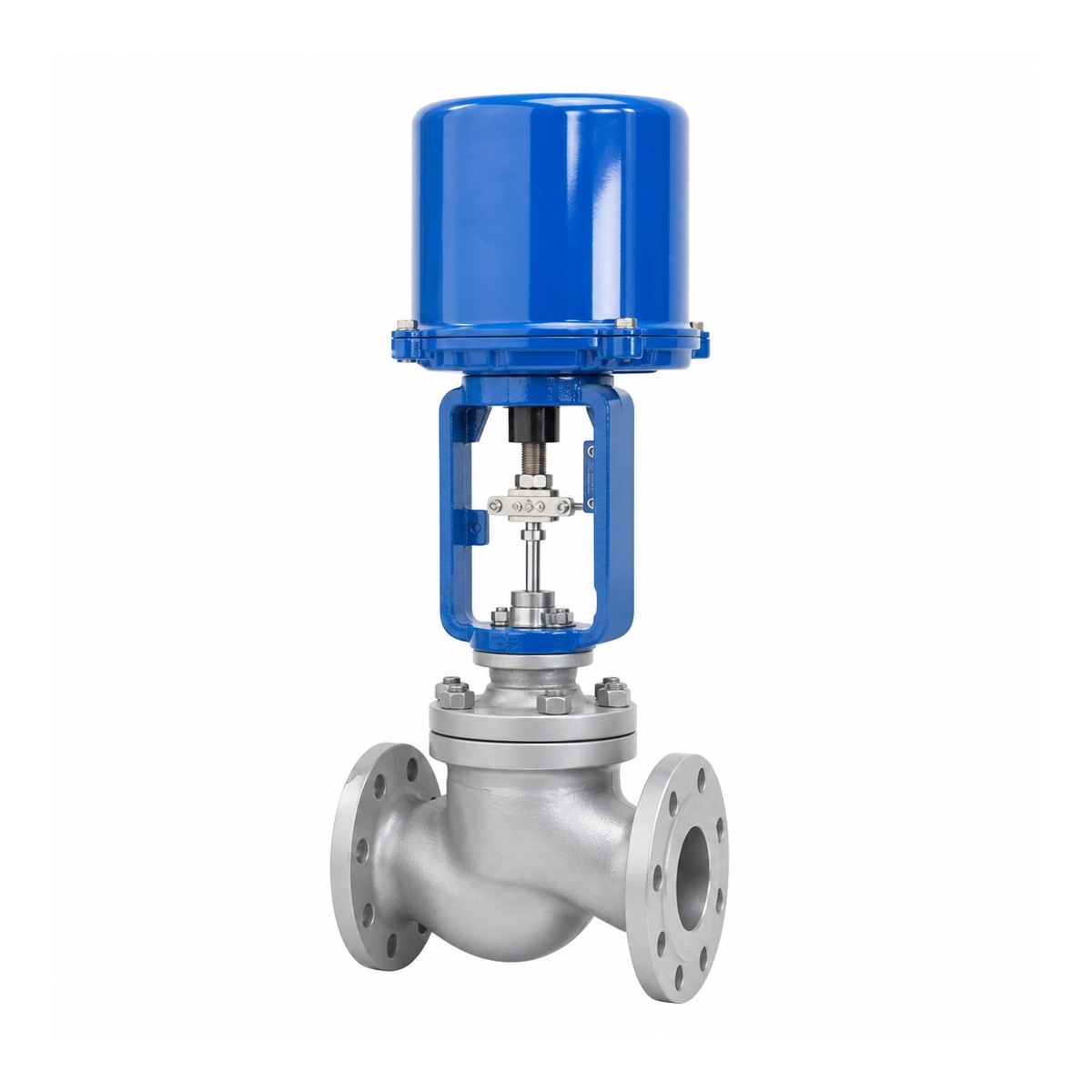
ZAZP-40C electric cast steel flange single seat regulating valve
Product Specifications
| parameter | Configuration |
|---|---|
| Product Model | ZAZP-40C |
| Valve Type | Electric single seat regulating valve |
| Nominal diameter series | DN20–DN200 |
| Nominal pressure | PN40 |
| Valve body material | WCB cast steel |
| Valve body structure | Direct single seat |
| connection method | flange connection |
| Valve core movement | linear stroke |
| actuator | Direct stroke electric actuator |
| Control method | Continuous valve position adjustment |
| control signal | Configurable analog control |
| Valve position feedback | Optional |
| sealed structure | Determine based on the actual combination of valve core and valve seat |
| Usage | Industrial pipeline flow and related process variable control |
Product Introduction
The ZAZP-40C electric cast steel flange single seat regulating valve adopts the WCB cast steel valve body, straight through single seat valve internals, and straight stroke electric actuator, used for continuous flow regulation of industrial automation pipelines.
The valve is driven by an electric actuator to lift and lower the valve stem and valve core, changing the flow area between the valve core and valve seat, and cooperating with an automatic control system to adjust the flow rate of the process medium.
The nominal pressure of this model is PN40. The nominal pressure belongs to the valve pressure rating identification, and the actual allowable working temperature, pressure, and maximum regulated pressure difference need to be determined in conjunction with the valve body, valve internals, sealing structure, and actuator.
1、 Direct single seat adjustment structure
ZAZP-40C adopts a straight through single seat valve body, and the valve core moves linearly along the valve stem.
The flow cross-section between the valve core and valve seat changes with the stroke, forming different throttling capabilities.
The single seat structure has a clear valve core and seat fitting position, and the corresponding flow characteristics and sealing structure of the valve internals can be selected according to the process requirements.
The valve core is subjected to axial load under the action of working pressure difference, so the thrust selection of the actuator needs to be calculated based on factors such as maximum closing pressure difference, valve seat sealing force, and mechanical friction.
2、 PN40 pressure rating and working pressure difference
ZAZP-40C adopts the valve body configuration of PN40 pressure rating.
The nominal pressure PN40 cannot be confused with the flow regulation pressure difference or the maximum closing pressure difference.
When the valve is opened and involved in process regulation, the actual working pressure difference varies with the flow rate and system resistance.
When the valve is closed, the actuator needs to overcome the specified pressure difference and the force required for valve seat sealing.
Therefore, even if two valves have the same nominal pressure and nominal diameter, electric actuators with different output capabilities may be required.
3、 WCB valve body and valve trim material
ZAZP-40C adopts WCB cast steel valve body.
WCB material mainly undertakes the pressure bearing and mechanical structural functions of the valve body. The valve core, valve seat, valve stem, and packing belong to different working components, and their material selection needs to be combined with the medium, temperature, pressure difference, and closing requirements.
For working conditions with obvious corrosiveness, solid particles, or special temperature conditions, a comprehensive assessment should be conducted on the wear risks of the liquid receiving component materials, sealing pairs, and valve internals.
Metal seals and non-metal seals have different usage conditions, and their allowable temperature, leakage performance, or closing force requirements cannot be directly equated.
4、 Electric actuator and signal control
ZAZP-40C adopts a linear electric actuator.
The regulating actuator controls the movement of the valve stem through the motor and transmission mechanism, and changes the position of the valve core according to the instructions of the control system.
For industrial pipelines that require remote process control, analog inputs and corresponding valve position feedback suitable for PLC or DCS systems can be configured.
Control instructions, actual position feedback, and switch in place signals belong to different functions and should be configured and verified separately.
For processes that require entering a specific safe location after a power outage, a fail safe solution that meets relevant requirements should also be selected. Ordinary electric actuators cannot be considered as automatic shutdown mechanisms when the power is cut off.
Guidelines for Control Signals and Valve Position Feedback of Electric Regulating Valves
5、 Flow coefficient and valve diameter
The selection of regulating valves requires not only confirmation of nominal diameter, but also calculation of flow capacity.
It is recommended to provide the medium flow rate, pre valve pressure, post valve pressure, and temperature separately according to the minimum, normal, and maximum operating conditions.
When selecting the valve seat diameter and flow characteristics, the actual adjustment range of each operating point should be checked to avoid being in an inappropriate opening area for a long time.
For liquid media with significant throttling pressure differences, it is also necessary to evaluate the risks of vaporization, cavitation, flash evaporation, and erosion of valve internals.
6、 Installation and Debugging
Before installation, check the valve nameplate, flow direction, flange size, and sealing surface condition, and remove welding slag, hard particles, and other foreign objects from the pipeline.
The electric actuator should have sufficient maintenance space, and the electrical wiring should meet the requirements of the on-site environment and equipment.
During the first debugging, check the power supply, control signals, valve action direction, stroke limit, and valve position feedback.
Continuous adjustment of operating conditions also requires verification of actual operational response in conjunction with the control system.
During maintenance, the pipeline medium should be isolated, pressure relieved, and relevant energy sources should be cut off first. After confirming the absence of residual pressure and mechanical energy storage, dismantling and inspection can be carried out.
7、 Selection and ordering
When purchasing ZAZP-40C electric single seat regulating valve, the medium name, operating temperature, minimum and maximum flow rates, pressure before and after the valve, connection standards, control signals, and requirements for closing leaks should be provided.
Fouten Flow Control (Jiangsu) Co., Ltd. can determine valve internals, sealing structures, and electric actuator configurations based on operating conditions, providing corresponding valve selection solutions for industrial process control systems.
Frequently Asked Questions FAQ
What is the difference between ZAZP-40C and ZAZP-16C?
The two belong to product configurations with different pressure levels. ZAZP-40C adopts PN40 pressure grade, and ZAZP-16C adopts PN16 pressure grade. The actual valve body size, material, actuator, and usage conditions should be determined according to the corresponding model.
Can ZAZP-40C be directly selected according to the diameter of the pipeline?
No. The actual flow capacity of the regulating valve needs to be calculated based on the flow rate, working pressure difference, and flow characteristics of the valve components, and the selection cannot be determined solely by the diameter of the pipeline connection.
Will the electric single seat regulating valve automatically close after losing power?
not always. Ordinary electric actuators usually cannot continue to rely on the motor to complete normal operations after losing the main power supply. For working conditions that require power outage to reach the designated safe location, corresponding fault safety devices should be installed.
 Home
 Valve selection
 news information
 Contact us