


 简体中文
 Japanese
 Korean
 Russian
 繁体中文
 Español
Valve selection
Can fluoropolymer-lined valves be used for vacuum negative pressure? Guidelines for Lining Risk and Engineering Selection
fluoropolymer-lined valves are used for negative pressure, and the anti negative pressure ability of the lining layer must be confirmed separately. Positive pressure level cannot replace vacuum range; The inquiry should include the minimum absolute pressure, temperature, as well as the evacuation and shutdown cooling process.
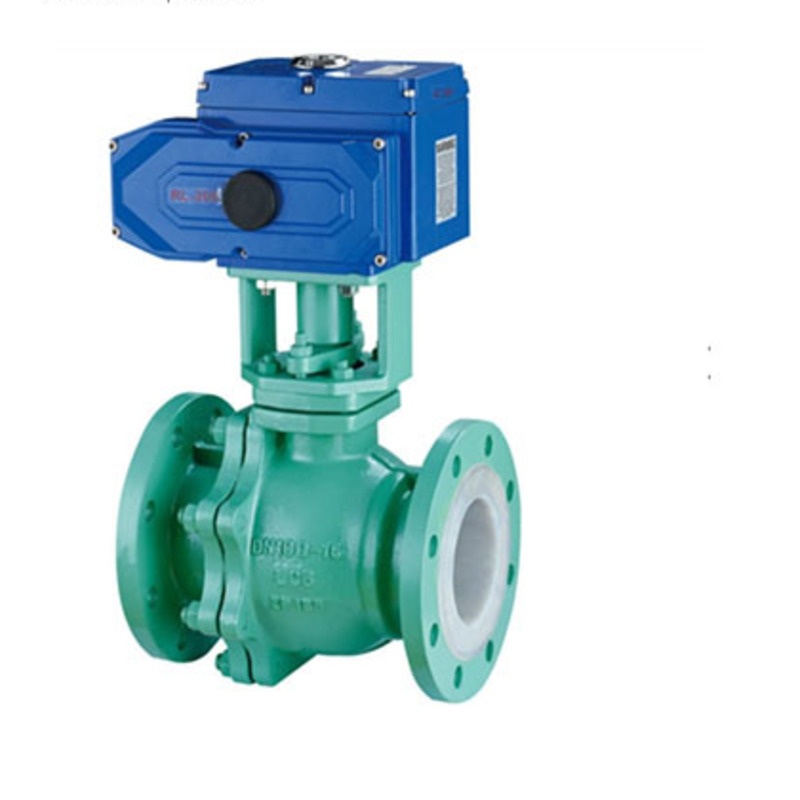
Related products:fluoropolymer-lined valve
But an easily overlooked issue is that fluoropolymer-lined valves that can withstand positive working pressure may not necessarily be directly used in vacuum or negative pressure pipelines.
Under negative pressure conditions, the direction of pressure difference and local stress state experienced by the lining may change. If the lining structure, fixing method, or temperature adaptability are insufficient, problems such as bulging, deformation, and detachment from the support surface may occur, affecting the valve's opening and closing and sealing performance.
1、 Why is it necessary to separately confirm the negative pressure capacity of fluoropolymer-lined valves?
fluoropolymer-lined valves typically consist of a metal pressure bearing shell, a fluoropolymer liner, a valve seat, and other sealing components.
Under positive pressure conditions, some lining layers are subjected to medium pressure and pressed towards the metal support surface.
But when the internal pressure of the valve is lower than the external pressure, the direction of the pressure difference experienced by the lining may change. For certain structures, if the lining is not fixed enough or the local support conditions are insufficient, there may be a risk of deformation.
The factors that affect the applicability of negative pressure include:
- Lining material and actual grade;
- Lining molding method;
- Lining thickness and fixed structure;
- Internal support conditions of valve body;
- Valve nominal diameter;
- Working temperature and temperature cycling;
- Continuous vacuum or intermittent vacuum conditions.
Therefore, the vacuum applicability cannot be simply judged based on the nominal pressure levels of positive pressure such as PN16 and PN25.
2、 Which pipelines are prone to negative pressure conditions?
- Vacuum pump connecting pipeline: The valve may be in a vacuum pumping state for a long time, and it is necessary to clarify the minimum absolute pressure, operating time, and medium conditions.
- Centrifugal pump suction pipeline: There may be operating conditions on the suction side of the pump that are lower than the ambient atmospheric pressure. Valve stress should be determined based on actual suction pressure, pipeline resistance, and transient operating conditions.
- High temperature medium cooling pipeline: The condensation of steam or a decrease in medium temperature in a closed pipe section may cause a decrease in internal pressure, resulting in abnormal negative pressure.
- Tank drainage and equipment maintenance: If there is insufficient air supply during the drainage process, negative pressure may form, and the applicability of valves and related pipeline components needs to be checked.
- Alternating positive and negative pressure system: Reaction vessels, vacuum drying, and some chemical equipment may experience repeated pressure changes, requiring simultaneous evaluation of the effects of mechanical loads and temperature cycling.
3、 Which is more suitable for vacuum, PFA, FEP, or PTFE?
PTFE (F4), FEP (F46), and PFA Both belong to fluorinated polymers, but there are differences in their processing technology and structural applications.
PTFE often uses molding, sintering, or other specific forming methods; FEP and PFA can be melt processed and are suitable for some different lining manufacturing processes.
However, the vacuum applicability of the valve cannot be determined solely based on the material name.
Even with the same PFA material, different valve body structures, lining thicknesses, and fixing methods may result in different negative pressure adaptability.
Therefore, when selecting fluoropolymer-lined valves for vacuum conditions, the manufacturer should be required to clarify:
- Applicable negative pressure range;
- The combination limitation of temperature and pressure;
- Lining structure and fixing method;
- Does it support continuous vacuum;
- Is there any applicability test or engineering proof.
4、 How to choose between fluoropolymer-lined ball valves and fluoropolymer-lined butterfly valves?
The flow channels, valve seats, valve chambers, and sealing structures of fluoropolymer-lined ball valves and fluoropolymer-lined butterfly valves are different, and their negative pressure performance cannot be directly equated.
fluoropolymer-lined ball valve: Focus on confirming the ball body, valve seat, valve chamber, and lining fixing structure. For structures with closed valve chambers, it is also necessary to consider abnormal pressure accumulation and temperature changes.
fluoropolymer-lined butterfly valve: Focus on confirming the lining valve seat, butterfly plate sealing contact, and flange clamping structure to avoid valve seat deformation or displacement under negative pressure conditions.
Related product structure reference
The flow channels, sealing structures, and driving methods of different fluoropolymer-lined valves are different. When selecting engineering models, one can refer to the following existing products to understand the structural differences:
- Q641F46-16C Pneumatic fluoropolymer-lined Ball ValvePneumatic driven fluoropolymer-lined flange ball valve.
- Q941F46-16C electric fluoropolymer-lined ball valveElectric driven fluoropolymer-lined flange ball valve.
- D971F46-16C electric fluoropolymer-lined butterfly valveElectric driven wafer-type fluoropolymer-lined butterfly valve.
The above products are only used to illustrate the differences in the structure and driving mode of fluoropolymer-lined valves, and do not represent that the three models have been confirmed to be suitable for vacuum negative pressure environments. The specific negative pressure applicability must be confirmed based on the lining structure, pressure conditions, and formal technical data of each model.
5、 What parameters are required for fluoropolymer-lined valves under negative pressure conditions?
Suggest providing the following information to the manufacturer:
| parameter | requirement |
|---|---|
| medium | Name, concentration, phase, corrosiveness |
| Normal pressure | Normal operating pressure |
| Minimum pressure | Minimum absolute pressure or negative pressure value |
| Operating temperature | Normal, maximum, and minimum temperatures |
| Working condition type | Continuous vacuum, intermittent vacuum, alternating positive and negative pressure |
| valve caliber | DN and pipeline specifications |
| Lining material | PTFE、FEP、PFA |
| connection method | Flange standards and sealing forms |
| Drive Type | Manual, pneumatic, electric |
| Acceptance Requirements | Applicability proof and necessary testing |
The minimum pressure should indicate whether gauge pressure or absolute pressure is used to avoid incorrect selection due to confusion of pressure benchmarks.
6、 What should be noted during installation and maintenance?
Before installing the fluoropolymer-lined valve, the lining flange, sealing surface, and internal flow channel should be checked to confirm that there are no obvious scratches, cracks, local bulges, or other abnormalities.
When installing flanges, the tightening sequence and torque of bolts should be controlled according to the manufacturer's requirements to avoid lining damage caused by flange deviation or excessive tightening.
During operation, if valve jamming, abnormal opening and closing torque, decreased sealing performance, or significant changes in internal flow resistance are found, the valve seat and lining condition should be inspected according to on-site safety procedures.
For pipelines with high process risks, valves should not be disassembled arbitrarily under pressure or with hazardous media.
8、 Summary
When fluoropolymer-lined valves are used in vacuum or negative pressure pipelines, the material corrosion resistance, lining structure, temperature, pressure difference, and actual process conditions must be considered simultaneously.
Choose fluoropolymer-lined ball valves, fluoropolymer-lined butterfly valves, or other optionsLined valveAt this time, it is necessary to first clarify the minimum pressure that may occur in the pipeline, and then confirm whether the specific product has the corresponding negative pressure application capability.
The fluoropolymer-lined valve of Fouten Flow Control (Jiangsu) Co., Ltd. can be used to understand different valve structures. The final configuration should be based on the complete operating parameters, product information confirmed by the manufacturer, and technical agreement.
Common customer questions
Can PN16 fluoropolymer-lined valve be directly used for vacuum?
It cannot be directly determined. PN16 belongs to nominal pressure identification and cannot replace vacuum applicability confirmation. It needs to be judged based on the specific valve structure, lining design, and product technical data.
Is the bulging of the lining layer in the fluoropolymer-lined valve necessarily a quality issue?
not always. It is necessary to comprehensively investigate negative pressure, temperature changes, lining fixation methods, medium penetration, as well as manufacturing and installation factors.
Can using PFA lining solve the problem of negative pressure deformation?
not always. The PFA material itself cannot determine the vacuum performance of the entire valve, and the lining structure and actual negative pressure application range still need to be confirmed.
 Home
 Valve selection
 news information
 Contact us