


 简体中文
 Japanese
 Korean
 Russian
 繁体中文
 Español
Valve selection
What is the difference between pneumatic valve loss of air and power? Guidelines for Fail-Safe Position and Interlock Configuration
Loss of gas, power, and signal may occur at different times, and the valve results may also vary. First, write down the target valve positions required for each fault in a table, and then implement them through actual actuators, pneumatic circuits, and control accessories.
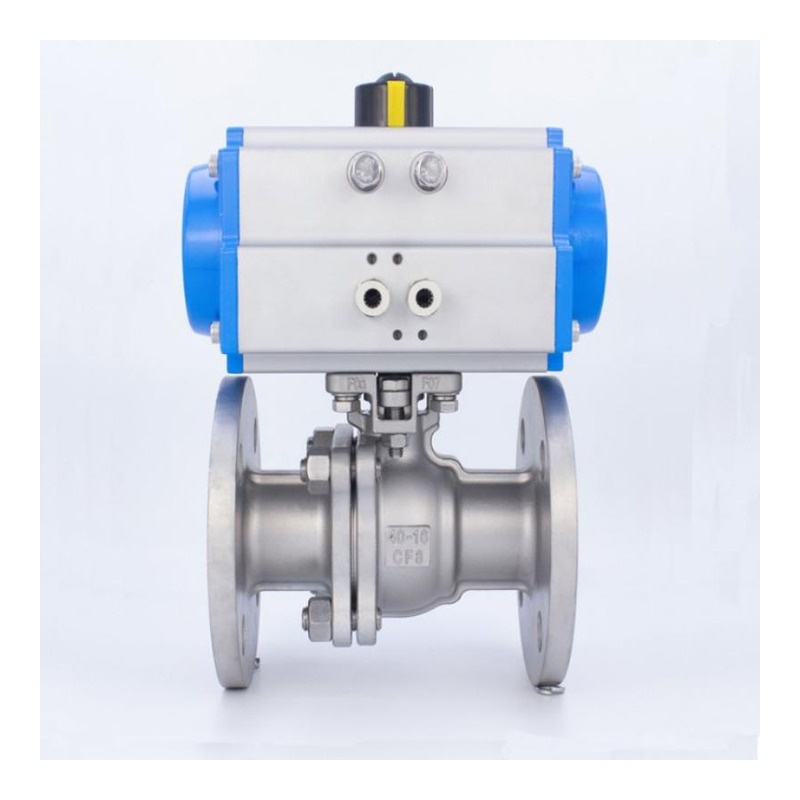
In practical engineering, pneumatic valves not only need to be opened and closed normally, but also the action status must be clearly defined when the gas source is interrupted, the solenoid valve loses power, or the control signal is abnormal.
Pneumatic valves may not necessarily close when they lose air or power. The final position of the valve depends on the type of actuator, the direction of spring reset, the air circuit of the solenoid valve, the status of the air source, and the fault safety design.
1、 What is the difference between pneumatic valve loss of air and power?
Although gas loss, power loss, and signal loss may all cause the pneumatic valve to fail to control properly, the cause of the malfunction and the actual response are different.
1. pneumatic valve loses air
Loss of air refers to insufficient compressed air pressure or supply interruption that drives the actuator.
Common reasons include air compressor failure, gas supply pipeline leakage, abnormal gas source treatment device, and insufficient gas supply pressure.
For single acting spring reset actuators, after the air source pressure drops, the spring usually pushes the actuator towards the preset position.
For double acting actuators, due to the lack of automatic spring reset capability, the valve position after loss of air may be affected by residual air pressure, medium load, and gas path structure.
2. pneumatic valve loses power
Power outage usually refers to the interruption of power supply to solenoid valves, positioners, or control accessories.
If compressed air still exists, the solenoid valve may drive the actuator to complete the action according to its power-off reset air path.
Therefore, the loss of power to the solenoid valve does not mean that the pneumatic actuator has completely lost its driving air source.
3. pneumatic valve loses signal
Signal loss refers to the interruption or abnormality of command signals between the controller and on-site control accessories.
For pneumatic control valves with valve positioners, the handling of abnormal control signals depends on the configuration of the valve positioner, actuator, and control system.
Signal loss, power loss, and gas loss cannot be considered as the same type of fault.
2、 Fault response of single acting and double acting actuators
There are significant differences between single acting and double acting actuators in normal operation and fault states.
| project | Single acting spring reset | Double acting pneumatic actuator |
|---|---|---|
| Normal driving | Gas source drive and spring reset | The direction of the switch depends on the air source |
| Spring return | Usually possessing | Usually not available |
| After losing breath | Towards the preset reset position | No default spring reset action |
| Gas loss closure | Can be achieved through corresponding reset direction | Special design and validation are required |
| Maintain Qi Loss | Special configuration and confirmation are required | Cannot default to reliable maintenance |
| Main selection parameters | Spring force, output capacity, pressure difference | Output torque or thrust, air circuit and accessories |
The single acting actuator can choose whether to open or close the valve according to the actual structure.
If the direction of spring reset corresponds to the valve closing, it can form a lost air closing scheme; If the corresponding valve is opened, it can form a lost air opening scheme.
However, regardless of which solution is adopted, it must be confirmed that the spring output capacity can meet the actual valve load.
The double acting cylinder may temporarily remain in its original position after losing air, but this state does not guarantee reliable mechanical locking.
For processes that require positioning, it is necessary to separately verify the positioning accessories and fault safety design.
3、 How to choose between gas loss control, gas loss control, and gas loss maintenance?
The location of the fault safety should be determined by the process requirements, and cannot be judged solely based on the name of the ball valve, butterfly valve, or regulating valve.
1. loses air and closes
Partial chemical agent injection, hazardous material transportation, or emergency pipeline shutdown may require the cessation of medium supply in case of abnormal gas source.
To adopt the airlock scheme, it is necessary to confirm that the actuator has sufficient closing capacity under the design pressure difference.
2. loses air and opens
Partial cooling, fluid protection, or specific safety pathways may require maintaining circulation in the event of a malfunction.
This operating condition may adopt a loss of air opening scheme, but it should be determined by process safety analysis and cannot be used as a unified configuration for all cooling systems.
3. gas loss maintenance
Partial continuous control systems may require maintaining the existing valve position during faults to avoid sudden changes in flow rate.
Reliable positioning requires corresponding gas path isolation, locking, or storage schemes, and verification under the load and fault conditions specified in the project.
4、 Why do solenoid valves affect the safe position of faults?
Electromagnetic valve is an important accessory of pneumatic valve control system, mainly responsible for switching the compressed air flow path according to electrical signals.
Different types of solenoid valves have different states of energized and de energized circuits.
Actual selection needs to be confirmed:
- The gas path connection after the solenoid valve is powered on.
- The reset state of the solenoid valve after power failure.
- Connection method of actuator air port.
- Valve opening and closing direction.
- The actual response when the gas source is interrupted.
- Whether to configure protective or gas storage accessories.
- Is it necessary to urgently disconnect the interlock.
- Whether the electrical accessories meet the on-site environmental requirements.
For example, a double acting actuator changes the direction of the air path through an electromagnetic valve.
If the solenoid valve loses power but the air source is still normal, the actuator may complete the specified action according to the configuration of the lost power circuit.
If both the gas source and power supply are interrupted, actions that were originally driven by the gas source may not be able to be completed.
Therefore, the expected actions in case of gas loss, power loss, and simultaneous failure should be specified separately in the technical agreement.
5、 How to choose a fail safe configuration for pneumatic fluoropolymer-lined ball valves?
Pneumatic fluoropolymer-lined ball valves are commonly used in chemical pipelines that require consideration of corrosive media. In addition to the valve body, lining, and sealing materials, it is also necessary to confirm the actuator and control accessories.
For example,Q641F46-16C Pneumatic fluoropolymer-lined Ball Valve Can be used as a reference for selecting pneumatic fluoropolymer-lined flange ball valves.
The actual project should specify:
- Media, temperature, pressure, and diameter;
- Actual opening and closing torque of the valve;
- Single acting or double acting actuators;
- Gas source pressure and quality;
- Requirements for gas loss opening or closing;
- Electromagnetic valve power failure action;
- Limit switch and valve position feedback;
- Do you need explosion-proof electrical accessories;
- Is there an emergency cut-off interlock.
For conventional industrial media, reference can be made Q641F-16C Pneumatic Flange Ball ValveCompare different valve body and sealing material configurations.
The actual fault safety location of these two products should be confirmed based on the final actuator and gas circuit configuration, and cannot be directly judged by the model alone.
6、 What is the relationship between gas loss protection and pneumatic valve interlocking?
Industrial automation interlocking not only requires the controller to issue a closing or opening command, but also requires confirmation that the on-site executing mechanism has the conditions to complete the action.
A complete pneumatic valve interlocking scheme usually requires consideration of the following aspects:
Control system
Generate specified interlocking instructions based on process conditions.
Solenoid valve
Change the gas path status according to the control instructions.
Pneumatic actuator
Drive the valve under the action of gas source or spring.
Valve body
Complete corresponding actions under actual medium pressure difference.
Valve position feedback
Provide actual switch position or continuous valve position information.
Fault Alarm
Report action failure, inconsistent valve position, or other abnormalities according to system requirements.
It should be noted that issuing a close command by the control system does not mean that the valve has reached the closed position.
Similarly, the signal of the limit switch being in place does not necessarily prove that the valve meets a specific closing leakage level.
Therefore, valve position feedback, action confirmation, and sealing acceptance should be defined separately according to process requirements.
7、 Pneumatic Valve Fault Safety Configuration Checklist
Before ordering pneumatic valves, it is recommended to confirm the main parameters according to the table below.
| inspection items | Clear content is required |
|---|---|
| Valve Type | Ball valves, butterfly valves, regulating valves, etc |
| Medium conditions | Medium, temperature, pressure, corrosiveness |
| actuator | Single acting or double acting |
| driving capability | Output torque or thrust |
| Gas source conditions | Work pressure, quality, and supply capacity |
| Location of loss of breath | Requirements for opening, closing or special protection |
| Power failure response | Electromagnetic valve or control accessory power failure action |
| Signal anomaly | Response after losing control signal |
| Interlocking interface | Control instructions and feedback methods |
| Valve position feedback | Open position, close position or continuous position |
| Electrical environment | Protection, Explosion proof, and Wiring Requirements |
| Acceptance Requirements | Fault testing, action confirmation, and test documents |
The required air source pressure, output torque, and accessory configuration for different models may vary, and the same set of parameters cannot be applied.
More valve structures can be found in Pneumatic Ball Valve Product Column Chinese control.
8、 What items need to be confirmed for on-site acceptance?
After the installation of pneumatic valves, functional verification should be carried out according to the product manual and approved on-site testing procedures.
Normal opening and closing
When the gas source is confirmed to be normal, the valve can complete the opening, closing, or specified adjustment actions according to the control instructions.
Valve position feedback
Verify whether the actual mechanical position matches the feedback information from the control system.
Electromagnetic valve power failure response
Under safe testing conditions, confirm that the direction of action of the solenoid valve after power loss is consistent with the design.
Gas source fault response
Using approved simulation methods, check the actual response and final state when the gas source is insufficient or interrupted.
fault recovery
After confirming the restoration of the gas source or power supply, there will be no unauthorized accidental actions.
Interlocking function
Confirm that the control instructions, actuator actions, and feedback logic meet the project requirements.
When dealing with toxic, corrosive, flammable or high-pressure media, necessary process isolation and safety permit procedures should be carried out first, and the gas source should not be cut off for testing under normal production conditions.
10、 Engineering selection suggestions
The core of the fault safety configuration of pneumatic valves is to match the actuator, pneumatic accessories, and process safety requirements with each other.
When purchasing, it is not only necessary to clarify the valve model, pressure rating, and driving method, but also to include the requirements for gas loss position, power loss response, control signal, valve position feedback, and interlocking in the technical agreement.
Fouten Flow Control (Jiangsu) Co., Ltd.'s Pneumatic Valve Product Center Multiple pneumatic valve structures are provided, and the combination of actuator and control accessories can be further determined based on actual working conditions.
The final configuration and acceptance requirements shall be based on the confirmed product documentation, control logic, and project technical agreement.
Supplementary selection instructions
Is it the same thing for a pneumatic valve to close when it loses air and when it loses power? No. The power-off switch emphasizes the safe position after abnormal gas source, and the power-off switch emphasizes the action after electrical control failure. Two types of faults need to be confirmed separately.
Common customer questions
Does the pneumatic valve always close automatically after losing air?
not always. Single acting actuators are usually driven by springs to move the valve towards a predetermined position, which may be open or closed; Double acting actuators typically do not have default spring reset capability. The final action should be based on the actual execution mechanism and gas circuit configuration.
Will the pneumatic valve solenoid valve always close after losing power?
not always. After the solenoid valve loses power, it may change the gas path state, but the final action of the valve depends on the type of solenoid valve, the gas source state, and the configuration of the actuator.
Can a double acting pneumatic ball valve maintain its original position after losing air?
It may temporarily stay in its original position, but it does not mean it has reliable positioning capability. If the process requires fault maintenance, a confirmed retention scheme should be adopted.
 Home
 Valve selection
 news information
 Contact us