


 简体中文
 Japanese
 Korean
 Russian
 繁体中文
 Español
Valve selection
Why does the weight of the control valve affect the flow response? Distribution of pressure drop between valves and pipelines
The adjustment effect not only depends on the capacity of the bare valve, but also on how the valve distributes pressure drop with other pipe sections. The customer provides the real pipeline network and load range, and then evaluates the opening response to avoid attributing all changes to the actuator.
First, define which section of the circuit is being compared
When discussing valve weight, it is necessary to clarify the design flow rate, valve pressure drop, and the range of pipelines or equipment included in the comparison. Different definitions cannot be directly mixed. Pumps, heat exchangers, fixed resistance, and other regulating components can all affect pressure drop distribution. A percentage without loop boundaries cannot explain control capability. Technical documents should specify the calculation range and operating points, rather than just stating that the valve weight should be high.
There is a difference between the inherent curve and the installation curve
The inherent flow characteristics typically describe the relationship between stroke and flow capacity under specified pressure differential conditions; In actual pipeline networks, changes in valve opening will simultaneously alter the distribution of flow rate and pressure drop. Therefore, the same valve core can exhibit different installation responses in different systems. Replacing only linear or equal percentage valve internals may not necessarily solve all system problems. It is important to first understand how supply pressure and fixed resistance vary with load.
Balancing control and energy consumption to increase valve pressure drop
Allowing valves to share more pressure drop may improve certain control conditions, but it also consumes available pressure and may increase the risk of liquid vaporization, noise, or load driving. We cannot arbitrarily increase the supply pressure or reduce the valve seat in pursuit of a certain ratio. The selection should simultaneously meet the requirements of process control, flow capacity, and allowable pressure drop. There is no optimal valve weight number that applies uniformly without considering the medium and system.
Retain the actual scope of work when evaluating the plan
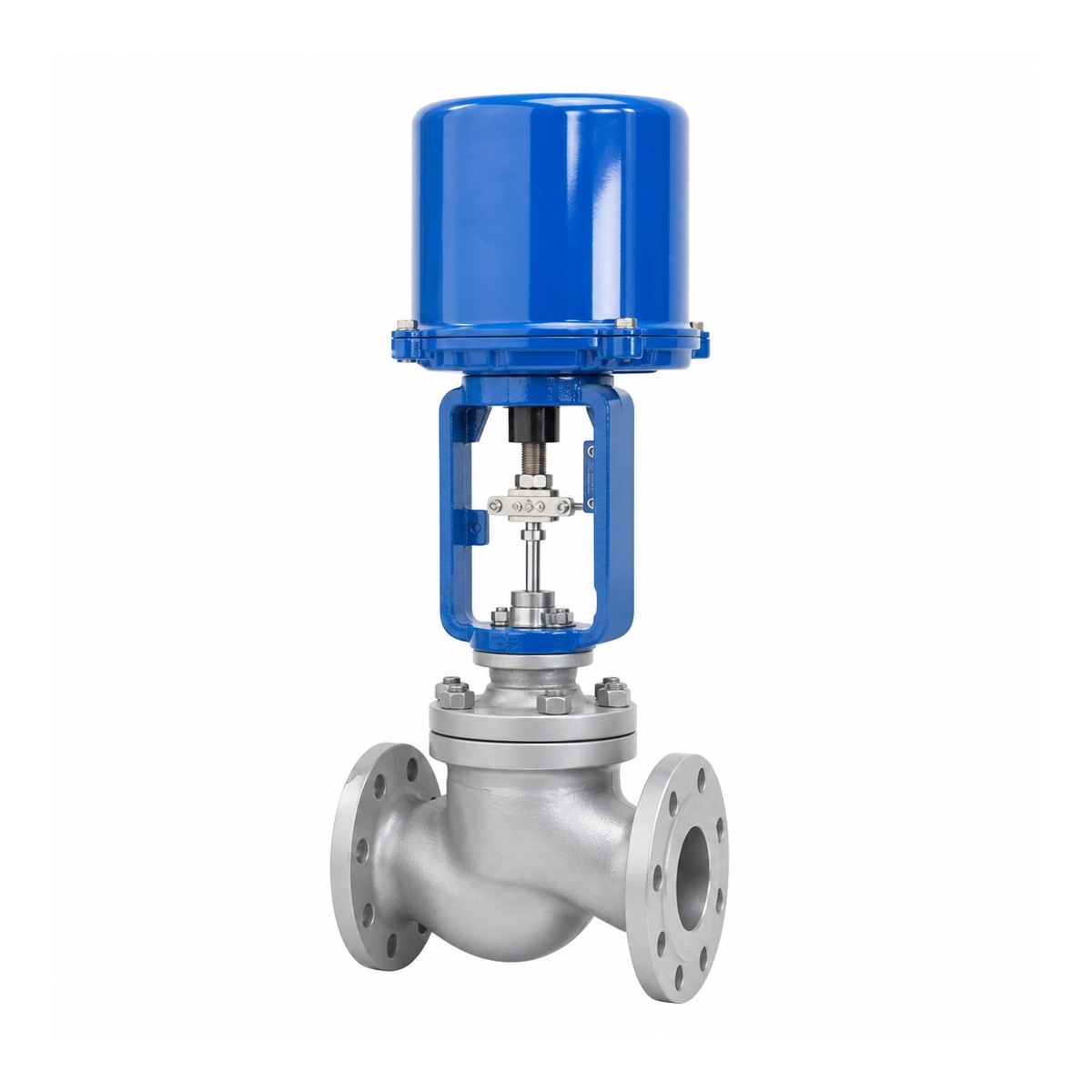
For electric single seat regulating valves, it is advisable to provide pressure supply, back pressure, fixed equipment resistance, and flow requirements at each load point, and then compare the valve internals and control parameters. The variable speed pump system also needs to consider the supply pressure regulation strategy to avoid attributing the response caused by pump changes to the valve body. Acceptance can use approved process response data to record valve position, flow rate, and upstream and downstream pressure; Merely measuring the no-load travel is not sufficient to evaluate the installation characteristics.
Comparison of selection information
| Information | Corresponding focus points |
|---|---|
| calculation range | Explain the circuit boundary and design points |
| Installation response | Consider the voltage difference instead of just looking at the inherent curve |
| Engineering trade-offs | Evaluate control, pressure loss, and vaporization risks together |
Corresponding products and selection entrance
When selecting flow characteristics, asking how much pressure drop the valve bears in the system can make the control design more complete. Clearly stating the circuit boundary and load range is more meaningful than selecting only one seemingly ideal valve core curve.
Related structures can be combinedZAZP-40C electric cast steel flange single seat regulating valveUnderstanding of specific product information. See more similar directionsRegulating Valve Product Column。
Common customer questions
Does the equal percentage valve core exhibit equal percentage flow in all pipe networks?
We cannot guarantee that the pressure differential distribution after installation will change the actual flow response.
Does the higher the valve weight, the more energy-efficient it is?
No, increasing the pressure drop of the valve will have a balance between energy consumption and risk, and it needs to be combined with the complete circuit.
Can replacing the valve core solve the problem of insufficient valve weight?
Not necessarily, it is necessary to compare the supply pressure, fixed resistance, and operating point. The problem may involve the system rather than just the valve core.
 Home
 Valve selection
 news information
 Contact us