


 简体中文
 Japanese
 Korean
 Russian
 繁体中文
 Español
Valve selection
Why do steam regulating valves require mass flow rate and status? Cannot directly set the diameter of clean water
Steam selection valve should first provide mass flow rate, pressure, and status, without directly transferring the experience of clean water capacity. Overheating, saturation, and wet steam conditions may vary, and complete input is necessary to support capacity and material judgments.
Mass flow rate and volume flow rate need to have clear states
Steam of the same quality occupies different volumes at different pressures and temperatures. If using volumetric flow rate, it is also necessary to indicate whether it is the actual state or the reference state. Tons per hour, actual cubic meters, and standard volumes cannot be directly compared without conversion. Unclear data expression can lead to incorrect estimation of capacity requirements and export speeds, affecting the overall selection of valves and downstream pipeline sections.
Saturated, superheated, and wet steam should not be mixed together
The steam state affects the computational properties and heat transfer. Droplets in wet steam may also cause erosion, which cannot be solved solely with high-temperature resistant materials. The usage and pressure conditions for equipment startup and normal production may also differ, and need to be recorded in groups. When there are requirements for temperature reduction, heat exchange, or steam distribution in a project, valve selection should be understood based on the corresponding system boundary, rather than matching a single rated temperature.
The export status and speed need to be reviewed together
After the steam is depressurized, the volume and local velocity may change, and the outlet connection cannot be automatically considered suitable just because the inlet DN is suitable. The capacity relationship of compressible flow is also different from that of incompressible liquids. Selection should use adaptive calculation tools and finished flow data to evaluate pressure differentials, critical conditions, and noise risks. The calculation results should correspond to the inlet state, outlet pressure, and actual valve internals, and cannot be extrapolated to all steam conditions using clear water capacity or fixed flow rate.
Separate proof of high temperature capability and regulation performance
The valve body, valve internals, packing, and actuator have different temperature and load boundaries. A certain cage valve can be used for steam conditions, but it does not mean that all specifications have the same low noise or pressure reducing ability. The inquiry should include the minimum normal maximum mass flow rate, temperature and pressure at each point, steam state, allowable pressure drop, and sealing requirements. The drive must also meet the shutdown conditions and cannot replace the maximum shutdown pressure difference with the normal flow pressure difference.
Comparison of selection information
| Information | Corresponding focus points |
|---|---|
| unit of flow rate | Clearly define the quality or volume with status |
| Steam state | Distinguish between saturation, overheating, and liquid content |
| System scope | Calculate the inlet, outlet, and start-up conditions together |
Corresponding products and selection entrance
Steam regulating valve inquiry should first unify the flow unit, and then record the status and pressure. Matching thermal data with valve capacity can provide a closer approximation to actual operational requirements than simply selecting based on the diameter of the main pipeline.
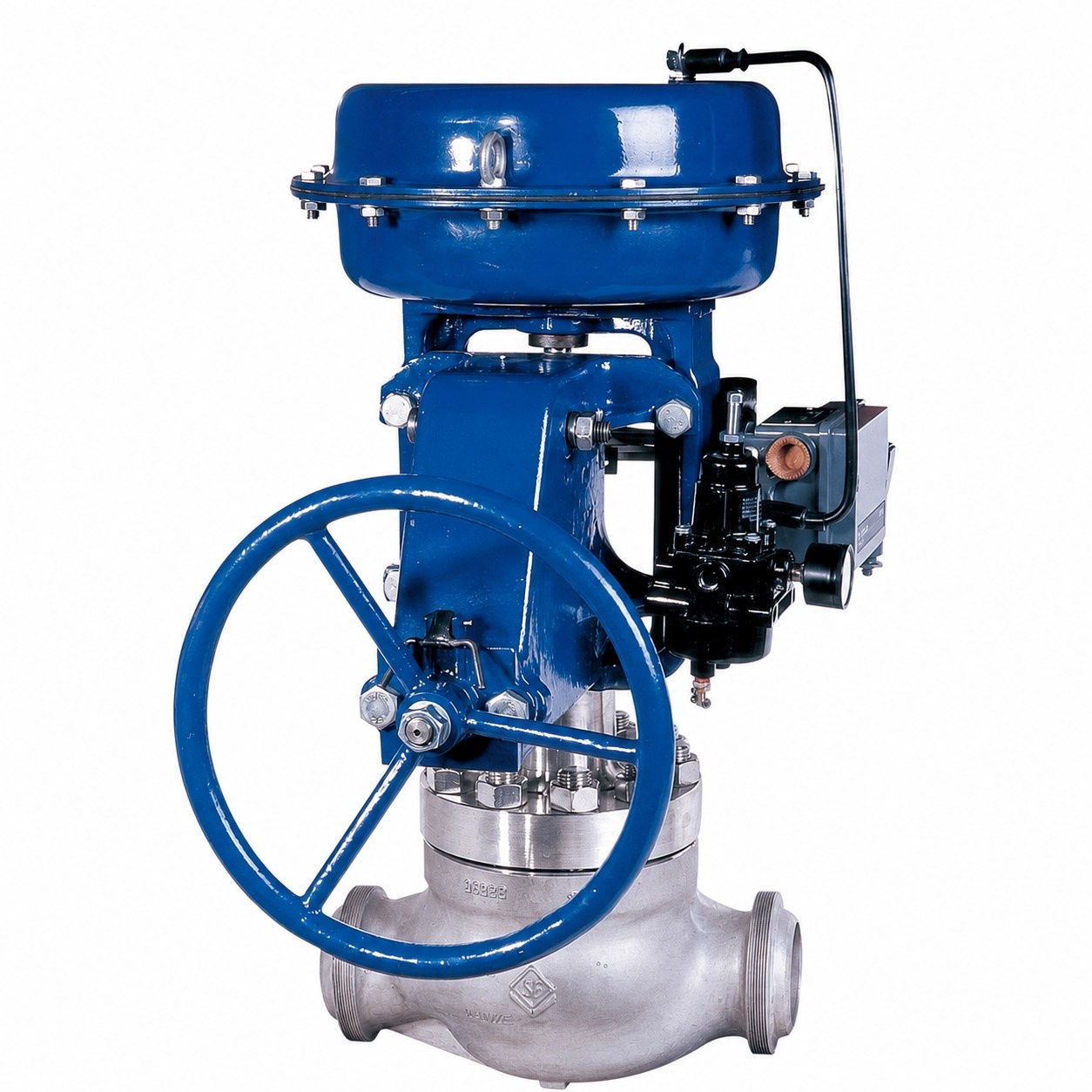
Related structures can be combinedCage type pneumatic control valve HCB-16CUnderstanding of specific product information. See more similar directionsRegulating Valve Product Column。
General principle data:Spirax Sarco — Control Valve Sizing For Steam SystemsThe principle described does not mean that the finished product on this site adopts the manufacturer's configuration or rated value.
Common customer questions
Can DN50 be used for clean water, or can DN50 be directly selected for steam?
No, the fluid properties and states are different, and should be calculated based on the steam mass flow rate and upstream and downstream conditions.
Is it enough to only report a few tons of steam per hour?
Temperature, upstream and downstream pressure, steam state, and various load points are also required, and mass flow rate is not all information.
Can a high-temperature valve body ensure quiet and stable steam regulation?
No, noise, flow, and control also depend on valve internals, pressure differentials, and pipe network conditions.
 Home
 Valve selection
 news information
 Contact us