


 简体中文
 Japanese
 Korean
 Russian
 繁体中文
 Español
Valve selection
How to observe the small signal response of pneumatic control valve? Dead zone, hysteresis, and travel resolution
Whether small signals can bring actual valve position changes depends on dead zones, hysteresis, friction, and detection. The correspondence process between acceptance record instructions and positions requires more than just the display resolution to identify the true control capability.
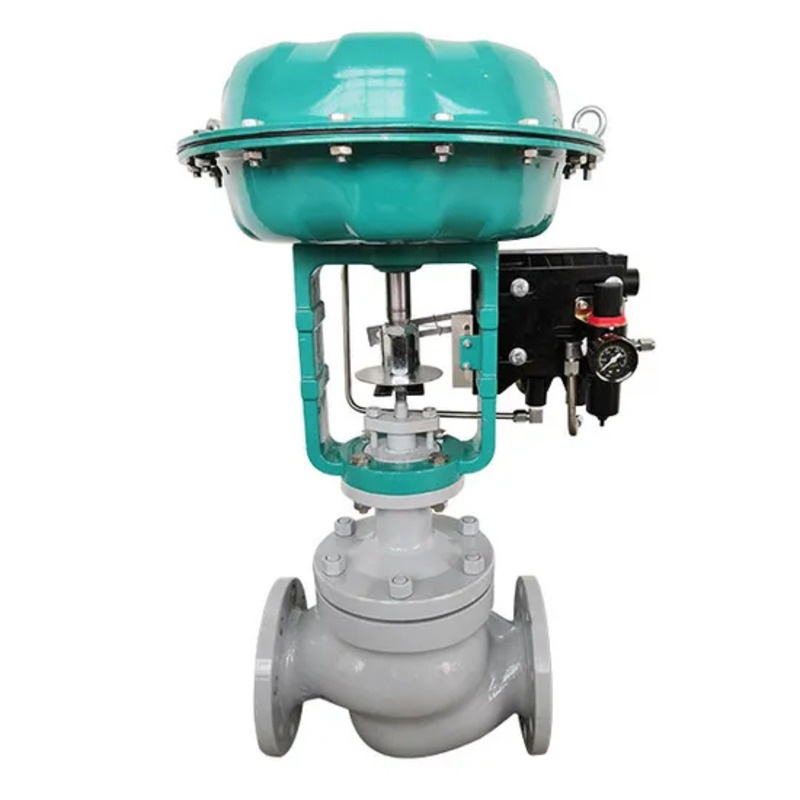
The full journey action is different from the small follow-up evaluation
The time from fully open to fully closed reflects one type of action ability, while the startup, direction change, and stability performance after small command changes involve another type of ability. The full travel data may not show any stickiness or small gaps. The evaluation should adopt appropriate testing methods and indicate the load, gas source, action direction, and signal amplitude. The no-load test cannot be directly regarded as a guarantee of all pressurized states.
Dead zone and hysteresis should not be written as the same indicator
After changing direction, the input may need to change by a certain amplitude to cause a significant change in output, which is related to the dead zone; If the same input shows different positions during the rising and falling process, it is related to hysteresis. The actual definition and calculation should adopt the selected testing system. Resolution focuses on recognizable or achievable changes, but it does not mean that these errors are zero. The quotation numbers should be labeled with definitions to avoid having the same name but different testing conditions.
Mechanical friction and air path capability both affect the results
The friction between the packing and the guide, the gap between the connection, and the actuator can change small movements with force; The flow of gas supply and valve positioner also affects the establishment of pressure. Increasing the control gain cannot independently repair mechanical problems, and pursuing speed may also cause overshoot. Acceptance should record the actual gas supply, load, and testing direction, distinguish mechanical resistance, gas path response, and control settings. After changing the settings, it is necessary to re verify according to the equipment and process requirements.
Transform process requirements into comparable acceptance criteria
The project should specify the minimum effective adjustment required, allowable deviation, common load, and response time. For the ZJHP diaphragm single seat regulating valve, it is necessary to compare the actual valve core load and sealing conditions. Delay or noise in control measurements can also affect the process curve, and not all fluctuations can be attributed to the actuator. Record the performance of finished product actions and the closed-loop performance of the system separately, making it easier to identify which layer the problem belongs to.
Comparison of selection information
| Information | Corresponding focus points |
|---|---|
| test conditions | Column signal amplitude, direction, and load |
| Indicator Definition | Separate dead zone, hysteresis, and resolution |
| Process requirements | Effectively adjust demand evaluation through practical means |
Corresponding products and selection entrance
The small signal response report should answer under what conditions, how it changes, and how the actual valve position responds. This can turn accuracy from a promotional number into a comparable engineering indicator and avoid using full stroke speed as a substitute for process control quality.
Related structures can be combinedPneumatic single seat regulating valve ZJHP-16CUnderstanding of specific product information. See more similar directionsRegulating Valve Product Column。
Common customer questions
The whole journey is fast, does it mean following the small signal?
Cannot be equated, two types of tests focus on different performances and require small response data.
Is there only an error of 0.1% when displaying the 0.1% resolution?
No, display resolution does not represent dead zone, hysteresis, or actual accuracy.
Can increasing the gain of the valve positioner eliminate valve stem friction?
Mechanical friction cannot be independently eliminated, and the mechanical and gas source conditions should be ensured first before conducting control evaluation according to requirements.
 Home
 Valve selection
 news information
 Contact us