


 简体中文
 Japanese
 Korean
 Russian
 繁体中文
 Español
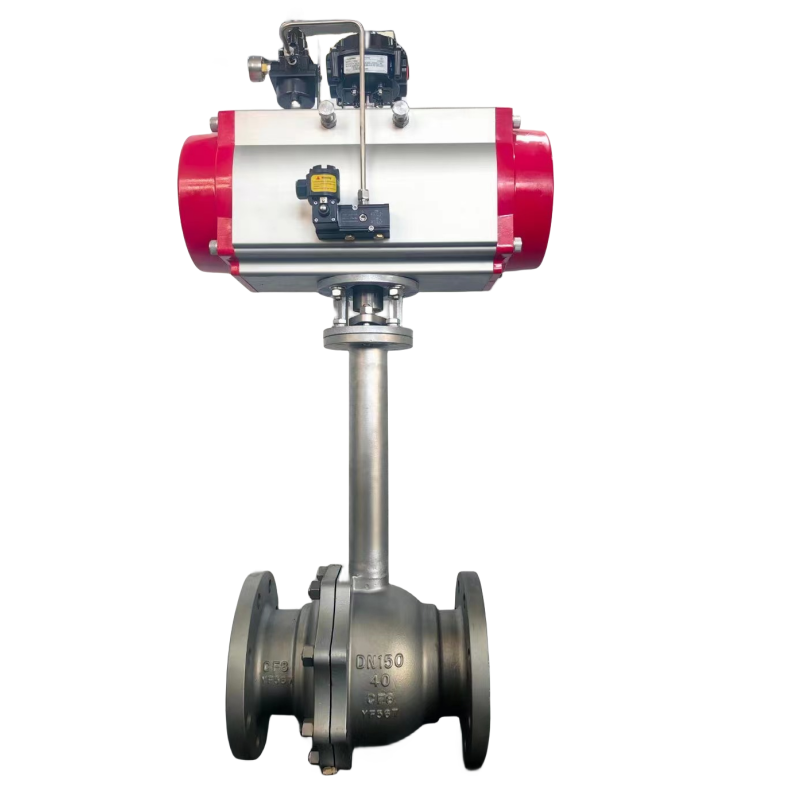
Pneumatic ball valves are not simply assembled with a valve body and a cylinder. The customer first explains the valve positions required for normal operation, gas loss, and power loss, and then confirms the gas source, actuator, and accessories to avoid reverse operation logic after wiring or gas circuit installation.
Related product columns:Pneumatic Valve Column Ball Valve Column

The relationship between structure and working conditions
Pneumatic ball valves are suitable for cutting occasions that require fast opening and closing, remote interlocking, or frequent actions. The ball valve part needs to first determine the floating or fixed ball, full bore or reduced diameter, connection method, and sealing material; The pneumatic part determines the actuator based on the pressure difference, operating frequency, and on-site gas source.
Conditions that need to be jointly confirmed when selecting
The dual acting actuator relies on a gas source to complete the opening and closing actions; The single acting actuator with spring reset should be confirmed to open or close in accordance with the safety logic of the device. Electromagnetic valves, filter pressure reducing valves, limit switches, and valve position feedback are not universal and can be omitted. They need to be configured according to control requirements.
Boundary between control and technical communication
The technical documents should specify the range of gas source pressure, medium, maximum pressure difference, valve diameter, control voltage, explosion-proof or protection level, and signal requirements. Only in this way can the valve body seal, cylinder output, and control accessories form a complete and verifiable solution.
Conclusion
The product column of Fouten can be used for further comparison of structure and connection form. The actual project should still confirm the final configuration with complete process data, material list, and technical agreement.
 Home
 Valve selection
 news information
 Contact us