


 简体中文
 Japanese
 Korean
 Russian
 繁体中文
 Español
Valve selection
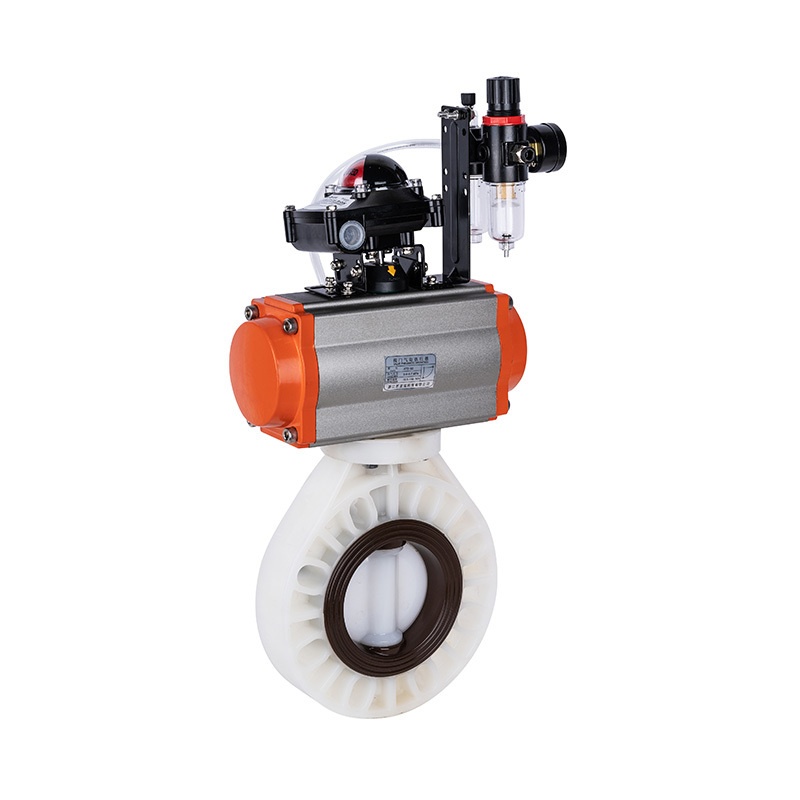
Pneumatic PVDF butterfly valve D671X-10F
Pneumatic PVDF butterfly valve D671X-10F
The D671X-10F pneumatic PVDF butterfly valve has a PVDF flow-path body, wafer connection and resilient disc sealing arrangement. The air actuator rotates the disc for line switching. EPDM or FPM seals are selected separately from the plastic body for compatible process fluids.
Product Specifications
| Product Model | D671X-10F |
| Structural form | Clamp connection, PVDF valve body, soft seal butterfly plate |
| Nominal Diameter | DN32-DN300 |
| pressure rating | PN10 |
| Valve body material | PVDF |
| sealing form | EPDM or FPM soft seal |
| Drive Type | Double acting or single acting pneumatic actuator |
| Applicable temperature | -20℃ to 120℃, confirm according to the sealing material |
| Applicable Medium | Acid alkali, salt solution, and compatible corrosive media |
How the valve moves and seals
The actuator transmits rotation through the shaft, moving the disc between open and closed positions. The body carries and contains the fluid, while the seat establishes closing contact. The matching mounting arrangement transfers actuator torque, and air delivery, exhaust and valve load together affect travel time.
Body and sealing materials
PVDF and the EPDM or FPM seals are different material systems. Evaluate fluid, concentration, temperature and cleaning exposure for each. Here the plastic body forms the wetted flow path; a metal shell with a fluoropolymer lining is a different construction. Pressure conditions apply to the complete assembly.
Operating conditions
Alternating production and cleaning cycles expose the body, connecting pipe and seals to different temperatures and chemicals. Thermal pipe movement can impose bending at the valve, so the supports and expansion arrangement distribute that movement while the seal materials cover cleaning service.
Installation and commissioning
Keep pipework naturally aligned, apply even flange loading and leave clearance for disc travel. Support the adjoining pipes and actuator assembly appropriately. Under safe isolation, verify the actual stroke, selected failure action and feedback before commissioning.
Inspection and maintenance
For external leakage, distinguish flange loading, plastic deformation and damaged seals. For slow movement, compare dynamic air pressure, exhaust and mechanical resistance. Isolate, depressurize, clean and control stored energy before inspecting the fluid-contact surfaces, seat and mounting.
Pneumatic PVDF Butterfly Valve Selection Q&A
Does a PVDF body remove the need to choose the seal material?
No. Fluid contacts both the plastic path and the closing or shaft seals. Compare chemical compatibility and cleaning exposure for those components separately, including temperature and contact time.
A flange starts leaking during hot cleaning. What should be checked?
Compare cleaning pressure and temperature, pipe expansion, even flange loading and seal condition. Plastic deformation, support loads and chemical changes need different remedies; inspect the actual leak location after safe isolation.
How can the valve open after an air-supply failure?
Select the spring direction, air circuit and accessories for the actual open position. Check return output against the worst load and coordinate feedback and the sequence when air is restored.
Ordering information
Provide process and cleaning fluids, temperature, pressure, flow and cycle frequency. Select the PVDF body and seal materials separately. Include flange, bore and installed dimensions, air supply, desired failure position, solenoid voltage and feedback requirements.
 Home
 Valve selection
 news information
 Contact us