


 简体中文
 Japanese
 Korean
 Russian
 繁体中文
 Español
Valve selection
Can the protective cover be removed first after the fluoropolymer-lined valve arrives? End face, storage and installation handover
The fluoropolymer-lined valve protective cover is used to protect the end face and the liquid contact layer. Upon arrival, conduct a visual and documentation inspection. When opening the lid for inspection, protect and restore it according to the corresponding requirements to avoid prolonged exposure or damage under pressure in the warehouse.
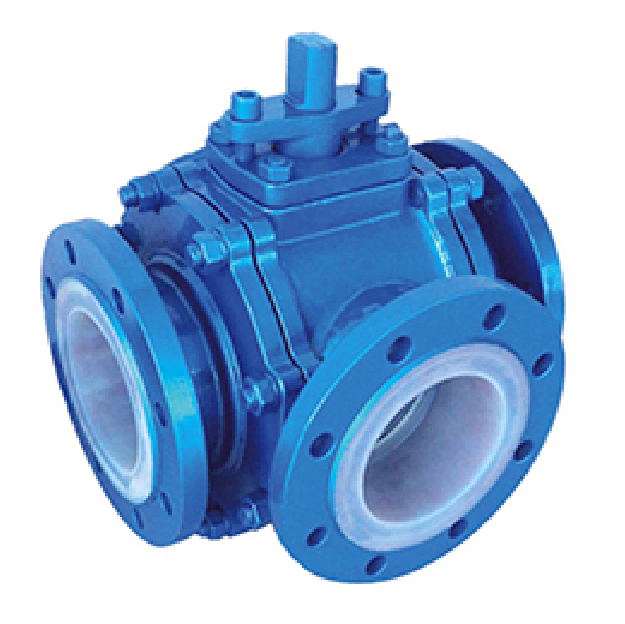
The protective cover first protects the end face, not the accessory in operation
The protective cover is used to reduce collisions and foreign objects entering the end face during transportation and storage, and its function cannot simply replace the instructions for the use of finished products. The actual packaging may also contain specialized fixing or protective measures, identification tags and delivery requirements, and not treat all temporary components as ordinary cover plates that can be removed at any time.
For structures where the lining extends to the connecting end face, damage to the end face may affect subsequent sealing. The fact that the metal of the valve body is not deformed does not mean that the non-metallic liquid layer is intact. When receiving the goods, the protective status of the shell, lining, and end face should be observed simultaneously, and it is not enough to only check the painting, flange holes, and quantity.
Distinguish between arrival inspection and long-term exposure
To complete the required inspection, it may be necessary to temporarily remove the corresponding protective components according to the instructions. After the inspection is completed, it is still necessary to restore the protection to be installed, rather than allowing unused valves to be stored with open ports. If transportation damage is found, the packaging and evidence of abnormalities should be retained, the handling status of the item should be clarified, and it should not be directly mixed with qualified items.
The inspection record includes the model, specific material configuration, flow channel identity, and end face status. Do not use sharp tools to scrape the lining layer to confirm the material, and do not use random opening and closing as a substitute for specified inspection. When foreign objects are found, handle them according to allowed cleaning methods and do not use solvents or hard scrapers that have not been confirmed for material compatibility.
Confirm the storage environment and storage posture according to the requirements of the finished product
During the installation phase, it is necessary to avoid impacts, contamination, and inappropriate temperatures or long-term exposure. The actual allowable temperature, packaging period, and storage conditions are provided by the finished product data, and the operating rated temperature is not directly used as the storage limit for the packaging state. The cardboard box, plastic cover, and end face protection each have their own functions, and the storage requirements cannot be summarized simply by covering them with rain.
Storage and handling should consider the weight and center of gravity of the entire set, and should not allow the liquid receiving end face to bear the weight of the valve, nor should the handle, valve stem, or actuator accessories be used as unconfirmed lifting points. Heavy complete sets of equipment should be handled according to the corresponding lifting plan. The stability of shelves and packaging should match the actual size and posture of the valves.
The valve position, flow channel, and accessory status should be continuously handed over
Different structures may have different requirements for transportation or storage valve positions, especially for three-way valves that need to retain port identification and flow path information. Just because two-way valves have been transported in a certain position, it is not appropriate to use the same valve position for all three-way or lined valves. Before and after the removal of protective components, the markings and documents should correspond to the actual finished product.
The manual carbon steel lined PTFE three-way directional ball valve of Fouten provides material configuration directions such as PFA, FEP, or PTFE, and has corresponding three-way flow channel tasks. Upon arrival, the actual materials, ports, and channels of the item should be confirmed, rather than considering the optional materials of the series as the complete identity of the item. Confirm the protective cover and storage location according to the actual structural specifications.
After entering the installation phase, the protection work is still ongoing
Before installation, confirm the cleanliness and end face condition of the pipeline, and remove protective components at the designated time. Welding, grinding, or construction in the vicinity may generate high temperature splashes and particles, and suitable barriers and handover arrangements should be adopted for on-site operations. Do not allow the valve to open the flow channel as a temporary material storage port, and do not leave construction pollution to be washed away during operation.
After damage to the end face, packaging failure, or long-term storage, technicians should determine whether a re inspection is necessary. Any repair and treatment must be carried out according to the allowed methods of the finished product, and the sealing surface of the lining layer should not be polished by oneself to eliminate appearance marks. The installation personnel should receive not only a valve, but also the material identity, inspection status, port information, and any restrictions that have not been lifted.
Delivery to installation handover checklist
| stage | Verify project |
|---|---|
| Receiving goods | Packaging damage, model, quantity, and finished product identity |
| Check | End face, liquid contact lining, and foreign object situation |
| Restoration protection | Restore port and end face protection after inspection |
| Staging | Environment, posture, load, and necessary re inspection |
| Installation handover | Material, valve position, flow channel and abnormal handling records |
Corresponding products and further selection
The corrosion resistance and sealing foundation of fluoropolymer-lined valves need to be protected from the arrival stage. Continuous records of inspection, restoration protection, appropriate storage, and installation handover are more helpful in controlling quality risks than searching for the cause of end face damage after commissioning.
Can be combinedManual carbon steel lined PTFE three-way directional ball valve PFA/FEP/PTFEThe actual product information confirms the structure and selection requirements. For more similar products, please refer toLining Valve Column。
Related questions can continue to be read:What is the difference between pinhole inspection and pressure testing for fluoropolymer-lined valves? Acceptance evidence cannot replace each other。
General principle reference:Storage and Handling Instructions for Resistochem Lining ProductsThe specific functions of the finished product are based on the corresponding structure and verification data.
Common customer questions
After disassembling and inspecting the protective cover, can it be replaced during installation?
After inspection, the protection to be installed should be restored to avoid long-term exposure of the end face and entry of foreign objects. The specific packaging and protection requirements shall be confirmed according to the finished product instructions.
There are scratches on the end face of the fluoropolymer-lined flange. Can it be polished on site?
Not self polishing. The end face may be involved in sealing, and any damage should be evaluated by technical personnel and treated using methods allowed by the finished product.
Can three-way fluoropolymer-lined ball valves be stored in the same position as ordinary two-way valves?
Not directly applied. Actual flow channels, valve positions, and transportation and storage requirements should be verified, and port identification should be retained and handed over according to corresponding information.
 Home
 Valve selection
 news information
 Contact us